I remember the exact moment I first learned about the Mariana Trench. I was ten, sprawled on my bedroom floor with a National Geographic spread open to a diagram of the ocean's deepest point. The illustration showed the Titanic next to the trench's depth for scale — and the Titanic looked like a grain of rice. It blew my tiny mind.
But here's what really blows my mind now: we've been staring at that dark abyss for decades, and we completely missed the biggest secret it was hiding.
Scientists just announced the discovery of a new form of life thriving in the hadal zone of the Mariana Trench. Not a new species of fish. Not a weird jellyfish. I'm talking about something fundamentally different — a life form that doesn't fit neatly into our existing biological categories.
Let's get into the weird, wonderful, and slightly terrifying details.
What They Actually Found (And Why It's Not Just Another Deep-Sea Worm)
You've probably seen those headlines about "new species discovered in the deep sea." They usually feature some translucent shrimp or a fish with terrifying teeth. This isn't that.
Researchers from the Japanese Agency for Marine-Earth Science and Technology (JAMSTEC) deployed a specialized lander to the Challenger Deep — the trench's deepest point, nearly 11,000 meters down. The pressure there is over 1,000 times atmospheric pressure at sea level. It would crush a human like a soda can in milliseconds.
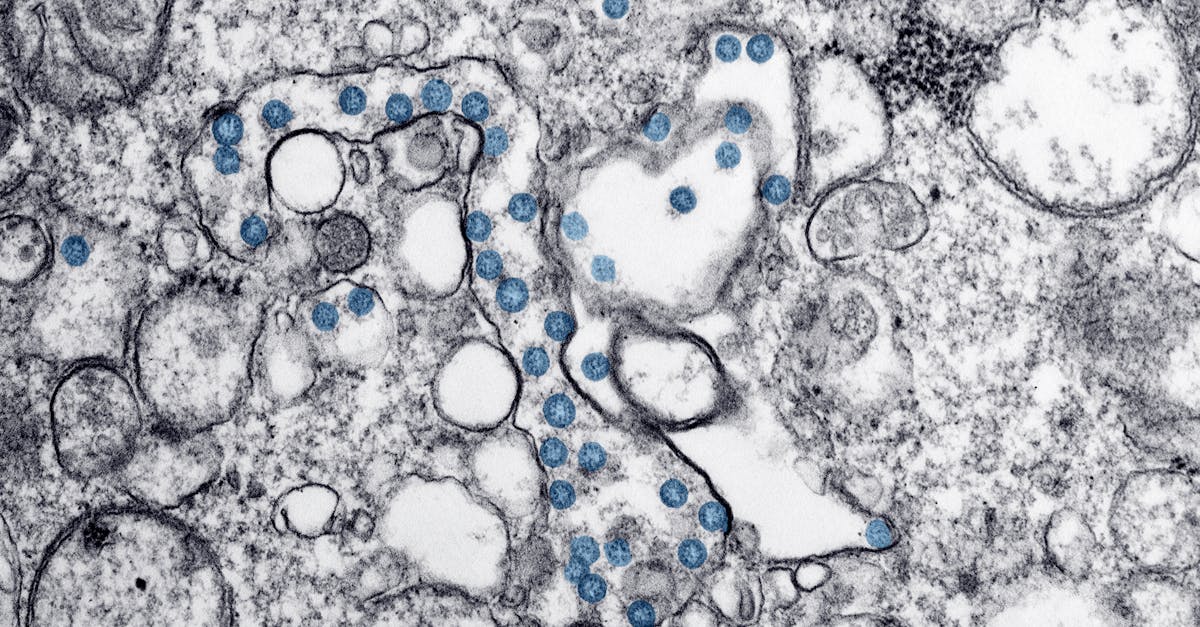
What the lander brought back wasn't a single creature. It was a biofilm — a slimy, microscopic mat coating the rocks. But when the team analyzed it under electron microscopes and sequenced its DNA, they found something that doesn't fit.
The cells are structured differently from any known domain of life. They have a membrane composition that's completely alien to what we see in bacteria, archaea, or eukaryotes. Their metabolic pathways are unlike anything in our textbooks.
I've been following deep-sea biology for years, and let me be honest: this is the most exciting discovery since hydrothermal vents. This isn't just a new species. It's potentially a new branch on the tree of life.
Why "Hidden" Is the Perfect Word
Here's what most people miss about deep-sea exploration: we've mapped less of the ocean floor than we have the surface of Mars.
The Mariana Trench is the deepest place on Earth, but we've only sent a handful of manned vessels down there. James Cameron made his solo dive in 2012. A few others have followed. But the trench is over 2,500 kilometers long. We've barely scratched its surface.
The new life form was found attached to rocks in an area researchers had previously dismissed as "biologically sparse." They assumed the crushing pressure and total darkness meant very little could live there. They assumed wrong.
This discovery proves something I've suspected for years: we have no idea what's really down there. Every time we send a probe or a submersible to a new spot in the hadal zone, we find something that makes us rewrite the textbooks. The ocean isn't just hiding secrets — it's laughing at our ignorance.
The 3 Things That Make This Life Form So Damn Weird
Let's get specific. Here are the details that made me re-read the research paper three times:
- Membrane chemistry from another planet. The lipids in these cells are built differently. They use a type of fatty acid chain that scientists haven't seen in any known organism. It's like finding a car that runs on orange juice — it shouldn't work, but it does.
- Metabolic independence. Most life in the deep sea relies on "marine snow" — organic matter drifting down from the surface. This new form appears to be chemolithoautotrophic, meaning it gets energy directly from inorganic chemical reactions with the rocks. It doesn't need anything from the surface world.
- Extreme pressure adaptation. The proteins in these cells are folded in ways that should be impossible at 1,100 atmospheres. They've essentially evolved a completely different biochemistry for handling pressure. If we can understand how, it could revolutionize everything from drug development to materials science.

What This Means for the Search for Alien Life
Okay, here's where I geek out completely.
If life can exist in the Mariana Trench with a completely different biochemistry, then the definition of "habitable" just got a whole lot wider.
Think about it. We've been searching for extraterrestrial life by looking for conditions similar to Earth — liquid water, moderate temperatures, organic compounds. But this discovery suggests life might be able to exist in environments we previously considered impossible. The chemolithoautotrophic metabolism of this new form means it could thrive on worlds like Europa or Enceladus, where subsurface oceans interact with rocky cores.
I've always rolled my eyes at the phrase "life finds a way." It's become a cliché thanks to Jurassic Park. But this discovery makes me take it seriously. Life doesn't just find a way — it invents entirely new rulebooks.
The Real Question Nobody's Asking
Everyone's focused on what this discovery tells us about the deep sea or alien life. But here's the question that keeps me up at night: What else is down there?
The Mariana Trench is one location. One trench. There are five other major ocean trenches on Earth, plus thousands of unexplored seamounts, hydrothermal vent fields, and abyssal plains. We've sampled less than 0.01% of the deep ocean floor.
If this new life form exists in the Challenger Deep, there could be dozens — or hundreds — of other unknown biological domains scattered across the ocean floor. We might be living on a planet where the majority of life's diversity is completely invisible to us.
And here's the uncomfortable truth: we might never find it all. Deep-sea exploration is expensive. A single research cruise can cost millions. The technology to sample these environments is still in its infancy. By the time we develop the tools to fully explore the hadal zone, climate change and deep-sea mining might have already altered these ecosystems beyond recognition.
What You Can Actually Do About It
I'm not going to end this with a guilt trip. But I do want to offer something practical.
If this discovery fascinates you — and it should — here's what you can do:
- Support organizations like the Schmidt Ocean Institute or MBARI. They publish their research openly and do incredible work.
- Follow the JAMSTEC research team. They're the ones who made this discovery, and they're constantly posting updates.
- Pay attention to deep-sea mining legislation. The International Seabed Authority is currently drafting regulations. Your voice, even as a citizen, matters in these discussions.
So next time you look at the ocean, remember: something down there is living by rules we haven't even begun to learn. And it's been there the whole time, waiting for us to finally pay attention.