I used to think the deep ocean was basically a wet desert. A cold, dark, empty nothing where life just gave up and floated there like a sad jellyfish waiting to die.
I was wrong. And so is everyone who still pictures the abyss as a lifeless void.
At 8,000 meters down — that's nearly five miles of black water pressing down on you with the force of a freight train — we're finding things that genuinely shouldn't exist. Fish. Squid. Entire ecosystems thriving in total darkness. Not just surviving, either. Thriving. And the deeper we look, the weirder and more wonderful the story gets.
Here's the thing most people miss: we've mapped more of the surface of Mars than we have of our own ocean floor. That's not an exaggeration. It's an embarrassment. But the recent dives into the hadal zone — the deepest trenches on Earth — are starting to change that.
The Fish That Shouldn't Be Alive at 8,000 Meters
Let's be honest, when scientists first started sending cameras into the deep trenches, they expected to find maybe a few scavengers picking at whatever fell from above. Marine snow, dead whales, the occasional unlucky tuna. Standard deep-sea stuff.
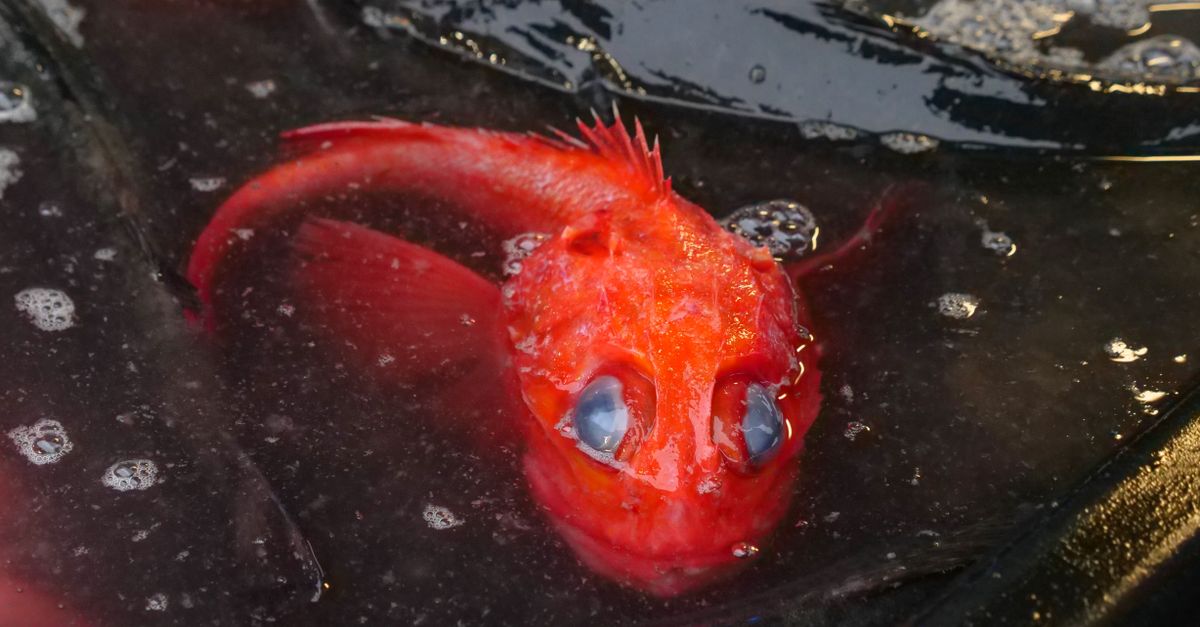
Then in 2017, a team studying the Mariana Trench snagged footage of a snailfish cruising around at over 8,000 meters. Not a shrimp. Not a bacteria mat. A fish. With a face. And eyeballs. Doing fish things.
The kicker? This wasn't a fluke. Researchers have since identified multiple species of hadal snailfish living down there, and they're thriving in conditions that would turn our cells into jelly. The pressure at 8,000 meters is about 800 times what you feel at sea level. That's like having 1,600 elephants standing on your chest. Somehow, these translucent little weirdos just... swim around like it's nothing.
How? Their bodies are packed with a molecule called trimethylamine N-oxide (TMAO), which stabilizes proteins under crushing pressure. The deeper the fish, the more TMAO they carry. It's basically biological antifreeze, except for pressure instead of cold. Nature figured out how to make a pressure suit out of chemistry.
The Secret Nobody Talks About: They're Eating Fallout
Here's where the story gets genuinely unsettling — in the best way.
When researchers pulled sediment samples from trenches 8,000 meters and deeper, they found something they didn't expect: elevated levels of radioactive carbon-14. The kind that comes from nuclear bomb tests conducted in the 1950s and 60s.
The deep ocean isn't isolated. It's downstream of everything. Every bomb we detonated, every plastic we dumped, every chemical we sprayed — it all settles eventually. And the trenches are the final sink.
But here's the twist that made me put down my coffee. Those same sediments are feeding the creatures down there. The snailfish and amphipods aren't just surviving in the deep — they're eating a record of human history. Our worst impulses, literally sinking to the bottom of the world and becoming food.
I've found that this is the part that gets people. Not the alien fish. The fact that we're already in the deepest place on Earth, whether we like it or not.
What Lives Down There Will Mess With Your Head
If you think snailfish are wild, wait until you meet the rest of the neighborhood.
- Giant amphipods the size of your hand, scurrying around like underwater cockroaches
- Hadal snailfish that look like they were designed by someone who'd only heard about fish secondhand
- Xenophyophores — single-celled organisms the size of your fist, making them the largest single-celled creatures on the planet
- Glass sponges that build silica skeletons in total darkness
- Cusk-eels and grenadiers gliding past like they own the place
Why 8,000 Meters Is the New Frontier
Look, space gets all the glory. NASA has a bigger budget than most countries, and every kid grows up wanting to be an astronaut. But the hadal zone — everything below 6,000 meters — is arguably more alien than anything we've found on Mars.
Mars is dead. We know that now. The deep ocean is alive, and it's full of creatures that rewrite the rules of biology every time we point a camera at them.
The problem? Getting down there is brutally hard. At 8,000 meters, the pressure will crush a standard submarine like a soda can. You need specialized landing vehicles — basically titanium spheres with cameras — or remotely operated vehicles that cost more than a small island.
That's why every new dive feels like a moon landing. In 2019, Victor Vescovo took a submersible to the bottom of the Mariana Trench — nearly 11,000 meters. He found plastic. A bag. A wrapper. At the deepest point on Earth.
That's the real secret of the deep ocean. It's not that it's empty. It's that it's already full of us.
The Truth We Keep Ignoring
Here's my hot take, and I'll die on this hill: the deep ocean is more important than space exploration right now.
Not because space isn't cool. It is. But because the deep ocean is the planet's life support system. It regulates temperature, stores carbon, and houses biodiversity we haven't even named yet. And we're treating it like a dumpster.
We've dumped over 8 million tons of plastic into the ocean. We've trawled the seafloor to bare rock. We've acidified the water to levels not seen in millions of years. And still, when a new species shows up at 8,000 meters, our first instinct is to ask what it tastes like or what we can extract from it.
I'm not saying don't explore. I'm saying explore with respect. Every time we send a camera into the hadal zone, we get a reminder: this place is ancient, fragile, and completely indifferent to us. It doesn't need us.
But we need it.

So What Now?
If you take anything from this, take this: the next time someone tells you we've explored everything, send them a picture of a snailfish at 8,000 meters. Send them the plastic bag at the bottom of the Mariana Trench. Send them the TMAO molecules holding life together under 800 atmospheres of pressure.
The ocean's deepest secret isn't a monster. It's a mirror. It shows us exactly what we've done to the planet — and exactly how much we still don't know.
Want to go deeper? Follow the research coming out of the Schmidt Ocean Institute and NOAA's Ocean Exploration program. They're publishing new findings every month, and honestly, it's the most exciting science happening on Earth right now.
And if you're feeling bold — book a trip to a research aquarium. Look a hadal snailfish in the eye. It'll change how you see the world.
Or at least how you see fish.





