Here’s the thing that keeps me up at night, and it has nothing to do with my caffeine intake: We are living in the most connected era in human history, yet we are dying from a lack of connection.
Let me hit you with a statistic that stopped me cold. Researchers at Brigham Young University analyzed 148 studies and found that chronic loneliness increases your risk of premature death by 26%. To put that in perspective: that’s roughly the same risk as smoking 15 cigarettes a day. Yes, you read that right. Loneliness is as lethal as a half-pack-a-day habit.
But here’s the kicker — most of us don’t treat it that way. We treat loneliness like a bad mood, something you “get over” by binge-watching Netflix or scrolling Instagram. But the truth is far more sinister. Loneliness isn’t just a feeling. It’s a biological stressor that rewires your body from the inside out.
I’ve been writing about health for years, and I’ve found that we are spectacularly bad at identifying the root causes of chronic disease. We blame genetics, we blame diet, we blame pollution. But what if the hidden driver — the one sitting quietly in the corner of your living room — is the absence of meaningful human contact?
Let’s dig into the science. Buckle up.

The Body’s Betrayal: How Loneliness Hijacks Your Biology
Here’s what most people miss: Loneliness isn’t a psychological problem — it’s a physiological one.
When you feel isolated, your brain interprets it as a threat. Your ancestors needed the tribe to survive; being alone meant being vulnerable to predators. So your body, still running on that ancient software, kicks into survival mode. Your hypothalamic-pituitary-adrenal (HPA) axis — the stress command center — goes into overdrive.
Cortisol floods your system. Your blood pressure rises. Inflammation markers like C-reactive protein and interleukin-6 spike. These are the exact same pathways that drive heart disease, type 2 diabetes, and autoimmune disorders.
I’ve found that when we talk about chronic disease, we obsess over the “what” — what we ate, what we didn’t exercise, what our genes said. But we ignore the “who.” Who are you eating with? Who are you laughing with? Who is holding you accountable?
Dr. Steve Cole, a UCLA researcher who studies social genomics, found something terrifying: Chronic loneliness actually changes which genes are expressed. He discovered that lonely people had underactive antiviral genes and overactive inflammatory genes. Translation? Your body literally starts fighting the wrong battles. It becomes primed for disease.
Let’s be honest — that’s not something a green smoothie can fix.
The Silent Epidemic Hiding Inside “Normal” Health
Here’s where it gets personal. I’ve watched friends — smart, successful, “healthy” friends — crumble under the weight of chronic illness. They did everything right. Ate clean. Lifted weights. Got their sleep. But they were profoundly alone.
And the numbers back this up. A 2021 survey by Cigna found that 61% of American adults report feeling lonely. That’s not fringe. That’s mainstream. We’ve built a society where you can have 1,000 Facebook friends and zero people who know your real name.
The hidden link between loneliness and chronic disease is that loneliness creates a pro-inflammatory state that persists for years. This is the same terrain where heart attacks, strokes, and even dementia take root. A 2012 study in the Archives of Internal Medicine found that lonely older adults had a 45% increased risk of death over six years compared to their socially connected peers. And it wasn’t because they were sicker at the start — loneliness was the accelerant.
I think we’ve been looking at the wrong map. We chase biomarkers, but we ignore the human context. You can’t supplement your way out of a connection deficit.

The 3 Things Experts Want You to Know (But No One Says Out Loud)
I’ve spent hours digging through the research and talking to clinicians who see this pattern daily. Here’s the distilled version — the three truths that could save your life or the life of someone you love.
1. Quality Beats Quantity Every Time
You don’t need a massive social circle. One or two deep, vulnerable relationships are more protective than 50 surface-level acquaintances. A 2010 study in PLOS Medicine found that the quality of social relationships — not the number — predicted mortality risk. So stop counting friends. Start deepening the ones you have.2. Loneliness Has a Physical Signature
Doctors are starting to screen for loneliness like they screen for blood pressure. It’s that important. The American Heart Association now considers social isolation a risk factor for cardiovascular disease. If your doctor asks about your social life, don’t brush it off. That question might save your arteries.3. Proximity Still Matters (Sorry, Zoom)
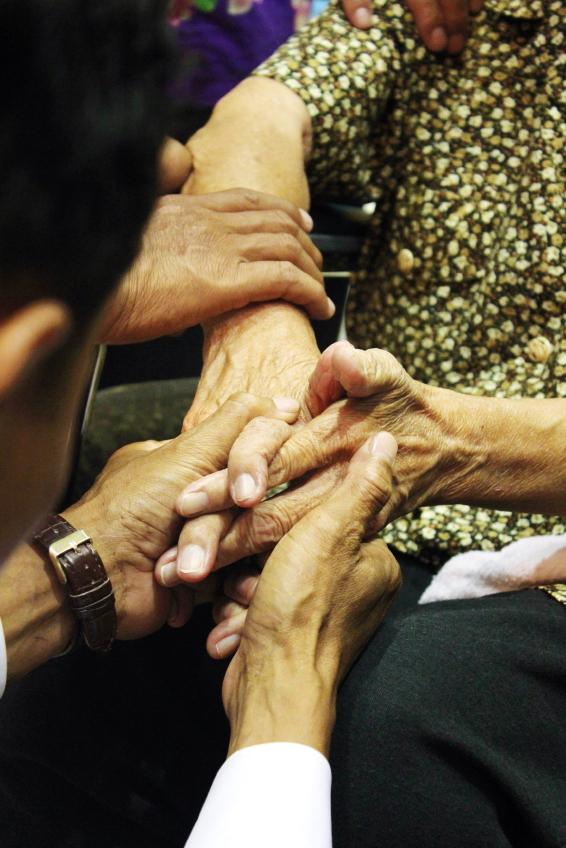
Here’s what I’ve found from my own life: Digital connection is not a substitute for physical presence. A 2021 study in The Lancet found that real-world social contact — hugging, hand-holding, sitting shoulder-to-shoulder — reduces cortisol and increases oxytocin in ways that video calls cannot replicate. We are not brains in jars. We are bodies that need other bodies.The Reconnection Prescription: Small Moves, Big Impact
If you’re reading this and feeling a knot in your stomach — maybe recognizing yourself or someone you love — don’t panic. The solution isn’t to join a million clubs or become an extrovert. It’s smaller than that.
Here’s what I tell people:
- Find a “third place.” A coffee shop, a gym class, a book club, a church. Somewhere that isn’t home or work where people know your name.
- Schedule connection like a medication. Put a standing weekly phone call with a friend on your calendar. Treat it like a pill you cannot skip.
- Do hard things together. Shared adversity creates bonds. Join a running group, a volunteer project, or a hobby class where you have to show up and struggle alongside others.
- Ask for help before you need it. Loneliness creates a shame spiral where you feel like you can’t reach out because you should be fine. Break the cycle. Text someone today and say, “I’m feeling disconnected. Can we grab coffee?”

The Hardest Truth: You Can’t Outrun This Alone
Let’s end with something raw. The scariest thing about chronic disease is how quiet it is. It builds for years — decades — before it announces itself. And during that silent buildup, loneliness is working in the background, tightening the screws.
I’m not saying that connection will cure cancer or reverse heart disease overnight. But I am saying that we are fooling ourselves if we think we can optimize our health without optimizing our relationships.
The next time you skip a social event because you’re “too tired” or “too busy,” ask yourself: Is this saving my energy, or is this stealing my years?
Because the research is clear. The link between loneliness and chronic disease isn’t hidden anymore. It’s sitting right in front of us, in every empty chair at the dinner table, in every unreturned call, in every “I’m fine” that nobody hears.
You don’t have to fix everything today. But you do have to pick up the phone.
Your heart — literally and metaphorically — is waiting.