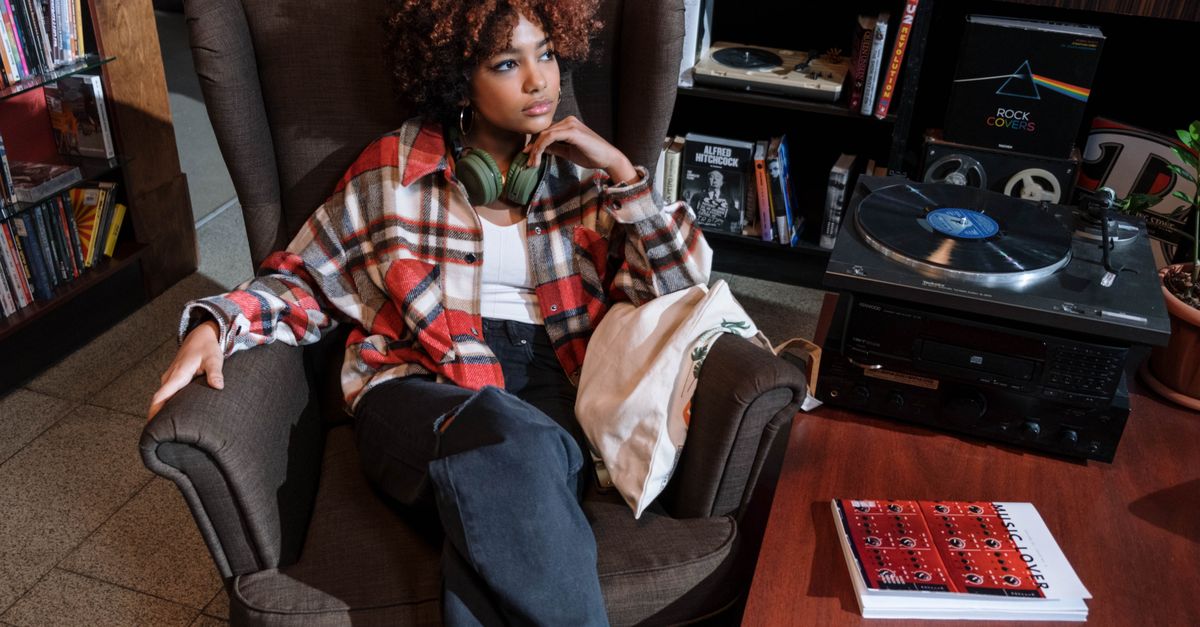
Last Tuesday, I found myself in a weird existential crisis. I was driving home, and my phone died. No Spotify, no podcasts, no algorithm feeding me my next dopamine hit. I had to resort to the one thing I hadn't done in years: I put on a physical CD. It was a classic—Lauryn Hill’s The Miseducation of Lauryn Hill.
And you know what? I sat in my driveway for ten extra minutes. I didn’t skip a single track. I didn't check my notifications. I just listened. It hit me that I hadn't experienced an album as a body of work in months. My listening habits have become a chaotic stream of consciousness, a slot machine of singles.
Let’s be honest: We are witnessing the death of the album, and playlists are holding the smoking gun. But is this a tragedy, or are we just finally admitting that the album was never the natural way to consume music anyway? Let's dig into the corpse and see what’s still breathing.
The Attention Span Autopsy
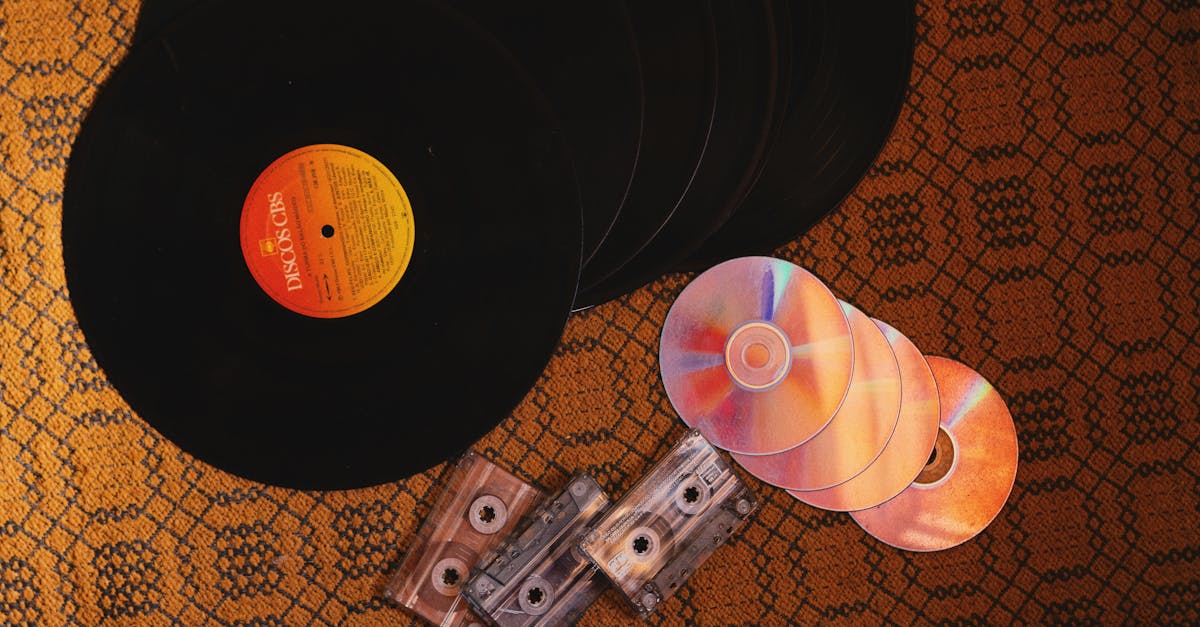
Here’s what most people miss when they cry about the "good old days": The album was a product of technological limitation, not artistic purity. In the vinyl era, you had roughly 22 minutes per side. Artists had to structure their work to fit a physical disc. It was a constraint that birthed masterpieces like Dark Side of the Moon, sure, but it was still a constraint.
Today, the constraint is gone. We have infinite digital storage, yet our attention spans have shrunk to the size of a TikTok loop. I’ve found that I’m not alone in this. We treat music like a utility now—background noise for workouts, commutes, and coding sprints.
The playlist caters to this perfectly. It doesn't ask for a 45-minute commitment to one mood. It shifts with you. It knows you want to cry for one song, then rage for the next. The album demands you sit with a feeling. The playlist says, "Nah, let's keep it moving."

Is this lazy? Maybe. But it’s also honest. We aren't listening to music as a ritual anymore; we are listening to it as a utility. And utilities don't need deep narratives—they need efficiency.
The Algorithm Knows You Better Than Your Ex Did
Let’s talk about the elephant in the room: the algorithm. I have a love-hate relationship with Spotify's "Discover Weekly." On one hand, it’s psychic. It knows exactly when I need a dose of 90s R&B nostalgia or obscure synthwave. On the other hand, it’s terrifying because it removes the effort of discovery.
In the past, buying an album was a financial commitment. You saved up your allowance, you bought the CD, and you had to like it because you couldn't return it. You listened to the deep cuts. You learned to appreciate track 7.
Now, we treat music like we treat dating apps. If the first 30 seconds don't grab us, we swipe left. The playlist ecosystem rewards hooks, drops, and instant gratification.
The slow burn is dead. The track that takes two minutes to build up? Skipped. The instrumental interlude that connects the themes of the record? Skipped. The algorithm has effectively trained us that if a song isn't a "banger," it’s a waste of time.
But here is the kicker: The playlist is the new radio, but it’s a radio that listens back. It’s a feedback loop. The more we skip, the more "safe" the playlists get, and the less variety we actually see.
The Death of the "Era" (And Why We Miss It)
When an artist dropped an album in the 2000s, it was an event. You had the lead single, the second single, the music videos, the secret B-sides, and the album art you could stare at for hours while reading the liner notes.
Playlists have killed the "Era." Now, artists are forced to operate in a singles-only economy. They drop a track, it blows up on TikTok for two weeks, and then it’s forgotten. By the time they actually release the full project, three of the songs are already old to us. We’ve heard them in a million TikTok videos. We’ve already moved on.
I recently saw a massive artist release a "surprise album." It dropped on a Friday, and by Sunday, the internet was already asking, "What’s next?" There was no time to dissect the lyrics, no time to sit with the production. It was consumed and discarded in a weekend.
Here’s what I think we’re losing:
- The Narrative Arc: Albums tell a story. Playlists just shuffle chapters.
- The Deep Cuts: The songs that take time to appreciate are being left to die.
- The Context: Without the album, we lose the context of why the artist made the song in the first place.
The Playlist as the New Artist
Here’s the twist that flips the script: Playlists have become the artists. We don't listen to "Track 4" by Artist A; we listen to "Chill Vibes 2024" by Spotify. We don't stan the musician anymore; we stan the mood.
The curators are the new rock stars. I’ve spent more time curating my "Late Night Coding" playlist than I have listening to half the albums I own. It’s a form of self-expression. The playlist is a mixtape for the modern age, but instead of one person’s taste, it’s a hive-mind consensus.
This shifts the power dynamic. In the past, the label and the artist dictated what you heard. Now, the listener dictates the context. We are deconstructing the "album" and rebuilding it as a personalized entity.
Is that a bad thing? I’m torn. On one hand, it democratizes music. On the other, it makes the music disposable. When a song is just a number in a queue of 50, it carries less weight.
The Truth About the "Album" in 2024
Let’s drop the pretense. The album isn't dead; it’s just no longer the default. It’s becoming a niche format, like vinyl or physical books.
The artists who survive will be the ones who adapt. They will release singles constantly to feed the algorithm, and then bundle them into an "album" just to qualify for Grammy nominations. The ones who thrive will be those who use the album as a statement piece, not a delivery system.
I’ve found that I have to intentionally train myself to listen to albums now. It takes effort. I have to put my phone in the other room. I have to resist the urge to skip. And when I do, it’s still magical. But it’s a deliberate act, not a passive one.
The playlist is for the body—it gets you through the workout, the commute, the chores. The album is for the soul—it requires you to stop and feel. We need both, but we are starving the soul to feed the body.
So, what’s the call to action here? I dare you to do this: This week, pick one album—just one—and listen to it from start to finish. No skips. No phone. Just you and the music.
You might find that in the age of infinite choice, the most rebellious thing you can do is commit to a sequence. Because while the algorithm knows what you want to hear, it doesn't know what you need to hear. And sometimes, you need the whole story, not just the headline.