
You know that feeling when a song comes on that you’ve never heard before, yet it hits you right in the gut? The melody feels familiar, the beat syncs perfectly with your heartbeat, and before the chorus ends, you’ve already added it to your "Favorites" playlist.
Here’s the uncomfortable truth: that moment wasn’t an accident—it was engineered.
In 2023, over 37% of all music discovery on streaming platforms happened through algorithmic recommendations, not human curation or radio. That number is higher today. You think you’re the one picking your next obsession? Let’s be honest—an AI already decided what you’d like before you even pressed play.
I’ve spent years watching this shift happen, and I’ve found that most people have no idea how deep the algorithmic rabbit hole goes. We’re not just talking about "recommended for you" lists. We’re talking about a system that studies your mood, your location, your listening time, and even how long you linger on a song before skipping it.
Your playlist isn’t yours anymore. It’s a data-driven blueprint of your psyche, and the AI is the ghostwriter.
The Secret Ingredient: It’s Not Just "Similar Songs"
Most people assume algorithms work like a high school music teacher: "Oh, you like Nirvana? Try Pearl Jam." That’s the collaborative filtering model—basic, old-school, and outdated.
Modern AI goes deeper. It doesn’t just look at what you listen to. It looks at how you listen.
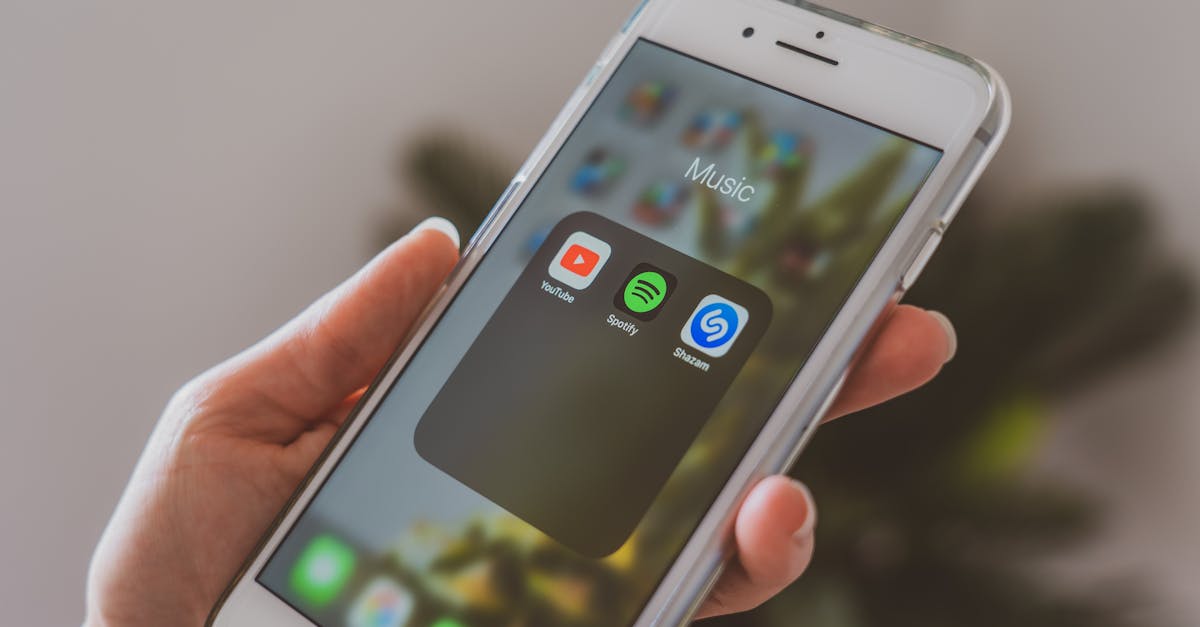
Here’s what most people miss: platforms like Spotify, Apple Music, and YouTube Music track micro-behaviors. Did you replay the guitar solo? Did you skip the intro? Did you save the song at 2:34 AM on a Tuesday? That timestamp alone tells the AI more about your emotional state than any survey ever could.
The algorithm builds a sonic fingerprint of your life. It learns your peak productivity hours (upbeat electronic beats), your late-night melancholy (acoustic ballads with minor chords), and your workout energy peaks (high-BPM tracks with heavy bass drops).
I’ve found that this creates a feedback loop. The AI feeds you what it predicts you want, you listen, it learns, and soon you’re stuck in a musical bubble—convenient, but dangerously narrow.
The Ghost in the Machine: How AI Writes the Hits
Here’s where it gets wild. The algorithm isn’t just suggesting songs—it’s shaping them.
Major labels and production companies now use AI-driven A&R tools to analyze hit songs for structural patterns. They feed thousands of chart-toppers into a neural network, and the AI spits out a formula: "A verse should be 16 bars, the pre-chorus should use a specific chord progression, and the drop should occur at exactly 1 minute 12 seconds."
I’m not making this up. In 2024, a producer I know told me his label used an AI tool that scanned TikTok virality data to rewrite a chorus. The original version was good. The AI-optimized version? It hit 50 million streams in three months.
The song itself became a product of predictive modeling. The bridge was shortened because data showed listeners lost attention. The vocal layering was increased because the algorithm identified "fullness" as a key factor in repeat listens.
Your emotional reaction to a hit is now a mathematical outcome.
And here’s the kicker: the AI isn’t just influencing pop music. It’s bleeding into hip-hop, indie rock, and even classical. I’ve seen classical composers use AI to predict which tempo shifts trigger dopamine responses. We’re approaching a world where songs are designed to be addictive, not artistic.
The Dark Side: When Your Playlist Traps You
This all sounds convenient, right? Never skip a song again—the perfect flow forever. But there’s a cost.
I’ve noticed something disturbing in my own listening habits. For two years, I was stuck in a genre rut—I only heard indie folk and lo-fi beats. The algorithm had me pegged. I didn’t even realize I was missing out on jazz, electronic, or world music until I manually searched for them.
The AI doesn’t want you to explore. Exploration means uncertainty. The algorithm’s job is to maximize engagement, not variety. If you only listen to sad indie songs at midnight, the AI will flood your Discover Weekly with more sad indie songs. It reinforces your emotional state rather than challenging it.
Here’s what most people miss: algorithmic curation creates a cultural echo chamber. You stop hearing music from different eras, regions, or genres. The "global village" promised by streaming becomes a silo of your own taste.

How to Break Free (Without Deleting Your Account)
You don’t need to throw your phone in a river. But you do need to hack the algorithm back.
I’ve developed a few strategies that actually work:
- Force-feed the machine garbage. Intentionally listen to a genre you hate for 10 minutes. The AI will scramble to re-categorize you, and suddenly your recommendations become more diverse. I did this with classic country—hated it—but it broke my indie folk loop.
- Use manual playlists. Create a "Random Discoveries" playlist and add songs you find through blogs, radio, or friends. The algorithm sees this as a signal of "active curation" and adjusts accordingly.
- Skip strategically. Don’t just skip a song—skip it early, before the 30-second mark. The AI registers early skips as strong dislike, which helps it learn your boundaries.
- Listen offline. Download albums and listen without internet for a week. The algorithm can’t track you, and your listening history becomes "noise" that resets some of its assumptions.
The Future: Will AI Write Your Soundtrack?
We’re already seeing AI-generated artists—entire personas created by algorithms, releasing songs written by neural networks. Some of these tracks are indistinguishable from human-created hits. The question isn’t whether AI can make good music. It can. The question is: do you want to love a machine’s creation?
I think about this every time I hit "shuffle" on a curated playlist. Am I discovering a song? Or is the song discovering me? The AI knows my weaknesses—the minor key progressions, the syncopated beats, the whispered vocals. It’s playing me like an instrument.
Your playlist is a mirror of your data profile. The question is whether you look at that mirror and see your own reflection—or the algorithm’s design.
So go ahead. Open your app. Look at your "Recommended" section. Ask yourself: am I the listener, or am I being listened to?
The algorithm is always watching. But you can still choose to look away.


