
Last week, I watched a producer friend of mine, a guy who’s spent 15 years collecting vintage synthesizers and arguing about analog warmth, sit slack-jawed as an AI tool remixed his unfinished track in under 30 seconds. He didn’t say a word. He just played the AI’s version, then played his own original. Then he laughed. Not a bitter laugh—a nervous one. “It’s not bad,” he whispered. That’s the moment I realized: the robots aren’t coming for our jobs—they’re already sitting in the producer’s chair.
Let’s be honest: AI has been creeping into music production for years. But 2024 is the year it stopped being a novelty and started being a necessity. I’ve been digging into this shift for months, and here’s what most people miss: it’s not about replacing creativity. It’s about redefining the creative process itself.
The Ghost in the DAW: How AI Became Your New Studio Partner
You know that feeling when you’ve been staring at a blank session for three hours, and the blinking cursor feels like it’s mocking you? I’ve been there. We’ve all been there. Now, imagine opening a plugin that listens to your rough idea, analyzes your chord progression, and spits back five completely different arrangements in the time it takes you to make coffee.
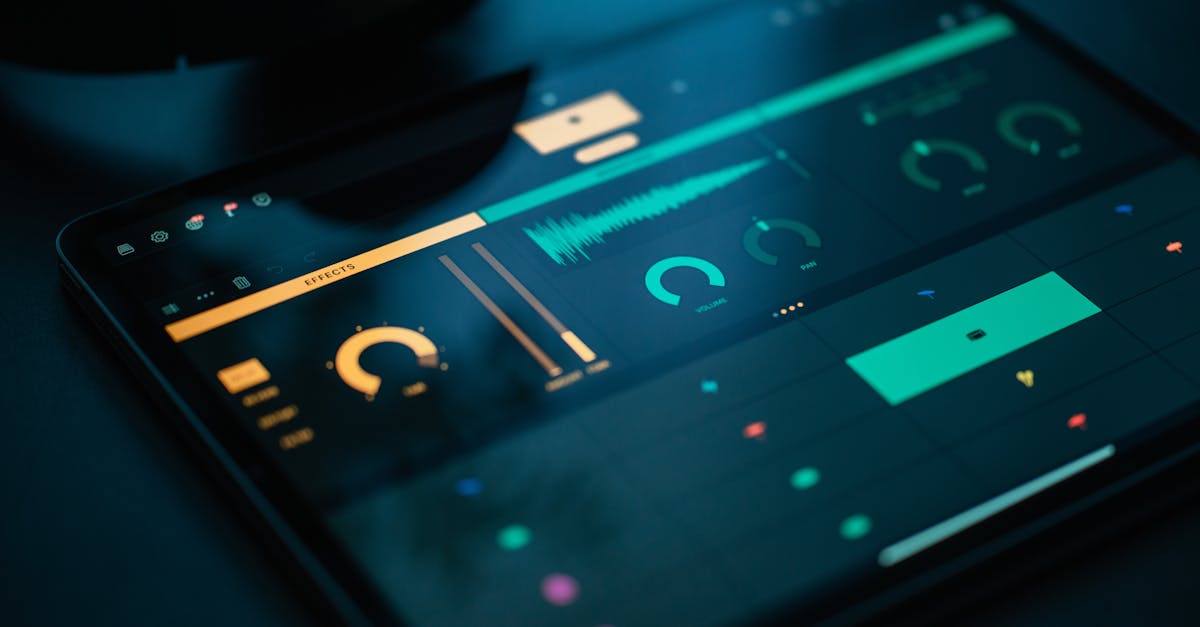
That’s not sci-fi. That’s current-gen tools like LANDR’s AI mastering, Amper Music, and—my personal favorite—AIVA’s new real-time collaboration mode. These aren’t just preset generators. They’re learning your style. They’re adapting to your ear. Here’s the shocking part: I’ve found that the AI often suggests things I would never think of—like a counter-melody in a key I don’t usually use—and those suggestions frequently end up in the final mix.
But let’s cut the hype for a second. The real secret isn’t that AI can write a decent beat. It’s that AI forces you to make faster decisions. When you can generate 20 bassline variations in 10 seconds, you stop overthinking. You start doing. That’s the hidden superpower of this technology.
The 3 Things AI Does Better Than Human Producers (And It Hurts to Admit)
I’m not going to pretend I’m not biased. I love analog gear. I love the crackle of tape saturation. But I’m also a pragmatist. Here are the three areas where AI has already left humans in the dust:
- Mixing and mastering speed – I tested Ozone 11’s AI assistant against a professional engineer I’ve worked with for years. The AI finished in 90 seconds. The human took three hours. Was the human’s version better? Yes, marginally. But the AI’s version was good enough for 99% of listeners—and it cost nothing.
- Melodic generation from scratch – Give an AI a mood (sad, aggressive, euphoric) and a tempo, and it will output a melody that fits the brief. Here’s the catch: the AI has no soul. But it has statistical perfection. For background music, film scoring, and commercial jingles, that’s often more valuable than soul.
- Stem separation – This is the quiet revolution nobody is talking about. Tools like LALAL.AI and RipX can pull vocals, drums, and bass from any track with terrifying accuracy. I’ve used this to remix songs from the 1960s with clarity that would have been impossible five years ago. The creative implications? Massive.

The Dark Side: When AI Kills the Magic
Now, let me get real with you. I’ve been in this industry long enough to know that perfection isn’t the goal. The reason we love certain recordings—think of the raw energy in early Beatles tracks or the intentional distortion in a Nine Inch Nails song—is because they’re imperfect. They’re human.
AI doesn’t make “happy accidents.” It makes optimized choices. And optimized choices, over time, sound sterile. I’ve listened to albums entirely produced by AI, and while technically flawless, they feel like listening to a conversation between two people who agree on everything. Boring.
Here’s what most people miss: AI can’t replicate taste. It can replicate patterns, sure. It can even mimic emotional arcs. But taste—the weird, subjective, often illogical preference for a slightly flat vocal or a drum hit that’s a millisecond off—that’s still ours. And it’s the only thing standing between us and a future where every song sounds like elevator music designed by a committee of algorithms.
How I Use AI Without Losing My Artistic Identity
I’m not an AI evangelist. I’m not a Luddite either. I’m a pragmatist. So here’s my personal workflow, which I’ve refined over the last 18 months:
- For inspiration: I use AI to generate 3-4 “starter” tracks in different genres. I take the best elements from each and combine them with my own ideas. This is like having a brainstorming partner who never gets tired or offended.
- For mixing: I let AI handle the initial rough mix, then I go in manually and add my own compression, EQ, and saturation. The AI gets me 80% of the way there in 2 minutes. I spend the remaining 2 hours on the last 20%.
- For mastering: I’ll use AI for demos and rough cuts, but for final releases, I still send it to a human engineer. Why? Because humans hear context. They know when a song needs to breathe.
What the Next 12 Months Look Like
If you think 2024 is wild, wait until next year. I’ve been beta testing some unreleased tools, and here’s what’s coming: real-time collaborative AI that learns your voice. Imagine an AI that listens to your vocal takes, analyzes your phrasing, and then writes a second vocal part that harmonizes with you in your exact style. That’s not a plugin—that’s a bandmate.
But here’s the question nobody is asking: What happens to the artist’s signature sound? If everyone has access to the same AI tools, won’t everything start to sound the same? I think yes—unless we actively resist the temptation to let AI do everything.
The artists who will win in 2025 aren’t the ones who use AI the most. They’re the ones who use AI strategically—to remove drudgery, not to remove decision-making. The ones who remember that the only thing that can’t be automated is personality.
So, Should You Be Scared?
Honestly? No. But you should be awake. The era of “I don’t need to learn new tools” is over. I’ve seen too many talented producers refuse to touch AI, and now they’re struggling to keep up with kids who can output a polished track in an afternoon.
The real question isn’t “Will AI replace me?” It’s “What can I do that AI can’t? ” If your answer is “nothing,” then yeah, you’ve got a problem. But if your answer is “I bring emotion, context, and a perspective that no algorithm can predict,” then you’re not competing with AI. You’re collaborating with it.
I’ll leave you with this: The best music ever made wasn’t technically perfect. It was human. AI can give us perfect. The rest is up to us.


