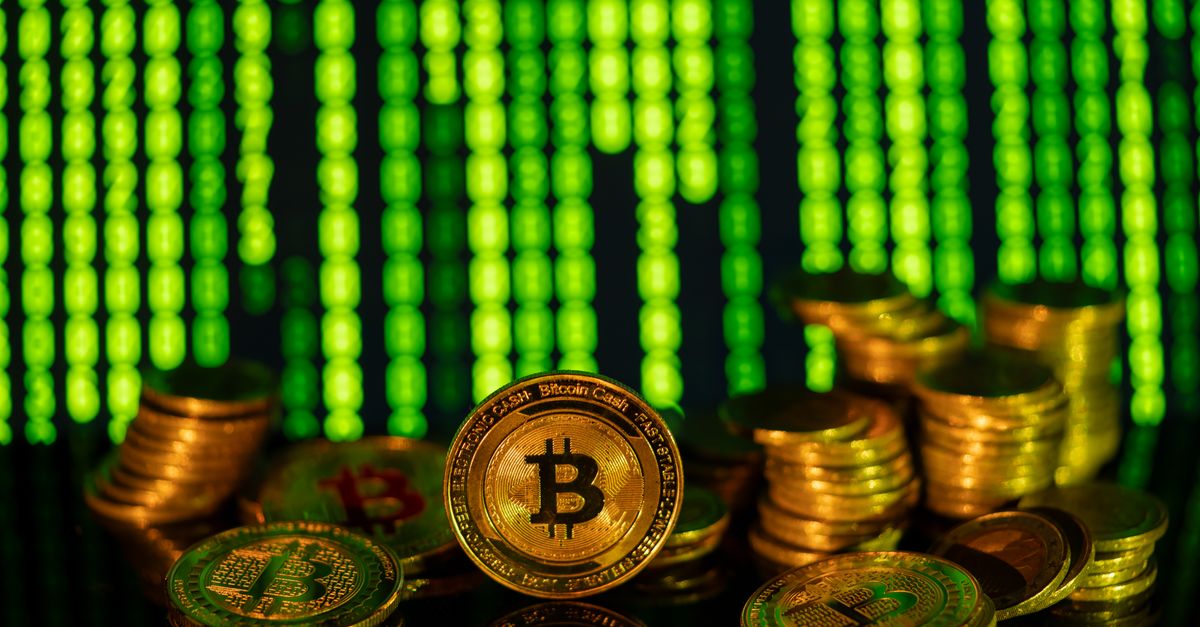
Picture this: it's 11 p.m. on a Tuesday in Lagos, and my cousin Tunde is trying to send money to his sister in London for their mum's hospital bill. He's got the cash. She needs it now. And yet, between his bank's "processing time," a correspondent bank in New York nobody's ever heard of, and a currency conversion that feels like a magic trick where your money disappears, that transfer will take three days and cost him a small fortune.
Tunde isn't a crypto bro. He doesn't care about blockchain. He just wants his mum's bill paid.
That's the thing about the global push for digital currencies that most people miss. We talk about it like it's a tech story — central banks, cryptographic protocols, monetary policy. But underneath all that jargon is a far simpler, far more urgent question: why does moving money across the world still feel like mailing a letter in 1995?
And more importantly — who gets to control that flow? That's the $2 trillion question nobody's putting on a bumper sticker.
The Quiet Race You Probably Didn't Notice
Here's a stat that should stop you in your tracks: according to the Atlantic Council's tracking, more than 130 countries are currently exploring a central bank digital currency, or CBDC. That's over 98% of global GDP. China's digital yuan has been in pilot mode for years. The European Central Bank is marching toward a digital euro. Even the Bahamas and Nigeria have already launched theirs.
This isn't a fringe experiment anymore. The global push for digital currencies is a full-blown monetary arms race, and it's happening while most of us are arguing about whether Bitcoin is a scam or a religion.
I've found that when something this big moves this quietly, there's usually a reason nobody's shouting about it. So let's be honest about what's actually driving it — because it's not just about making Tunde's transfer faster.
Reason One: The Dollar's Grip Is Slipping (and Everyone Knows It)
Let me get a little uncomfortable here. The U.S. dollar still dominates global trade and reserves, but that dominance has been quietly eroding. Sanctions have shown the world that dollar-denominated systems can be weaponized. Countries like Russia, China, and even some U.S. allies have watched and thought, "Hmm, maybe we shouldn't have all our eggs in one green basket."
A CBDC gives a country a way to settle cross-border trade without routing through New York. That's not a conspiracy theory — it's just math. Digital currencies are, at their core, a sovereignty play. Nations want monetary independence the same way they want energy independence.
And here's the part that should make you sit up: when major economies start settling trade outside the dollar system, the ripple effects hit everything from your mortgage rate to the price of imported coffee. This isn't abstract geopolitics. It's your grocery bill.
Reason Two: The Plumbing Is Ancient and We All Pay for It
Cross-border payments currently cost an average of around 6% per transaction, according to World Bank data, and can take days. For a migrant worker sending $200 home to family, that's real money — money that never arrives. The remittance economy is worth hundreds of billions annually, and a fat slice of it gets eaten by intermediaries.
Digital currencies promise to collapse that plumbing into something instant and nearly free. Whether it's a CBDC, a stablecoin, or some hybrid nobody's invented yet, the incentive is obvious: billions of dollars in friction, waiting to be eliminated.
I've found that the people who benefit most from this aren't the tech elite — they're the Tundes of the world. The nurse in Manila. The construction worker in Dubai. The student in Nairobi. If digital currencies deliver on even half their promise here, that's a genuinely good thing.
But — and there's always a but — speed and cheapness come with a trade-off that nobody wants to talk about at dinner parties.
The Part Nobody Wants to Say Out Loud
Here's what most people miss: a CBDC gives governments a level of visibility into your spending that cash never could. Programmable money could, in theory, be restricted — spendable only on certain things, expiring if you don't use it, frozen with a keystroke.
Now, I'm not wearing a tinfoil hat. But let's be honest — if you hand any institution the ability to see and control every transaction in real time, history suggests it's only a matter of time before someone tests the limits. The question isn't whether the technology allows it. It's whether the laws and norms keep it in check.
This is the tension at the heart of the global push for digital currencies: efficiency versus autonomy. Convenience versus privacy. And right now, most of us are being asked to pick a side without even knowing there's a vote.

So What's Actually Driving It? A Short, Honest List
Strip away the press releases and here's what I think is really fueling this:
- Control — governments want better tools for monetary policy and oversight
- Competition — nobody wants to be left behind in the next financial system
- Cost savings — the current plumbing is expensive and everyone knows it
- Financial inclusion — billions are still unbanked, and digital rails could reach them
- Geopolitical leverage — money is power, and digital money is the next frontier of it
The Question You Should Actually Be Asking
We keep asking whether digital currencies will "work." Wrong question. They're coming — that's not in doubt. The real question is: who writes the rules, and who gets protected when things go sideways?
If you're in the U.S., the U.K., or the EU, your central bank is making decisions right now that will shape how you save, spend, and get paid for the next 50 years. If you're in a country already piloting a CBDC, you're the test case. Either way, this isn't a spectator sport.
So here's my challenge to you: next time someone talks about digital currencies like it's just a Bitcoin headline, ask them the boring question that actually matters. Who controls it? What can they see? What can they freeze? And what happens when the power goes out?
Because the $2 trillion question isn't really about money at all. It's about who gets to hold the keys — and whether the rest of us get a say.
What's your take? Drop a comment or find me on the socials. I genuinely want to know if I'm the only one who thinks we should be paying more attention to this.