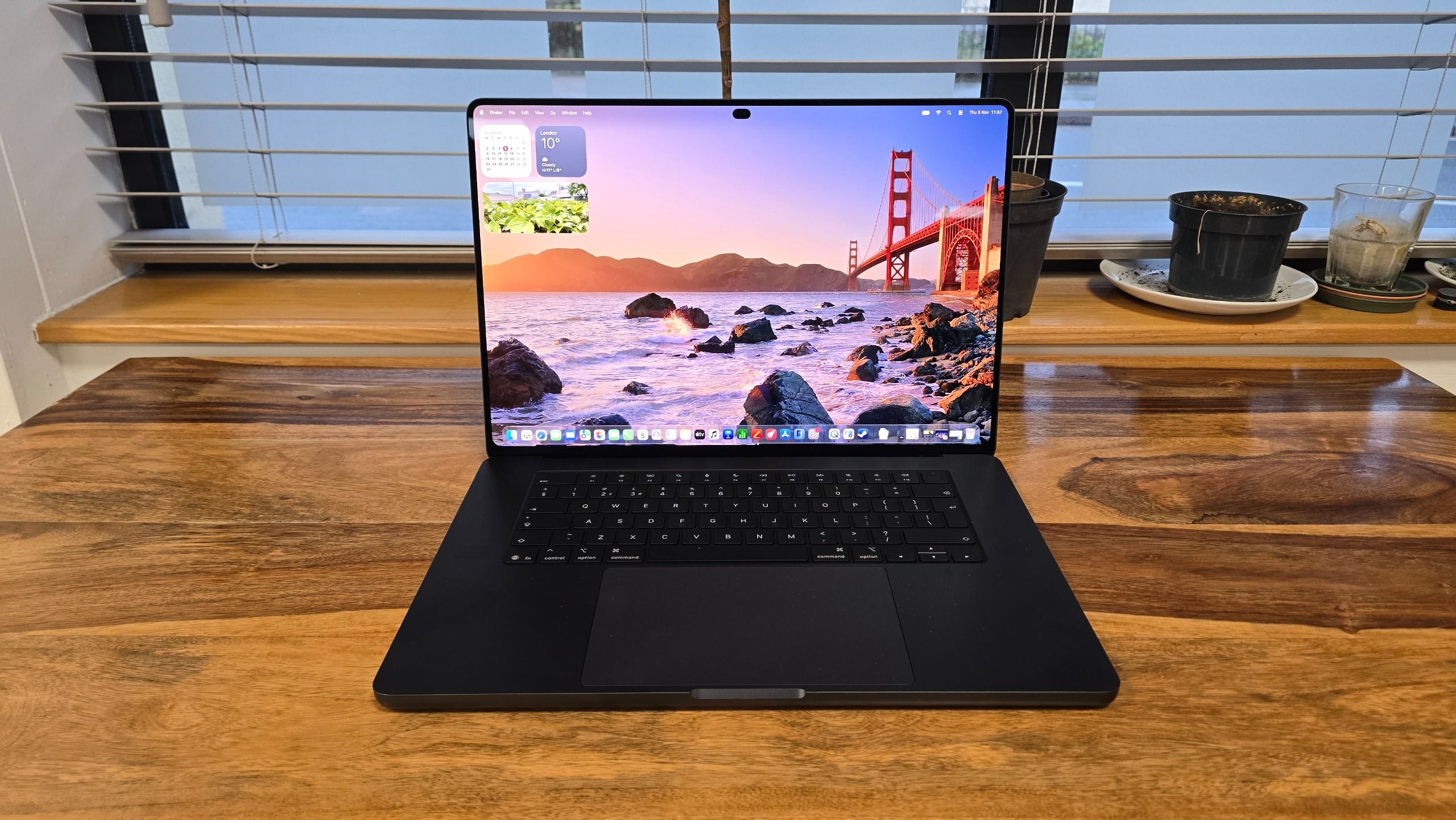
TechRadar has published its review of the 16-inch MacBook Pro with PROLED XDR display, concluding that Apple's new flagship laptop earns its price through its screen and battery life rather than its headline touchscreen feature. The review, published on 6 November 2026, argues that the touch input works well enough, but macOS remains an operating system built around traditional input methods on laptops. According to TechRadar, the tandem OLED panel and class-leading endurance are the reasons to take an interest.
The machine is Apple's newest and most capable portable workstation, aimed at professional users. It does not carry the newest M6 chip generation; buyers instead choose between the M5 Pro and the more powerful M5 Max. TechRadar describes performance as very impressive but not unprecedented. The larger news, in the reviewer's view, is the display: Apple has moved away from mini-LED in favour of tandem OLED, and the reviewer calls the result strikingly vivid. It is also the first time Apple has put a touchscreen on a MacBook.
Why it matters
The review lands in a crowded moment for high-end laptops. TechRadar notes that machines built around Nvidia's RTX Spark chip — including the Asus ProArt P16 RTX Spark and the Microsoft Surface Laptop Ultra — have arrived with powerful processors, unified memory and touchscreens, many of them OLED. That puts them in direct competition with Apple's new MacBook Pro, and the review's verdict matters to anyone weighing a professional purchase in that bracket.
TechRadar's central point is that the touchscreen, however much attention it draws, is not the reason to buy. The reviewer explicitly advises against choosing this model purely for touch input. Instead, the tandem OLED display, a lighter design and stronger components are what justify the higher price. For creative professionals who need an extremely capable laptop with one of the best screens on the market, TechRadar considers the model an excellent investment.
Pricing across the range
Apple offers the MacBook Pro with PROLED XDR in two sizes. The 14-inch model starts at 38,990 kroner, while the 16-inch version begins at 44,990 kroner. Both base configurations come with 24 GB of unified memory and 1 TB of storage, powered by the M5 Pro chip. The 16-inch model's M5 Pro carries a more capable 20-core GPU, compared with the 18-core GPU in the 14-inch machine, according to TechRadar.
Buyers can configure either size with the stronger M5 Max chip, up to 128 GB of memory and up to 16 TB of storage — but TechRadar notes the price climbs very quickly at that end. A fully specified configuration reaches 210,240 kroner. The reviewer frames the value question less around the sticker price than around what the machine lets a buyer accomplish.
Who should buy it — and who should not
TechRadar is direct about the alternatives. Anyone who mainly wants a MacBook that handles everyday tasks well would be better served by a MacBook Air (M5). Even for more demanding work, the recently unveiled MacBook Pro (M6), which starts at 27,490 kroner, will likely be more than sufficient. Neither of those has a touchscreen, but the reviewer would not recommend buying the PROLED XDR model solely for touch functionality in any case.
The case for the pricier machine rests on raw capability and image quality. Although the M5 Pro and M5 Max predate the M6 chip, TechRadar reports that they outperform it. For buyers who need serious power and care most about display quality — particularly if faster rendering lets them finish projects sooner and take on more work — the review sees a sound case for the purchase. For everyone else, the reviewer warns that the components will be overkill and the price steep, and points to considerably cheaper MacBook models and rival laptops.
On competition, TechRadar finds Apple's machine holds up well. The Asus ProArt P16 RTX Spark starts at 37,990 kroner, and the review says the MacBook Pro with PROLED XDR compares favourably against such RTX Spark machines despite its much higher price. The reviewer acknowledges the laptop is extremely expensive but argues the figure makes more sense once its capabilities, its intended audience and rival pricing are taken into account — while conceding that does not make it easier to afford.
The review also notes that the MacBook Pro's design has not changed in years, a point it raises across both size variants. The full assessment covers value, design, specifications, performance and battery life, along with a section on how TechRadar tests products.
Watch for how the M6 generation and the coming wave of RTX Spark laptops shift this comparison in the months ahead.