The Tanzanian government has set aside 1.06trn/- for student loans and grants in the 2026/2027 academic year, an increase of roughly 15.6 per cent over the previous year, according to figures from the Higher Education Students' Loans Board (HESLB) reported by Daily News. The allocation is expected to reach at least 300,000 students at higher education institutions. HESLB Executive Director Dr Bill Kiwia announced the first batch of awards in Dar es Salaam, covering 165,775 students with 535.7bn/-.
The financing sits within a wider push by President Samia Suluhu Hassan's administration to widen access to higher and middle-level education. Daily News reports that the government allocated 916.7bn/- in the 2025/2026 academic year, supporting 289,932 students, before this year's increase.
Why it matters
Education spending of this kind is treated by the government as a foundation for economic growth, productivity and a workforce with the skills a changing economy demands. The loan figures matter most for students from low-income households, who according to Daily News have been the main beneficiaries of the expanded financing. The board has described the budget rise as part of a strategy to open up both university and middle-level study while improving how loans are delivered and keeping the fund sustainable.
How the first allocation breaks down
The initial release of funds for 2026/2027, announced in October, covers several categories of students. Among newly admitted undergraduates, 74,769 students received 246.88bn/-. A further 8,538 new diploma students were allocated 22.9bn/-, and 873 new entrants were awarded grants worth 4.5bn/- under the Samia Scholarship programme.
Continuing students account for the rest of the first batch. Undergraduates already enrolled received 252.4bn/- across 79,115 beneficiaries. Another 1,554 continuing diploma students were allocated 3.8bn/-, while 926 continuing Samia Scholarship recipients received 5.1bn/- in grants.
HESLB noted that the amounts released so far are not the same as the full annual budget. Further allocations will follow as universities admit students and applications are completed, according to the board.
Diploma students brought into the system
A change that has broadened who can access financing is the inclusion of diploma students, which began in the 2023/2024 academic year. Daily News reports that this has given young people a route to professional and practical qualifications without needing to enrol in a bachelor's degree.
For 2026/2027, the government intends to support 24,978 diploma students in priority fields, including 14,000 new students. The plan reflects labour market demand for technicians and specialists in areas such as technology, health and engineering, which contribute to production and services. Extending loans to diploma programmes also pushes back on the idea that higher education should be counted only in university graduates, recognising instead the role of technical training in building a productive economy and in helping young people find work or become self-employed.
The government also plans to fund 513 students taking the Postgraduate Diploma in Legal Practice in the same year, among them 350 new entrants.
Scholarships for top STEM students
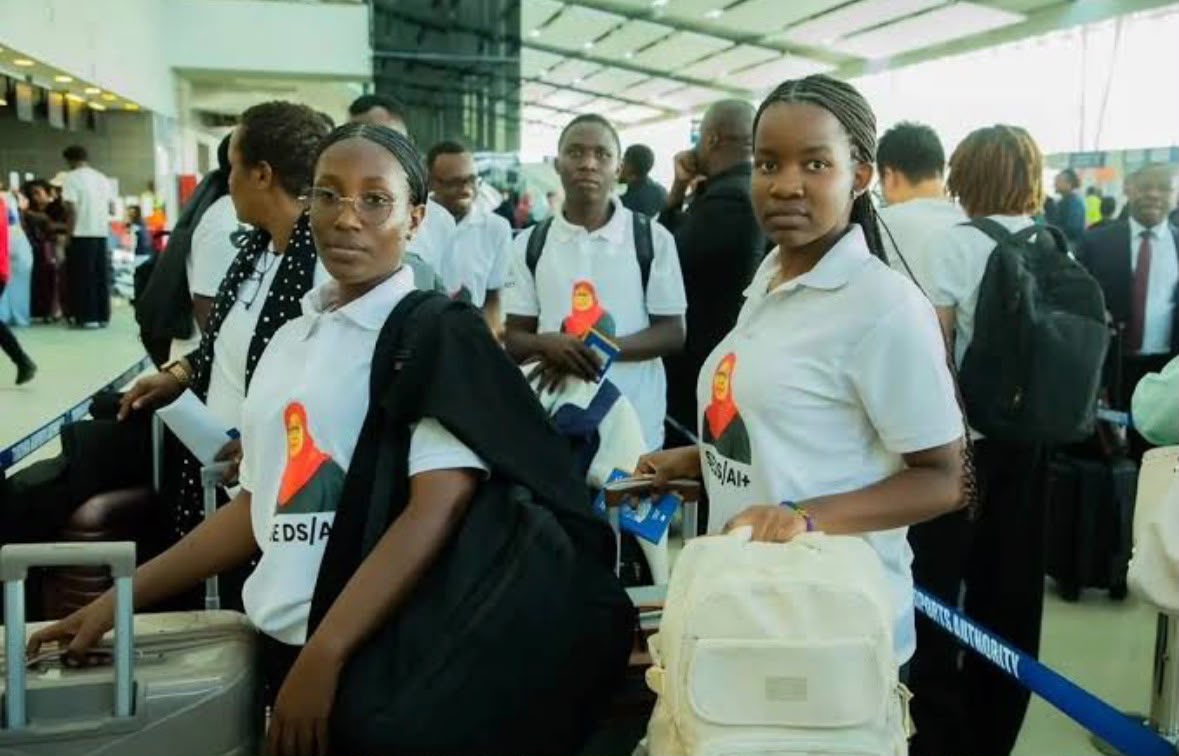
Alongside the standard loan scheme, the Samia Scholarship programme supports high-achieving students, with a focus on Science, Technology, Engineering and Mathematics. It began in the 2022/2023 academic year with 636 beneficiaries. For 2026/2027 the government aims to support 2,738 students through the programme, including 1,000 new ones. In the October allocation, 873 new students received 4.5bn/- and 926 continuing students received 5.1bn/-. According to Daily News, the scheme is intended to raise the number of professionals in fields tied to technological change and the needs of the modern economy.
HESLB also said the government is widening partnerships with institutions to bring in more sources of education funding, including work with the Bank of Tanzania. Details of that arrangement were not set out in the reporting.
Watch for further HESLB allocations through the 2026/2027 cycle as admissions are finalised, and for the full-year totals against the 1.06trn/- budget.