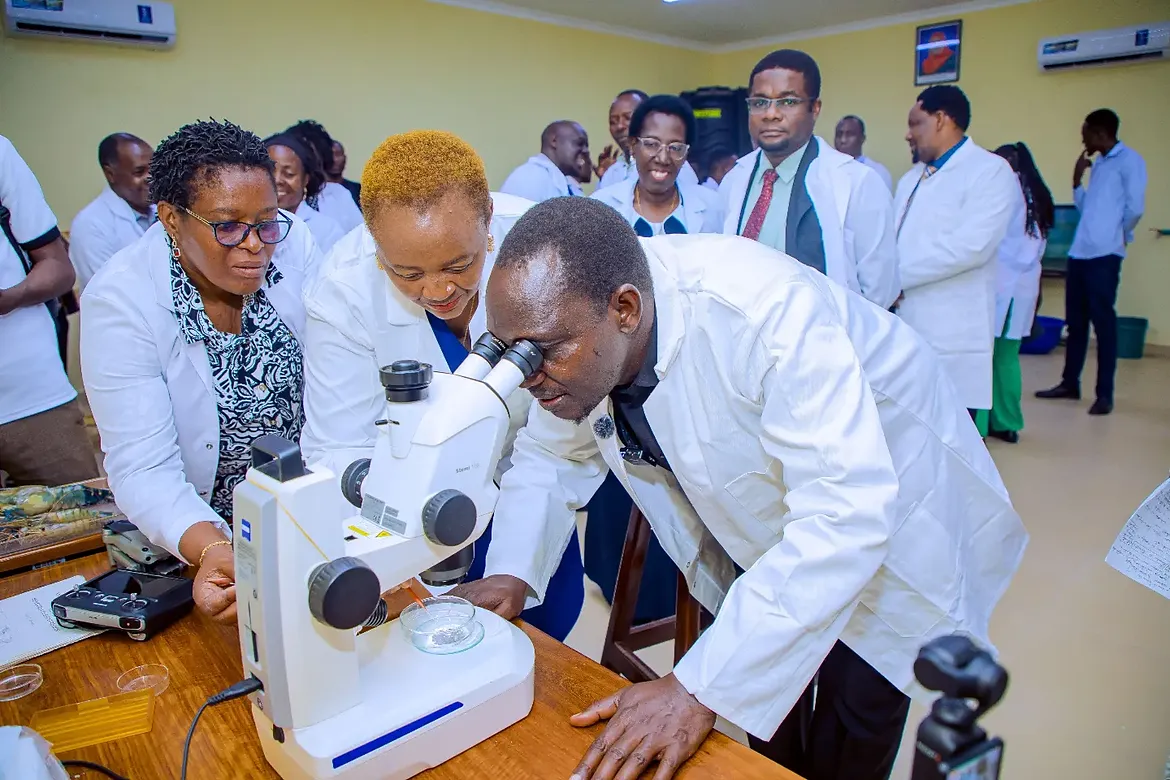
The Minister for Livestock and Fisheries, Dr Bashiru Ally Kakurwa, has inaugurated a laboratory at the Tanzania Fisheries Research Institute (TAFIRI) devoted to studying ocean acidification and its impact on marine organisms, according to Daily News. The facility sits at TAFIRI's headquarters in Kunduchi, Dar es Salaam.
Daily News reports that the investment is intended to strengthen Tanzania's ability to safeguard marine resources, support better investment choices in the blue economy, and preserve the economic and social gains that flow from those resources.
Why it matters
The laboratory forms part of the National and International Ocean Acidification Research Programme, which was set up in 2019. According to Daily News, that programme has already backed the gathering of data on shifts in ocean water conditions and how those shifts affect marine organisms.
For Tanzania, the stakes are practical as well as scientific. A large share of coastal livelihoods depends on fishing, aquaculture and seaweed farming, and the new facility is meant to give researchers the tools to test how those activities may hold up as seawater chemistry changes.
What researchers will test
TAFIRI scientists will run experiments examining ocean acidification alongside rising water temperatures and falling oxygen levels — conditions Daily News links to climate change. The work is expected to pinpoint which marine species face the greatest risk and to evaluate ways of improving their resilience, especially in aquaculture.
TAFIRI Director General Dr Ismael Kimirei said researchers hope to identify aquatic species that can tolerate acidification, warmer water and low oxygen. According to Daily News, the results are meant to help fishers and aquaculture farmers choose production activities that fit the environmental conditions where they live and work.
Dr Kimirei explained that ocean acidification occurs largely because seawater absorbs carbon dioxide from the atmosphere. That process, he said, can interfere with the growth and survival of many marine organisms, above all those that rely on calcium carbonate to build shells and skeletons.
He added that experiments would cover organisms including crabs, prawns, oysters and seaweed, in order to establish which species can endure changing ocean conditions. Daily News reports that the findings will be used to guide communities on which species suit aquaculture and seaweed farming in their particular areas.
Funding and partners
Joseph Olila, Marine and Coastal Conservation Manager at the International Union for Conservation of Nature (IUCN) in Tanzania, said the programme has cost roughly 500m/-, with 151m/- of that spent on building and equipping the laboratory, according to Daily News.
Olila said the programme also covers research buoys that monitor changes in ocean conditions. He said it is being carried out in partnership with the government through TAFIRI, with funding from the Embassy of Ireland in Tanzania, and that its purpose is to build the country's capacity to track shifts in the marine environment and to put research findings to use in decisions about managing marine resources and developing the blue economy.
What to watch is whether the laboratory's first experimental results translate into formal guidance for coastal communities on species selection.





