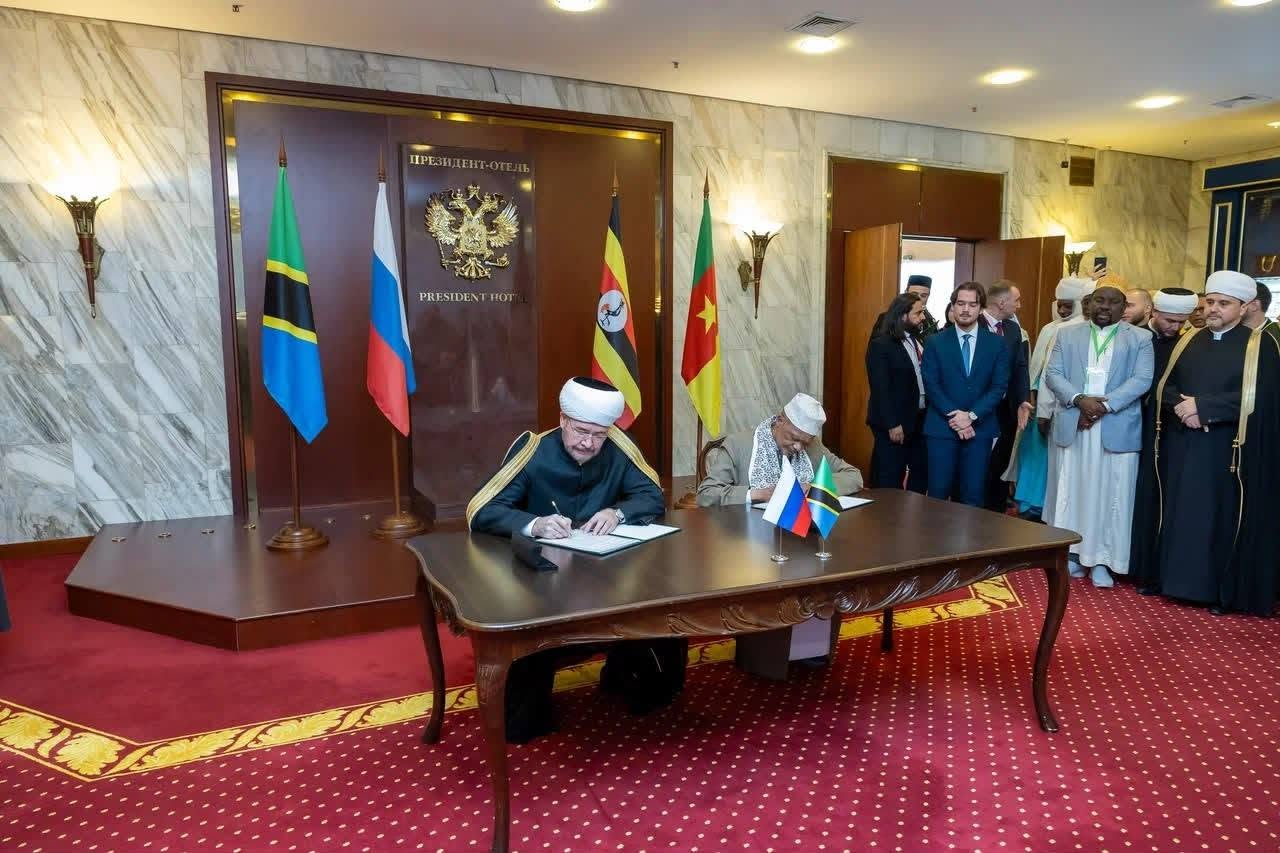
Tanzania's Chief Mufti, Sheikh Dr Abubakar Zubeir Bin Ally, and Russia's Mufti, Sheikh Rawi Ainuddin, have signed an agreement linking the Religious Affairs Department of the Russian Federation with the National Muslim Council of Tanzania, known as BAKWATA. The signing took place in Dar es Salaam, according to Daily News, which reported the ceremony on Wednesday.
The accord sets out a framework for the two bodies to work together on religious affairs. Its stated aims include encouraging peace and goodwill and drawing communities in the two countries closer together, the outlet reported.
Why it matters
The agreement gives BAKWATA, Tanzania's principal Muslim umbrella body, a formal channel to a Russian state religious institution. For Russia, it adds another strand to its religious diplomacy on the African continent.
Daily News framed the deal around shared goals of harmony and cohesion rather than any specific programme, and the report did not disclose the terms, duration or funding of the arrangement. What the signing does establish is an institutional relationship: two organised religious bodies agreeing to engage each other directly.
Tanzania's Muslim leadership has long maintained ties with counterparts abroad, and BAKWATA operates a foreign affairs directorate that handles such contacts. The new agreement places the Russian relationship within that existing structure.
Who attended the ceremony
The Tanzanian Mufti was not alone at the signing. Daily News reported that he was joined by Alhaj Sheikh Sharif Twahir Musawa, BAKWATA's Director of Foreign Affairs, and Sheikh Othman Kaporo, who heads the council's Qur'an and Da'awa Department.
Their presence points to the parts of BAKWATA most likely to carry the agreement forward. The foreign affairs office would be the natural point of contact with the Russian side, while the Qur'an and Da'awa department oversees preaching and outreach work, areas that fall squarely within the "religious matters" the agreement covers.
The report named Sheikh Rawi Ainuddin as Russia's Mufti and the counterpart signatory, representing the Religious Affairs Department of the Russian Federation. No further details of the Russian delegation were given.
A relationship without published detail
Beyond the stated goals of peace, love and unity, the reporting leaves the practical content of the cooperation open. Daily News did not describe joint projects, exchange programmes, scheduled events or any mechanism for implementing the agreement.
That absence is worth noting for observers trying to gauge what the pact will produce. Cooperation agreements between religious institutions can range from symbolic declarations to structured exchanges of scholars, students or humanitarian work. The available reporting places this one in the former category until further details emerge.
The same Daily News report referenced separate ongoing work between Tanzania and Russia on a payment system for trade and investment, indicating that official contact between the two countries extends beyond religious affairs. The two strands are distinct, but they suggest a broader period of engagement.
What to watch
Whether BAKWATA and the Russian Religious Affairs Department publish the text of the agreement, or announce joint activities under it, will show how far the cooperation goes beyond the signing ceremony.