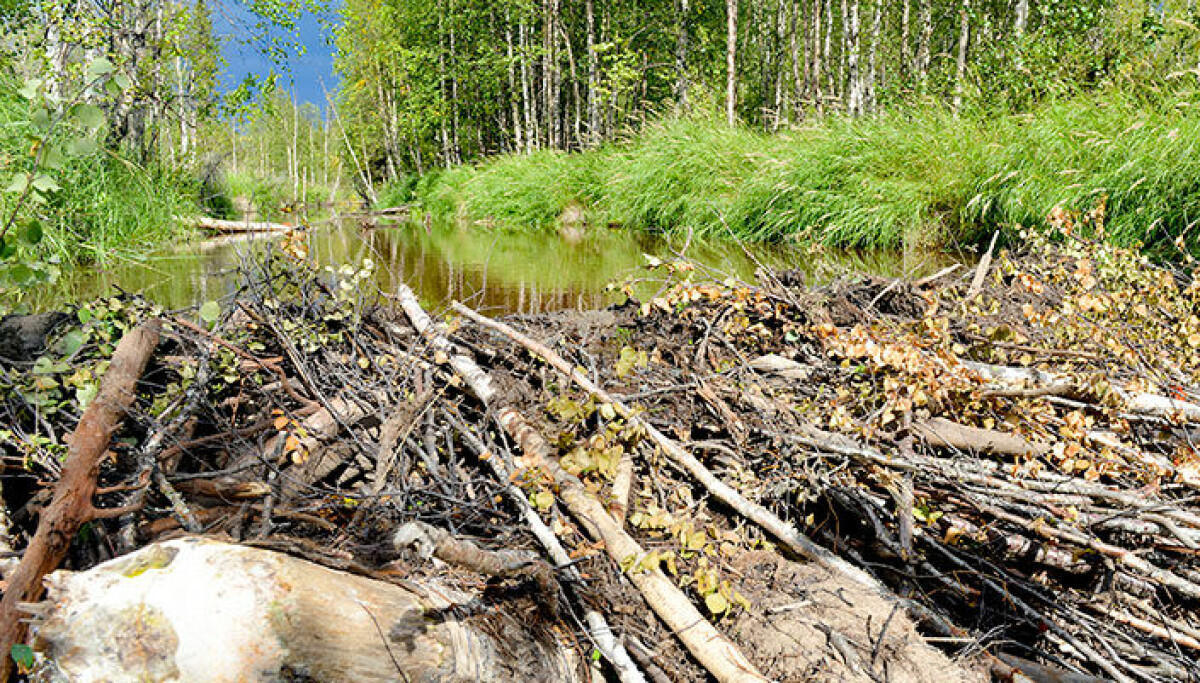
A new doctoral thesis from the Swedish University of Agricultural Sciences (SLU) concludes that wetlands built up by beaver dams carry no greater risk of spreading tularemia than other wetlands, Jaktjournalen reports. The finding challenges a widespread assumption that beavers play an outsized role in passing infections to other animals and to people.
Tularemia, known in Swedish as harpest, is caused by bacteria and affects both wildlife and humans. According to Jaktjournalen, the infection is most common in Norrland but occurs across large parts of the rest of Sweden. People can contract it through contaminated water, through mosquito bites, or through close contact with infected animals.
Why it matters
The idea that beavers amplify disease has circulated widely, and the SLU work puts that assumption to a direct test. If beaver-built wetlands were in fact hotspots for infection, they would deserve special attention from hunters, landowners and public health officials. The thesis suggests they do not, which shifts the focus toward water in the landscape more broadly and toward the insects that breed in it.
The research is also a reminder that disease risk in wetlands is not simply a matter of which animals live there. As Jaktjournalen reports, the researchers found that infected hares turn up more often in wet environments — a pattern that appears to hold regardless of whether beavers are present.
What the researchers tested
The SLU team set out to examine whether beavers spread infection more than other animals do. They analysed water samples taken from beaver dams and from other wetlands, and paired those with tissue and faecal samples collected from beavers themselves. In total, 21 different infectious agents were checked, including the bacterium responsible for tularemia.
The results showed that infectious agents appeared at roughly the same frequency in wetlands with beavers as in wetlands without them. Most of the beavers examined carried none of the agents tested for.
"When we have now investigated and evaluated the risks, we see that the beaver in Sweden does not appear to cause increased spread of infection," Lovisa Hökby, a doctoral student at SLU, said in comments reported by Jaktjournalen.
Water, hares and mosquitoes
The thesis does not dismiss wetland risk altogether. Jaktjournalen reports that hares carrying tularemia are found more often in damp habitats, and the researchers point to water in the landscape as a factor that raises infection risk in hares. One possible explanation offered by the team is that hares, like people, are being infected by mosquitoes.
"The conclusion is that water in the landscape increases the risk of infection in hares. One conceivable explanation is that even the hares have been infected by mosquitoes," Hökby said, according to Jaktjournalen.
That framing moves the discussion away from a single species and toward the shared conditions — standing water and biting insects — that connect wetlands, wildlife and human exposure. It also fits with what is already known about how tularemia reaches people, since mosquito bites and contact with contaminated water are both recognised routes of infection.
For hunters and others who spend time outdoors in affected regions, the practical picture is unchanged: the bacterium remains present in much of Sweden, and wet ground is where the risk concentrates. What the new work adds is a reason not to single out beaver ponds as a particular hazard.
What to watch
The thesis has been completed and its conclusions are now public through Jaktjournalen's reporting. Whether the findings feed into practical guidance for hunters, landowners or health authorities is the next question to watch, along with any further work on the role of mosquitoes in transmitting tularemia to wildlife.





