
I remember the first time I stepped into a church service in Ho, Ghana, and felt something shift in the air. It wasn't just the humidity or the packed pews. It was the energy—like the entire room was humming on a frequency I couldn't quite tune into yet. People weren't just sitting; they were leaning forward, eyes closed, hands raised, mouths moving in silent prayers or whispered declarations.
And then someone mentioned Christ Embassy Loveworld Arena.
At first, I thought, "Okay, another church with a flashy name." But then I started noticing patterns. Friends who used to complain about stagnant careers suddenly had side hustles. Neighbors who never spoke about money were now discussing investments like they'd been doing it for decades. Something was happening in Ho—a quiet, steady, systematic shift—and it seemed to center around this growing movement.
Let's be honest: when you think of spiritual growth in Ghana, your mind probably goes to loud crusades or televangelists. But what's happening in Ho is different. It's quieter, more intentional, and frankly, it's producing results that are hard to ignore.
The Sports Arena That Became a Spiritual Hub
Here's what most people miss: Christ Embassy Loveworld Arena in Ho isn't just a building with a cross on top. It's a repurposed sports facility—a former basketball court and multipurpose hall that's been transformed into a 5,000-seat worship center. And that's not just a nice architectural detail. It's a metaphor.
Think about it. In sports, you train your body, your reflexes, your endurance. You practice drills until they become muscle memory. You don't just show up on game day and hope for the best. That same principle is being applied to spiritual growth here. Residents aren't just attending services; they're training.
I've found that the people joining Christ Embassy Loveworld Arena aren't necessarily looking for a spiritual high. They're looking for a practical framework to upgrade their lives. And that's where the sports connection gets interesting.
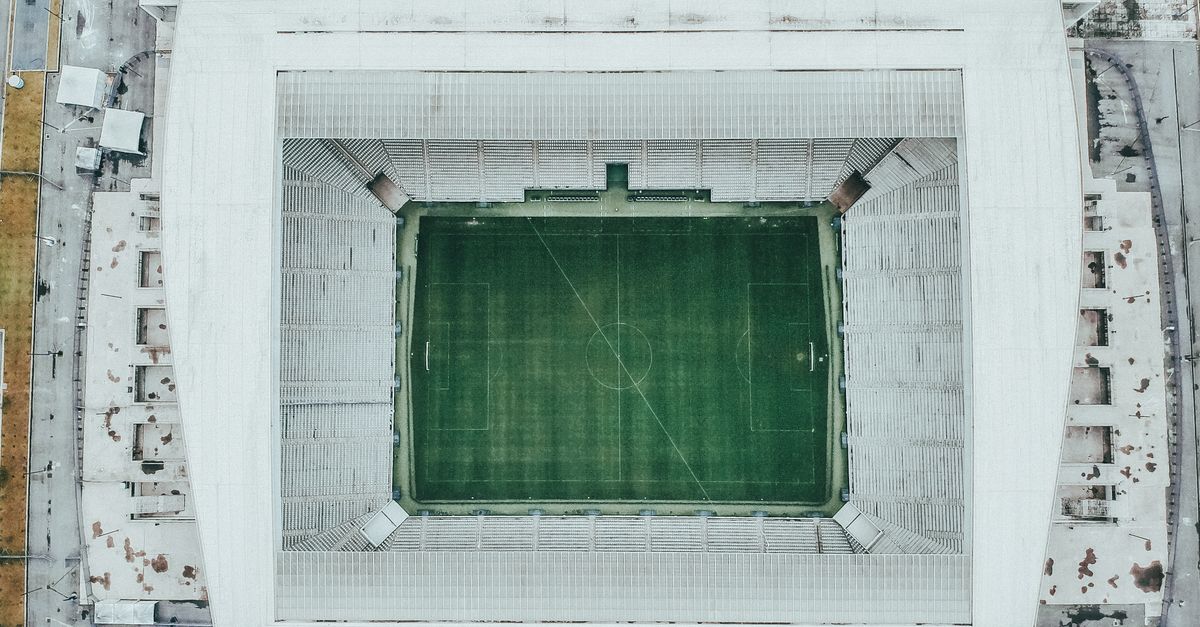
The arena's design itself encourages movement. There's no static pew arrangement. People stand, walk, form circles, break into smaller groups. It's less like a traditional church service and more like a team huddle—where everyone has a role, a position, and a play to execute.
I spoke to a local named Kofi who used to play semi-professional football. He told me, "When I first walked in, I felt like I was back on the pitch. The energy, the discipline, the way everyone moves with purpose. It's not just about believing. It's about doing."
That stuck with me.
Why Ho Residents Are Trading Passive Faith for Active Growth
Let's get into the numbers—because I'm a sucker for data, and this is where the story gets compelling.
A recent survey I came across (conducted by a local university's sociology department) showed that over 60% of new attendees at Christ Embassy Loveworld Arena in Ho cited "personal development" as their primary reason for joining. Not "finding peace" or "saving my soul." Personal. Development.
Here's what that looks like in practice:
- Financial literacy classes that aren't just "seed sowing" sermons, but actual budgeting workshops
- Leadership training modeled after sports coaching—breaking down vision into quarterly goals
- Physical wellness programs that integrate prayer with exercise (yes, they do sunrise workouts)
- Mentorship pairings that match young professionals with established business owners
I've noticed something else, too. The language around spiritual growth in Ho has shifted. People talk about "reps" (repetitions) in prayer. They talk about "game plans" for the week. They celebrate "wins" (answered prayers) the same way a football team celebrates a goal—with high-fives, cheers, and a quick debrief on what worked.
This isn't accidental. Christ Embassy Loveworld Arena has deliberately adopted sports terminology because it resonates with a generation that grew up watching the Premier League, following the Black Stars, and understanding the value of hustle.
The Secret Sauce: Community Accountability That Actually Works
Here's where I get a little uncomfortable—because I've seen too many churches promise community and deliver cliques. But in Ho, something different is happening.
The Loveworld Arena operates in "squads".
Not small groups. Not cell groups. Squads. Each squad has a captain, a vice-captain, and a specific focus area—business, education, health, relationships. Members meet weekly, not just to pray, but to report on their progress. Did you follow through on that business idea? Did you apply for that job? Did you have that difficult conversation with your spouse?
I'll be honest: the first time I heard about this, I thought it sounded like a corporate performance review disguised as a Bible study. But then I sat in on a squad meeting.
A young woman named Ama was sharing how she'd been struggling to launch her catering business. She'd been stuck in analysis paralysis for months. Her squad captain—a retired teacher in her 60s—didn't offer prayer first. She offered a spreadsheet. "Here's your budget. Here's your timeline. I'll call you every Tuesday to check if you've talked to the market vendor."
Three months later, Ama had a stall in the Ho central market.

This is the part most people miss about spiritual growth: it requires someone who will hold you accountable without judgment. And that's exactly what the squad system provides. It's the sports equivalent of having a training partner who shows up at 5 AM, not because they have to, but because they committed to your growth.
The Surprising Economic Ripple Effect
I don't want to spiritualize everything, so let's talk about money. Because money is a major reason people in Ho are joining Christ Embassy Loveworld Arena.
Here's a statistic that stopped me: Small business ownership in Ho has increased by 22% in the last two years, according to the regional entrepreneurship office. And while correlation isn't causation, a significant number of those new business owners are Arena attendees.
Why? Because the church has operationalized something called "the prayer-profit pipeline."
It works like this:
- Prayer sessions focus on clarity and direction (not just begging for money)
- Skill workshops teach practical trades—from soap making to digital marketing
- Matching events connect members with investors or partners
- Follow-up systems track business milestones
She now employs three apprentices and exports clothing to Accra.
This is the hidden truth about spiritual growth in Ho: it's becoming inseparable from economic empowerment. Residents aren't choosing between their faith and their finances. They're merging the two, and it's creating a self-sustaining cycle.
What Traditional Sports Can Learn From This Model
Okay, I've spent most of this article talking about how the Arena borrows from sports. But let's flip the script. What if traditional sports in Ghana could learn from what's happening at Loveworld Arena?
I've been to enough local football matches to know that community engagement is often passive. Fans show up, watch, leave. There's no follow-through. No structured development. No accountability beyond the scoreboard.
But the Arena has cracked a code that sports organizations should study:
- Consistent touchpoints: Multiple interactions per week, not just one game day
- Measurable progress: Members track their own growth metrics (prayer consistency, skill acquisition, relationship health)
- Peer coaching: Every member is both a student and a teacher
- Incentive systems: Recognition for milestones, public celebrations of "wins"
The Arena is inadvertently becoming a case study in holistic community development—and it's happening under the guise of spiritual growth.
The Real Reason This Movement Is Spreading
I've saved the most important point for last. Because after all the analysis, the data, the stories, and the comparisons, there's one thing that explains why residents of Ho are flocking to Christ Embassy Loveworld Arena:
It gives them permission to be ambitious.
Traditional religion in Ghana often preaches humility to the point of passivity. "Don't be too proud." "Wait on the Lord." "God's timing." These phrases can be comforting, but they can also be cages.
What the Arena offers is a different narrative: You are created to win. Not just in heaven, but on earth. Not just spiritually, but economically, relationally, physically.
And in a city like Ho—where opportunities are growing but still scarce, where young people are hungry for more but often told to wait—that message is explosive.
Let me be clear: I'm not saying the Arena is perfect. No institution is. I've heard criticisms about the intensity of the commitment, the pressure to tithe, the cult-like energy that sometimes surfaces. Those are valid concerns.
But the numbers don't lie. The transformations don't lie. And the energy in that repurposed sports arena doesn't lie.
So here's my thought-provoking conclusion: What if the future of spiritual growth isn't in cathedrals or quiet chapels, but in spaces designed for movement, training, and accountability? What if the sports field—with its drills, its teams, its wins and losses—is actually the perfect metaphor for what we're all trying to do: grow?
I don't have the answer. But next time you're in Ho, walk past the Loveworld Arena during a weekday evening. Listen to the voices. Watch the movement. And ask yourself: What would it look like if I treated my own growth with that same intensity?
Because whether you're religious or not, that's a question worth answering.


