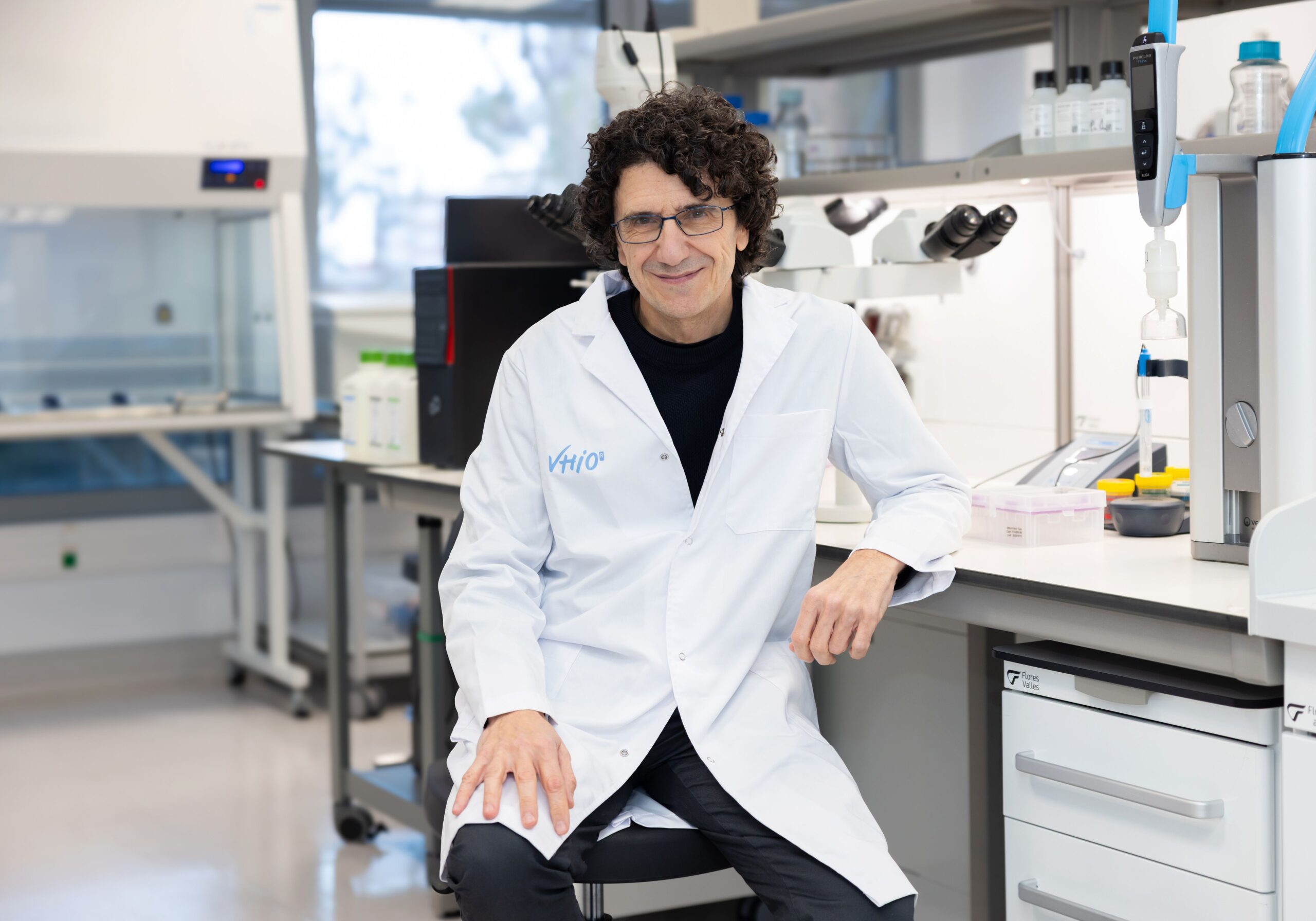
A research group at the Vall d'Hebron Institute of Oncology (VHIO) in Barcelona has identified a weakness in liver cancer cells that could shape future drug development, according to iSanidad. The findings, published in the Proceedings of the National Academy of Sciences (PNAS), center on two proteins, CDK16 and CDK18, that tumor cells use to fix damaged DNA and continue multiplying. The work was led by Dr. Marcos Malumbres, an ICREA professor who heads VHIO's Cell Cycle and Cancer Group and directs its Systems Oncology Program, and it focused specifically on hepatocellular carcinoma, the most common primary liver tumor in adults.
Why it matters
Advanced liver cancer remains hard to treat. iSanidad reports that while existing therapies can control the disease and extend survival, late-stage cases still present serious difficulties. The VHIO team's approach is to look for dependencies inside tumor cells that current drugs do not touch, which could open the door to treatments acting through different mechanisms.
Malumbres framed the problem in practical terms, according to iSanidad: developing new therapies requires understanding what keeps a tumor cell alive despite the damage it accumulates. In this work, his team identified two proteins that back each other up. Removing both at once, he said, leaves the tumor without an important support system for repairing its genetic material.
The study also adds to a broader effort to map the cyclin-dependent kinase (CDK) family, a group of proteins that regulate various cellular activities. Some members are already well known in cancer medicine: inhibitors of CDK4 and CDK6 are part of standard treatment for advanced hormone-positive breast cancer, iSanidad notes. Other members, including CDK16 and CDK18, had gone largely unstudied until now.
A backup system that hides a weak point
According to iSanidad, the VHIO researchers showed that some liver tumor cells depend on CDK16 and CDK18 working in concert to repair their DNA and keep dividing. When both proteins are switched off at the same time, damage builds up irreversibly and the cells lose the ability to survive. Disabling either one alone is not enough, because the two compensate for each other — a redundancy that appears to have concealed the vulnerability.
The paper also describes part of the mechanism behind this dependence. Genetic material sits inside the cell nucleus, enclosed by a membrane that controls the exchange of molecules with the rest of the cell through structures called nuclear pores, which function as gateways. iSanidad's coverage of the study places access to the nucleus at the center of the story, describing it as a weak point in hepatocellular carcinoma. The outlet's headline framing refers to a vulnerability "in the liver cancer" that opens a path to new treatments "through the cell nucleus."
Other Spanish outlets picked up the results with similar emphasis. 20Minutos reported that Spanish scientists had found a vulnerability in tumor cells opening a route to new treatments, while Libertad Digital described the work as a Spanish milestone in showing how to strike hepatocellular carcinoma by blocking two proteins. Demócrata highlighted a weak point detected in the nucleus of liver cancer cells pointing toward new therapies, and VHIO's own release referred to a vulnerability at the gates of the tumor cell nucleus.
What the finding does and does not establish
The research identifies a biological dependency and outlines the mechanism behind it; it does not report a new drug or clinical results. iSanidad's account presents the work as a basis for designing future therapies rather than a treatment ready for patients. That distinction matters for readers weighing the news: the value of the study lies in naming specific targets — CDK16 and CDK18, disabled together — that drug developers could pursue, and in explaining why hitting both at once may be necessary.
The choice of hepatocellular carcinoma as the focus is significant on its own. As the most frequent primary liver cancer in adults, it is a disease where new mechanistic leads are scarce relative to the burden it places on patients. Malumbres told iSanidad that identifying new dependencies in tumor cells allows researchers to seek treatments that act on mechanisms different from those addressed by current therapies — a route toward options for patients whose disease has progressed despite existing care.
The PNAS publication gives the findings a peer-reviewed footing, and the involvement of VHIO's Cell Cycle and Cancer Group places the work within a long-running institutional focus on how cells divide and how that process goes wrong in cancer. The CDK family has already produced approved medicines in breast cancer, which gives the broader strategy a track record, even though CDK16 and CDK18 remain far from that stage.
What to watch next is whether other research groups confirm the dependence in additional liver cancer models and whether drug candidates capable of blocking both proteins simultaneously can be developed and tested.





