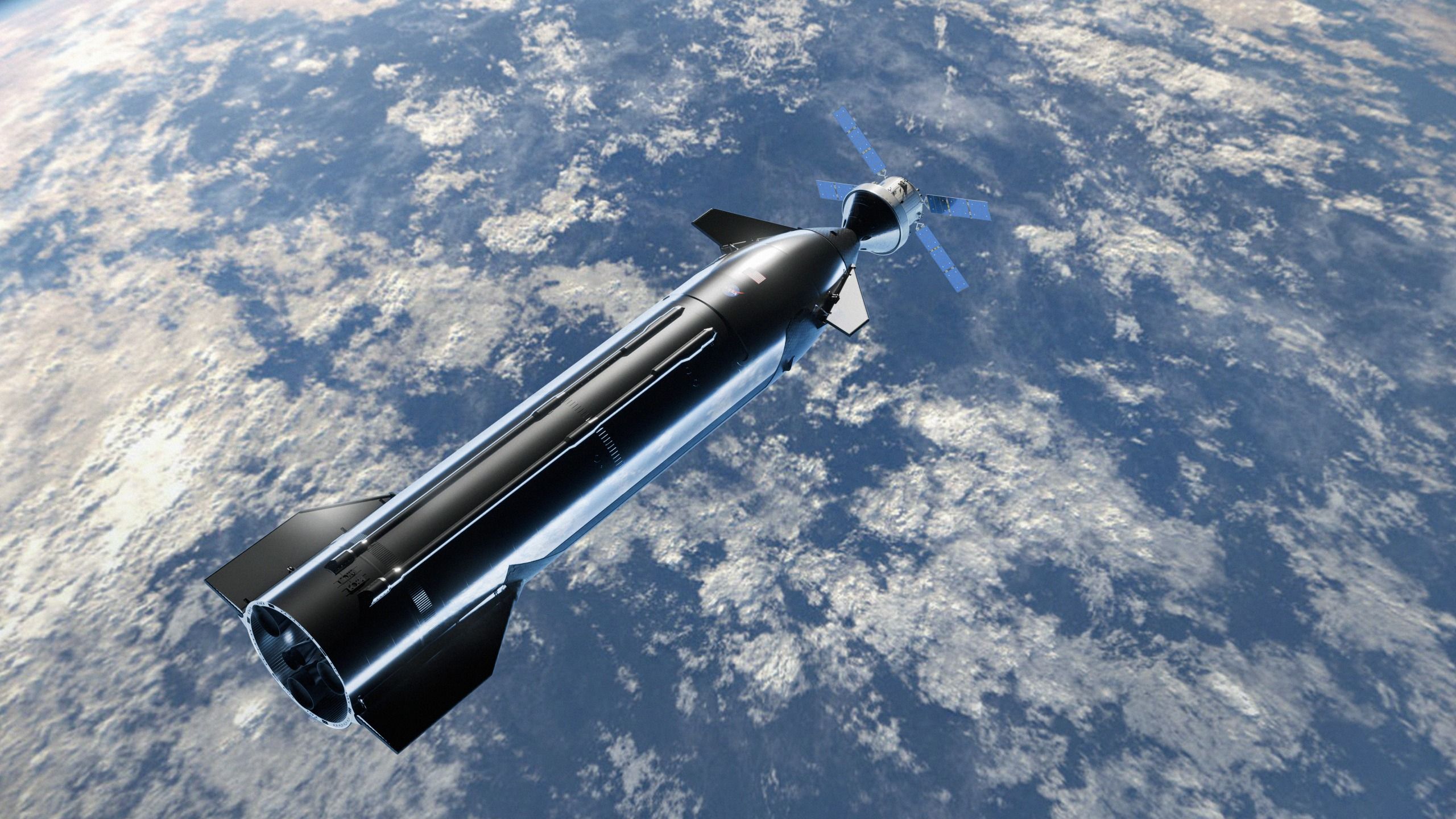
SpaceX's Starship lunar lander will need to be refuelled in orbit before it can carry NASA astronauts to the moon on the Artemis IV mission, and according to Space, two basic questions about that process remain unresolved: how many tanker launches it will take, and how the elaborate sequence of dockings will actually work.
The launch count has been disputed for years. Space reports that by summer 2021 it was widely accepted that a single Starship launch could not deliver a moon landing on its own, and a Government Accountability Office audit at the time put the possible figure at as many as 16 refuelling flights. Earlier this month, a member of the Aerospace Safety Advisory Panel said the number could reach 22. SpaceX founder and CEO Elon Musk rejected that figure on his social media platform X, writing that the true count would be nearer six or eight, according to Space.
Why it matters
Artemis IV is slated to be the first Artemis mission that puts astronauts on the lunar surface, and the lander is central to it. If SpaceX cannot show that its orbital refuelling strategy works, or cannot complete an uncrewed lunar landing by the end of next year, NASA retains the option of choosing Blue Origin's Blue Moon lander instead — provided Blue Moon meets its own required milestones in time, Space reports. The refuelling question is therefore not a technical footnote but a factor that could decide which company lands the first Artemis crew.
A step-by-step sequence with gaps
NASA published a graphic during a recent Artemis update setting out the order of operations for Artemis IV, and Space's account of it shows a mission built around a fuel depot parked in low Earth orbit.
Under the outline, a Space Launch System rocket would send four astronauts aboard the Orion capsule to high Earth orbit. There they would rendezvous and dock with the Starship lander. Using Starship's engines, the two vehicles would burn toward the moon and separate once they reached low lunar orbit. Two astronauts would stay with Orion while the other two descend to the surface in Starship. After time on the lunar surface, the pair would launch back to lunar orbit, dock with Orion and begin the return to Earth.
What the outline leaves open is how the lander gets fuelled before any of that happens. According to Space, SpaceX would first launch a depot ship to low Earth orbit to hold the propellant the lander will eventually need. The NASA graphic shows a tanker Starship docked to the depot with the word "(multiple)" beside it, meaning the number of flights required for that first fill is not specified. The Starship lander would then launch and join the depot in low Earth orbit for its first refuelling stop.
From there, the lander would undock and climb to a higher altitude that NASA labels the "final tanking orbit." At some point after the lander leaves low Earth orbit, SpaceX would launch another set of "(multiple)" tankers to refill the depot, which would then travel to meet the lander in that final orbit for a last propellant transfer. Only after that second farewell would Starship ascend to high Earth orbit to meet Orion.
The NASA graphic shows the SLS rocket launching Orion before Starship receives its final load of fuel. According to Space, NASA says on its website that this staggered sequence gives the agency flexibility over when SLS can launch the crew, and that the approach reduces the amount of propellant SpaceX needs for the mission. Part of that saving comes from having Starship carry Orion directly to low lunar orbit rather than to the much higher orbit contemplated in earlier mission plans.
Estimates that keep moving
The wide spread in refuelling estimates reflects how early the practice still is. The 2021 GAO audit figure of up to 16 flights and the safety panel's figure of 22 both describe a mission architecture in which many tanker launches are needed to accumulate propellant in orbit; Musk's counter-estimate of six to eight describes a far leaner operation. Space reports both without resolving the discrepancy, and NASA's own graphic declines to put a number on the tanker flights at either stage of the sequence.
None of the current plan is final. Space notes that the details of how the mission pieces fit together should become clearer as the launch date approaches, and that the refuelling strategy is one of several open questions awaiting an answer.
What to watch: whether SpaceX demonstrates orbital propellant transfer and completes an uncrewed lunar landing by the end of next year — the milestones Space reports NASA has tied to keeping Starship as the Artemis IV lander.





