Here’s the thing: the average American has less than $1,000 in savings. So if you’re sitting on that first grand, you’re already ahead of the curve. But here’s the catch—what you do with it next determines if you stay ahead or get lapped by inflation.
Last year, I watched my neighbor pour $1,000 into a pressure washer and turn it into $4,000 in three weekends. Meanwhile, my cousin dumped the same amount into a meme stock and watched it evaporate faster than a 3 AM Taco Bell run. That’s the tension, right? The hustle versus the market. The sweat equity versus the compound interest.
So, where does your first $1,000 actually belong this year? Let’s break it down without the fluff.

The $1,000 Trap Most People Fall Into
I’ve made this mistake myself, so I’m not here to judge. You get that first big chunk of disposable income, and your brain goes into gambling mode. You start browsing Reddit threads about options trading or look at a dropshipping course that promises “passive income” (spoiler: it’s never passive).
Here’s what most people miss: $1,000 is a weird number. It’s too small to retire on, but too big to just blow on a weekend. The trap is thinking you need to pick one winner.
Let’s be honest—if you dump that entire grand into a single stock, you’re not investing. You’re speculating. And if you dump it into a side hustle that requires inventory, ads, and 40 hours a week, you’re just buying a second job.
The real question isn’t which is better. It’s which one fits your current timeline and risk tolerance.
The Stock Market: Slow, Boring, and Probably Your Best Bet
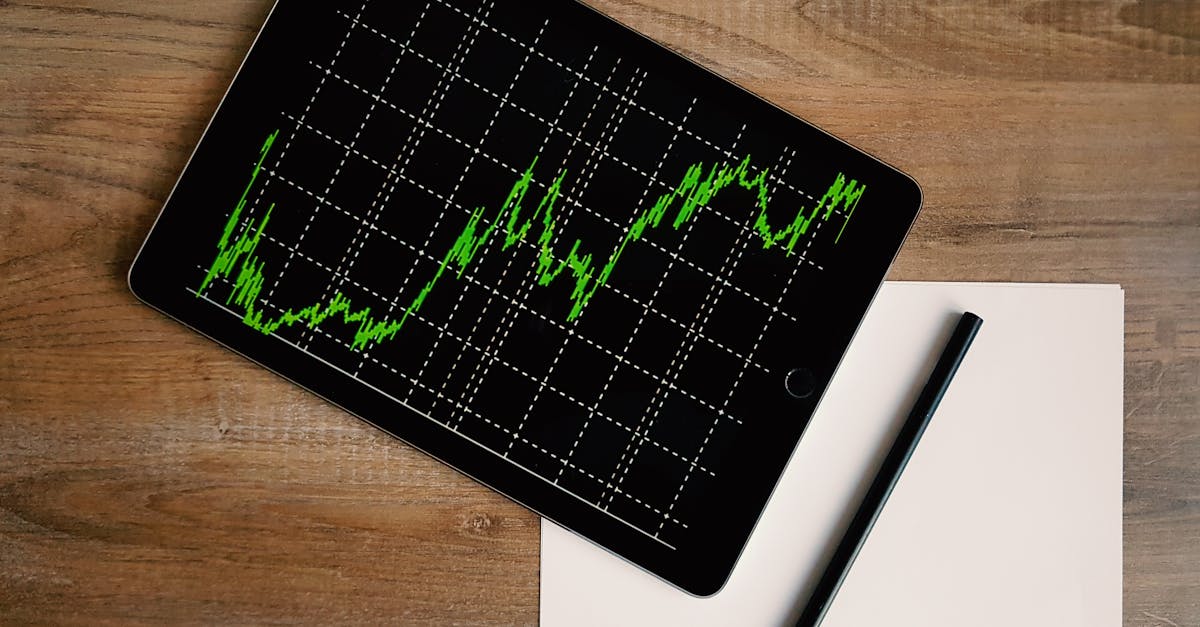
I know, I know—stocks sound boring compared to flipping sneakers or launching a print-on-demand empire. But here’s a little-known fact that changed my perspective: the S&P 500 has historically doubled every 7-10 years. That means your $1,000 could be $2,000 without you lifting a finger.
But here’s the catch—most people can’t handle the emotional rollercoaster. I’ve found that when the market dips 10%, the average retail investor panics and sells. They lock in losses. Meanwhile, the people who just set it and forget it come out ahead.
If you go the stock route, don’t buy single stocks with $1,000. Buy a low-cost index fund like VOO or VTI. You’ll own a slice of 500 companies. You won’t get rich overnight, but you also won’t wake up to a -90% day.
The biggest advantage? Time. The earlier you start compounding, the more your future self thanks you. A 25-year-old who invests $1,000 at 7% annual return has about $15,000 by retirement. Not life-changing, but it’s a foundation you didn’t have to break a sweat for.
The Side Hustle: Faster Cash, Higher Ceiling, More Sweat
Let’s flip the coin. I’ve personally run a few side hustles—dog walking, writing gigs, even selling vintage clothes on eBay. The truth? You can turn $1,000 into $10,000 in a year if you pick the right hustle. But that’s a big “if.”
Here’s what the gurus don’t tell you: most side hustles require your time. You’re trading hours for dollars. That $1,000 might buy you equipment, inventory, or software, but it doesn’t buy you freedom. You still have to do the work.
The best side hustles for $1,000 right now:
- Pressure washing / window cleaning – $500 for a good machine, $200 for supplies, $300 for gas and marketing. You can charge $150-300 per job. Do 5 jobs and you’ve already doubled your money.
- Local service arbitrage – Hire someone on TaskRabbit for $50 to clean gutters, then charge homeowners $200. You manage the calls and scheduling. Minimal labor, maximum margin.
- Digital products (templates, Notion dashboards, presets) – Costs $0 to make, $100 for a website, $200 for ads. If you find a niche (budget planners, wedding checklists), you can sell unlimited copies.
- Flipping furniture – Hit up Facebook Marketplace, buy solid wood pieces for $20-50, paint and refinish, sell for $200-400. $1,000 can buy 20-30 pieces in a month.
The Hybrid Play: Do Both (Here’s the Secret Sauce)
I’ve found that the smartest move isn’t picking one—it’s splitting the difference. Here’s what I did and what I recommend to friends:
Take $500 and put it into an index fund. Set up automatic recurring deposits of $25 a month. That’s your future money. It grows while you sleep.
Take the other $500 and launch a micro side hustle—something that doesn’t require a ton of inventory or time. For me, it was a neighborhood dog walking service. I spent $200 on a website and flyers, $100 on supplies, and kept $200 as float for expenses. Within two months, I had 6 regular clients at $40 per walk. That’s $960 a month.
Here’s the key: reinvest the side hustle profits back into the stock market. Now you’re not just splitting $1,000—you’re creating a snowball. The hustle funds the long-term investment. The investment gives you a safety net. It’s the financial equivalent of having your cake and eating it too.

The $1,000 Mindset Shift Nobody Talks About
I’ll leave you with this: $1,000 is a test, not a destination. It’s a psychological barrier. Most people never save this much. If you’re here, you’ve already won half the battle.
What I’ve learned from my own mistakes is that the money itself isn’t the point. It’s the habit. Every dollar you save and invest builds a muscle. That first $1,000 teaches you discipline. The second $1,000 teaches you patience. The tenth $1,000 teaches you confidence.
So, side hustle or stock market? Honestly? Do both. The stock market gives you time. The side hustle gives you control. Together, they’re unstoppable.
Your move. What are you going to do with that first grand?