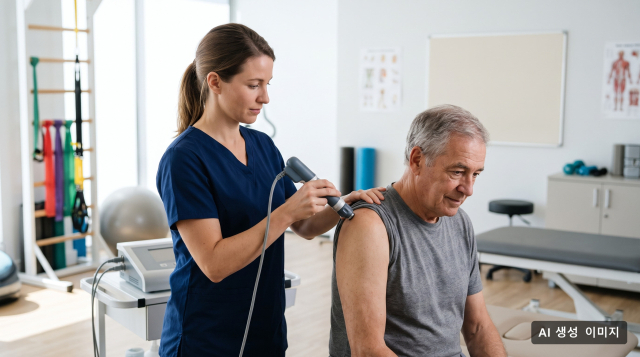
A large pooled analysis has found that shockwave therapy, a common treatment for frozen shoulder, reduces pain in the short term, but whether the benefit lasts beyond three months is still unknown. The findings were published in The BMJ as a systematic review and network meta-analysis, according to 매일신문.
The researchers combined results from 189 randomized controlled trials involving 12,988 patients with frozen shoulder, medically known as adhesive capsulitis. Patients in the included studies had an average age of 54. The team compared treatments on pain, physical function, range of motion and side effects.
Why it matters
Frozen shoulder occurs when the connective tissue surrounding the shoulder joint thickens, stiffens and becomes inflamed, causing pain and restricted movement. It affects roughly 2 to 5 percent of the general population and is most common among people in their 50s and 60s.
Because the condition is widespread and recovery is often slow, patients and clinicians face a crowded field of treatment options with uneven supporting evidence. A comparison of this scale helps clarify which approaches have the strongest short-term backing — and where the gaps lie.
What the evidence showed
On moderate-certainty evidence, extracorporeal shockwave therapy — which delivers low-energy sound waves to damaged tissue to encourage blood flow and healing — lowered short-term pain by an average of 1.97 points on a 0 to 10 scale compared with general care.
The analysis also pointed to possible gains in arm function, lifting the arm and moving it out to the side. However, the researchers rated the evidence for these outcomes as low certainty and noted inconsistencies across the data.
Manual therapy performed under anesthesia also drew attention for its short-term results. When doctors moved the shoulder directly while the patient was anesthetized — a technique used to stretch the joint's range of motion — and combined it with a steroid injection, forward flexion improved by an average of 33.29 degrees compared with general care. Manual therapy alone, without the injection, produced an improvement of 26.16 degrees.
For most other treatments, the evidence was far less certain. The same was true for effectiveness beyond three months and for comparisons of safety between treatments. The researchers also flagged incomplete and inconsistent reporting of side effects as a limitation of the underlying studies.
A guide for early decisions, not a long-term answer
According to 매일신문, the researchers said their findings can serve as a reference when deciding on an initial course of treatment. They stressed, however, that the lack of evidence on long-term benefits and safety means patients should discuss treatment choices thoroughly with their clinicians.
The review's short-term signal for shockwave therapy and anesthetized manual therapy is relatively clear, but the durability of either approach remains an open question. Watch for future trials with longer follow-up and more standardized reporting of adverse events, which would be needed before the long-term picture comes into focus.





