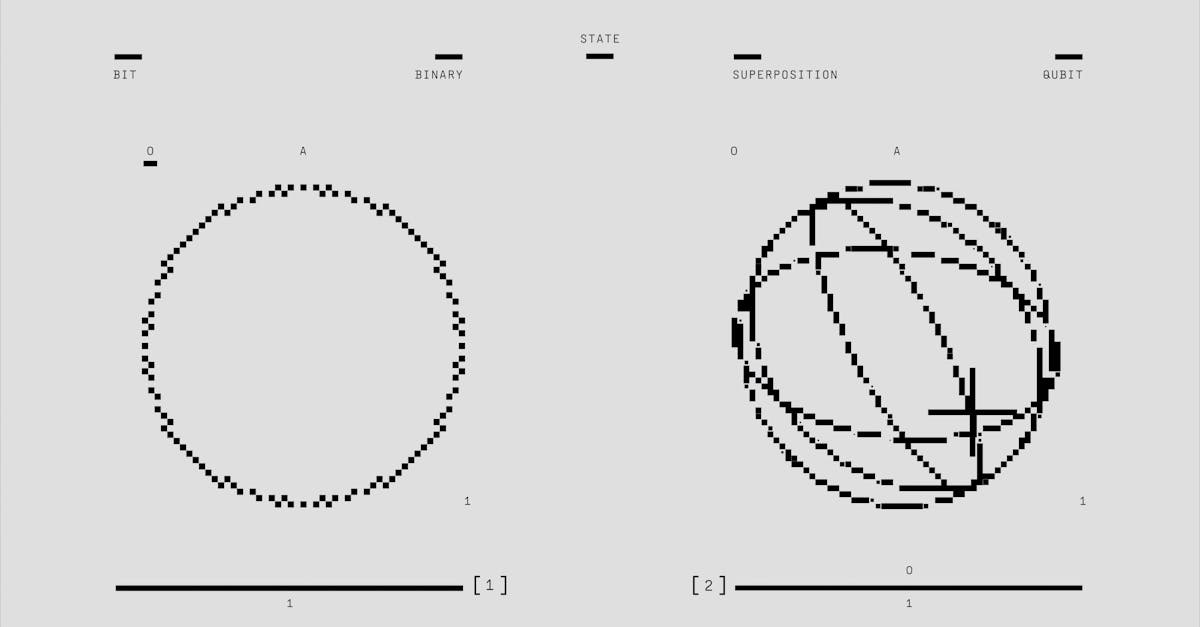
Let me tell you something that's been rattling around my brain for weeks now. I want you to picture the universe as a single, infinite sheet of paper. Now picture a second sheet lying right on top of it — so close you could almost feel it, but completely invisible to you. Every once in a while, something bleeds through from one sheet to the other. That's the fever dream that physicists have been chasing for decades, and according to a flurry of breathless headlines, we might have just caught our first glimpse of it.
Here's the part where I have to be the grown-up at the party: the truth is messier, weirder, and honestly more interesting than the clickbait version. So let's actually dig into what scientists found, why it matters, and whether you should be excited or just roll your eyes.
The Experiment That Launched a Thousand Headlines
The story traces back to an experiment involving a neutron beam — essentially firing subatomic particles through a magnetic field to see how they behave. In one much-discussed setup, researchers observed anomalies in the way neutrons appeared to oscillate, as if they were briefly "tunneling" into some hidden state and back again. The phrase that set the internet on fire was "mirror matter" — the idea that there's a shadow version of our universe sitting alongside ours, where a mirror twin of every particle exists.
Now, before you start packing for the multiverse, let me pour a little cold water. The physics community hasn't exactly thrown a parade. Some researchers argue the signal could come from something far more mundane — an experimental artifact, an unmodeled systematic error, or a particle behavior we simply haven't catalogued yet. That's science in action, folks. A blip in the data isn't a discovery; it's an invitation to look harder. I've found that the most exciting science stories are usually the ones still being argued about in the comments section of a preprint server.

What "Parallel Universe" Actually Means in Physics
Here's what most people miss: when physicists say "parallel universe," they're not talking about a place where you're married to someone else or where your dog can talk. The parallel universe theory in this context is a specific, testable hypothesis about mirror matter — a hidden sector of particles that interacts with ours through gravity and possibly a few other forces, but is otherwise invisible.
Think of it like radio stations. Your favorite song is playing right now on 98.7 FM, but you can't hear it because your radio is tuned to 101.1. Both stations exist simultaneously in the same space. That's the mirror universe — not a different dimension of time, but a different "frequency" of reality layered onto ours. The whole reason this idea even survives scrutiny is that it makes predictions — and predictions are what separate physics from philosophy. If mirror matter exists, it should show up in subtle ways: tiny gravitational effects, odd neutron behavior, maybe even anomalous signals in dark matter detectors.
And honestly? That's the part that gives me goosebumps. Because if mirror matter is real, it could help explain dark matter — that mysterious 27% of the universe we can't see but know is there because of how galaxies move. We've been staring at the dark matter problem for decades, and a mirror sector might just be the key that fits.

The Big Three Takeaways Everyone's Missing
Let's be honest — most coverage of this story is either screaming "PORTAL TO ANOTHER UNIVERSE!" or dismissing it entirely. Both are lazy. Here's my honest breakdown:
- This is a hypothesis under pressure, not a confirmed discovery. The anomalies are real in the sense that they were measured, but the interpretation is still wide open. Multiple independent teams would need to reproduce the signal before anyone pops champagne.
- Even if mirror matter is real, it changes almost nothing about your daily life. You won't be able to visit, trade with, or high-five your mirror self. It's about understanding the fundamental fabric of reality — which is a different kind of payoff entirely.
- The real win is the method. The fact that we've built instruments sensitive enough to probe hypothetical hidden sectors is astonishing. Whether this particular signal holds up or not, the search for parallel universes has forced physics to sharpen its tools — and sharper tools find unexpected things.
Why the Physics World Isn't Losing Its Mind (Yet)
Let me be blunt: if a parallel universe had genuinely been proven, you'd see Nobel committees clearing their calendars and physics departments canceling classes. That hasn't happened. What you're seeing is a controversial result — the kind that gets debated at conferences, torn apart in peer review, and tested by competing teams with better equipment.
The neutron anomaly doesn't exist in a vacuum, either. It's one thread in a much larger tapestry of unexplained observations — the muon's weird magnetic wobble, the Hubble tension, the stubborn refusal of dark matter to show up in detectors. Taken together, these anomalies whisper that our standard model of particle physics, for all its glory, is incomplete. A mirror universe is one candidate explanation among many. It's not the answer; it's a hypothesis with a seat at the table.
And that's genuinely thrilling. Science isn't a series of mic-drop moments — it's a long, argumentative dinner party where everyone brings data and nobody agrees on the appetizers. The parallel universe story is that dinner party in miniature.
What This Means for You (Yes, You)
I've found that people read these stories hoping for a portal, a magic trick, a reason to believe reality is stranger than it looks. Here's the secret: it is stranger than it looks, and always has been. Quantum entanglement already tells us particles can influence each other across vast distances. Time dilation means your head ages faster than your feet. A mirror sector would just be the latest weirdness in a universe that's been weird all along.
So should you believe the parallel universe headlines? No — not yet. But should you follow the story? Absolutely. Because the moment we stop chasing the inexplicable is the moment science becomes just another thing we recite. Keep an eye on the replication attempts. Watch how the neutron data holds up under scrutiny. The next few years will either bury this hypothesis or crack open a door no one's ever walked through.
And if that door opens, I'll be right here, telling you about it — with my usual mix of giddy enthusiasm and skeptical side-eye.
Here's my challenge to you: the next time a headline screams "scientists discover another universe," don't just share it. Read the actual paper — or at least the abstract. Ask what the error bars say. That's how you become the smartest person in the group chat.