You know that feeling when you’re swimming in the ocean and you suddenly realize how deep and dark it is beneath you? Chilling, right? Well, here’s a fact that makes that seem like a kiddie pool: there’s more water stored inside the Earth than in all the oceans on the surface combined. Yeah, I’ll let that sink in.
We’re not talking about a few underground lakes or aquifers. We’re talking about a massive, planet-wide reservoir of water locked deep in the mantle. And recently, scientists confirmed something that changes everything we thought we knew about the origin of life, the stability of our planet, and maybe even the search for aliens.
Let’s dive in. And I promise, no bad geology puns. Okay, maybe one.
The "Ringwoodite" Breakthrough That Broke the Internet (Sort Of)
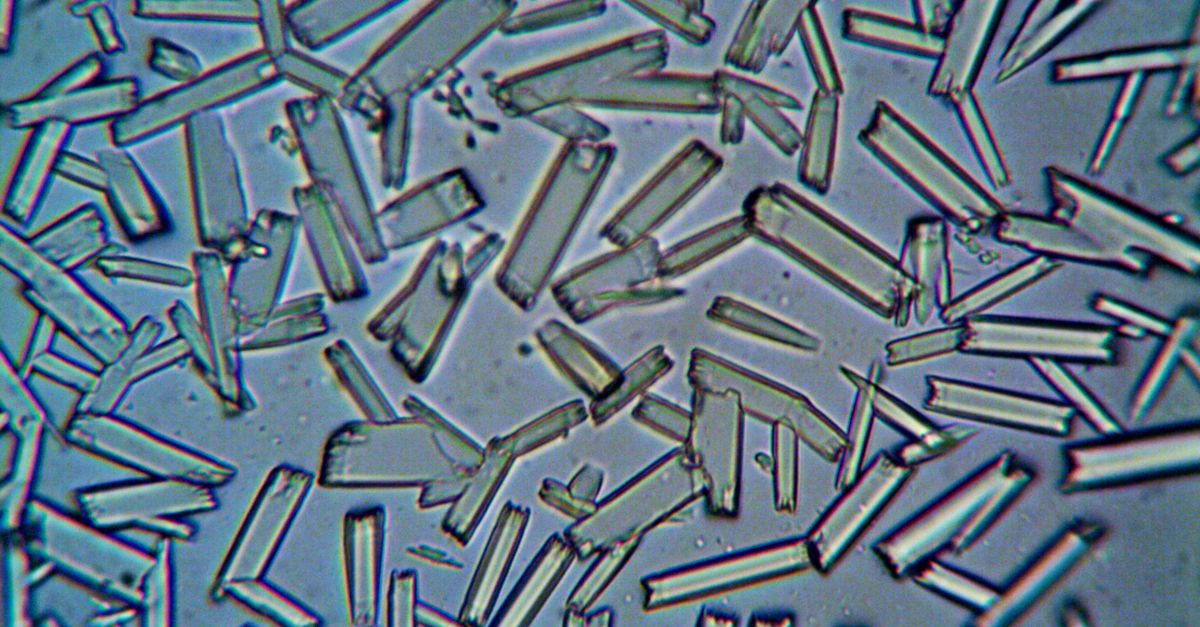
Here’s what most people miss: this isn’t a recent discovery in the sense of "oops, we found a new ocean." The real breakthrough came from a team of scientists at Northwestern University who analyzed a diamond from Botswana. Not just any diamond — this one had a tiny, microscopic inclusion of a mineral called ringwoodite.
Why does that matter? Because ringwoodite acts like a sponge. It can trap water molecules inside its crystal structure. And this particular diamond came from the transition zone — a layer of the mantle sitting between 410 and 660 kilometers deep.
When the team tested the diamond, they found that the ringwoodite contained about 1.5% water. That doesn’t sound like much, but when you consider that the transition zone is hundreds of kilometers thick and spans the entire globe, the math gets ridiculous. We’re talking about three to six times the volume of water in all the surface oceans.
I’ve found that people usually react one of two ways to this: either "cool, science!" or "wait, so are we floating on a giant water balloon?" The answer is… complicated.
Wait, Is There Actually Liquid Water Down There?
Let’s be honest — when you hear "hidden ocean," you probably picture a giant underground cave with waves and weird glowing fish. That’s not what this is. There are no massive caverns of liquid water down there.
The water is trapped inside minerals. Think of it like a wet sponge, not a swimming pool. The extreme pressure and heat in the mantle keep the water chemically bonded to the rock. But here’s the kicker: that water can move. Through plate tectonics, subduction zones, and volcanic activity, some of this "hidden ocean" gets recycled back to the surface.
I’ve read some wild takes online — people claiming this proves the Hollow Earth theory or that we could drill down and tap into it. Please don’t. We can barely drill 12 kilometers into the crust. The transition zone is 400+ kilometers down. That’s like trying to reach the center of an apple by poking a toothpick through the skin.
What This Means for the Origin of Life on Earth
This is where things get personal for me. The origin of water on Earth has always been a puzzle. The leading theory was that water arrived via icy comets and asteroids during the Late Heavy Bombardment, about 4 billion years ago. But there’s a problem with that theory: the chemical signature of our ocean water doesn’t perfectly match comet water.
Here’s what this hidden ocean suggests: Earth may have had its own internal water supply from the very beginning. The planet formed with water already locked in its minerals. That changes the timeline completely. Instead of water arriving later, it was always here, slowly leaking out through volcanic activity over billions of years.
I’ve always found it poetic — the idea that the water you drink, the rain that falls, the ocean you swim in — it all came from deep inside the Earth. We are literally drinking the planet’s blood.
Could This Discovery Help Us Find Life on Other Planets?
This is the part that keeps me up at night. If Earth can store massive amounts of water deep in its mantle, why not Mars? Why not Venus? Why not exoplanets?
The standard model for habitability has always been about the "Goldilocks Zone" — the right distance from a star to have liquid water on the surface. But this discovery suggests a whole new variable: internal water storage.
A planet could be bone-dry on the surface but still harbor vast reservoirs of water deep underground. That water could be released through geological activity, creating oceans, lakes, and even hydrothermal vents. And where there’s water, there’s potential for life.
I’ve been following the Mars exploration news for years, and this makes me wonder: are we looking in the wrong places? Maybe we should be drilling deeper on Mars, or looking for evidence of ringwoodite on the Moon. The search for extraterrestrial life just got a whole lot more interesting — and a whole lot more complicated.
The 3 Things This Discovery Changes About How We See the Planet
Here’s the practical takeaway. This isn't just a trivia fact for geology nerds (though I love those people). It changes three fundamental things:
- The Water Cycle is Way Bigger Than We Thought. We always assumed the water cycle was a surface-to-atmosphere thing. Now we know it goes deeper — miles deep. Water is constantly being subducted into the mantle and released back via volcanoes. The planet is breathing water.
- Earthquakes and Volcanoes Might Be Driven by Water. Most people think of tectonic plates grinding against each other. But water acts as a lubricant. If the transition zone is wetter than we thought, it could explain why some subduction zones are more active than others. This could even help predict volcanic eruptions.
- The Search for Life Just Expanded. Forget the surface. The real action might be happening deep underground, on Earth and beyond. If life can exist in the deep subsurface of our own planet — and we know it can, thanks to extremophiles — then the "habitable zone" for exoplanets just got a lot wider.

So, Are We Standing on an Ocean Right Now?
The short answer: yes, but not in the way you imagine.
You’re not floating. The planet isn’t going to crack open like an egg. But the ground beneath your feet is holding more water than all the oceans, seas, lakes, and rivers on the surface combined.
I think the real lesson here is humility. We’ve mapped the surface of Mars better than we’ve mapped the inside of our own planet. We’re still scratching the surface — literally. Every time we think we’ve figured out Earth, it throws us a curveball.
Next time you’re standing on solid ground, remember: you’re standing on an ocean. It’s just hiding.
And if that doesn’t make you appreciate geology, I don’t know what will.
What do you think? Are you as blown away by this as I am? Let me know in the comments — and if you want to geek out about deep Earth science, I’m always here for it.