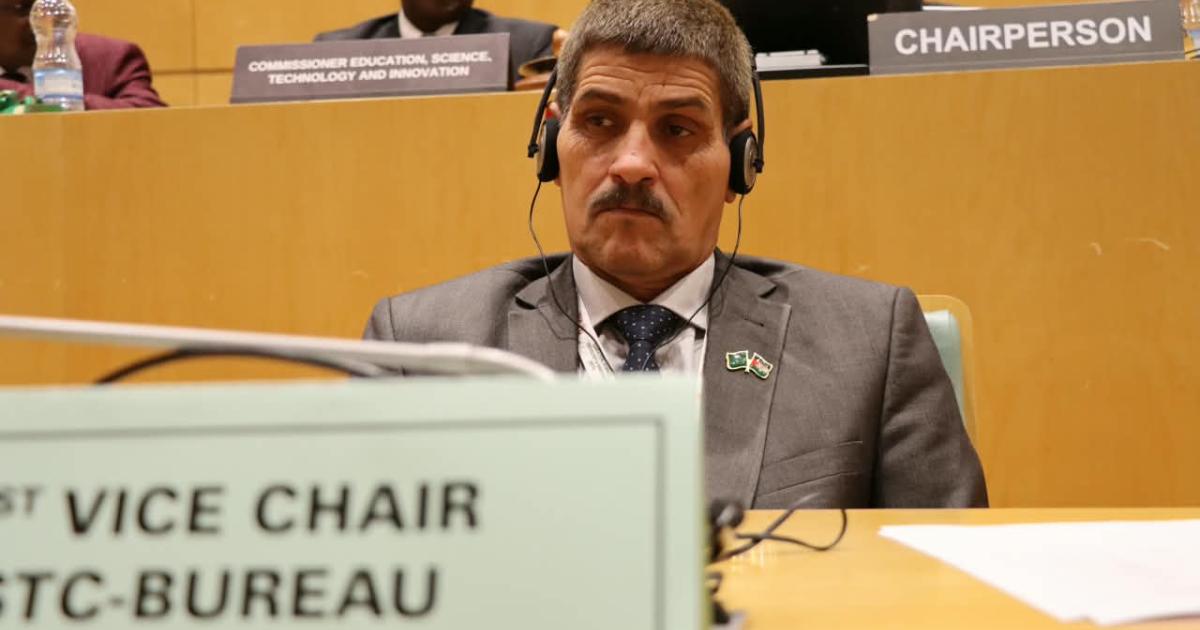
The Sahrawi Arab Democratic Republic (SADR) took part in the Ministerial Session of the Sixth Ordinary Session of the African Union Specialized Technical Committee on Education, Science, Technology and Innovation (STC-EST VI), held on Friday, 6 November 2026 at the African Union Commission headquarters in Addis Ababa, Ethiopia, according to وكالة الأنباء الصحراوية.
The ministerial meeting followed an Experts' Session that ran from 2 to 4 November under the theme "Accelerating Africa's Human Capital and Innovation: Resilient Education, Science and Technology Systems for the AU Decade of Accelerated Action for the Transformation of Education and Skills Development in Africa (2025–2034)."
Delegates discussed ways to make education, science and technology systems across the continent more resilient and inclusive, with the aim of pushing forward Agenda 2063 and sustainable development, the agency reported.
Why it matters
The STC-EST is one of the African Union's technical bodies, and its education-focused sessions set the direction for how member states coordinate schooling, research and skills training. The Sixth Ordinary Session lands in the opening stretch of the AU's decade dedicated to education and skills development, which runs from 2025 to 2034. Decisions taken at this level can shape how continental frameworks are translated into national policy — and for the SADR, participation is also a visible marker of its standing within AU processes.
For the Sahrawi Republic, the session offered a platform to press for support in maintaining its education system, which its representative described as operating under exceptional circumstances since 1976.
Bureau elected and reports adopted
The ministerial agenda included the election of the Sixth Bureau of the Committee. Delegates also received and reviewed the report of the Experts' Session along with its recommendations, which were put forward for adoption. The meeting considered and adopted the Ministerial Report and set the date and venue for the Seventh Ordinary Session.
The Sahrawi delegation was led by Mr. Hamdi Salec Did, Adviser for African Union Affairs at the Ministry of Education and Vocational Training. He represented H.E. Abdelkader Taleb Omar, the Minister of Education and Vocational Training and a member of the National Secretariat. Mr. Aman Sidi Abdallah, Minister-Counsellor at the Sahrawi Republic's Embassy to the Federal Democratic Republic of Ethiopia, also attended.
Sahrawi representative backs Algerian proposals
In an address to the session, the representative of the Ministry of Education and Vocational Training congratulated the committee, AU member states and participants on their work and deliberations. He said he was confident the outcomes would serve future generations of boys and girls and contribute to the progress, prosperity and economic development of African peoples and countries, helping them join the ranks of developed nations.
The representative pointed to what he described as considerable efforts by the Sahrawi Republic to educate and train successive generations of Sahrawis despite the difficult conditions the Sahrawi people have faced since 1976. He called for support so that the republic can sustain and expand those efforts.
He also welcomed the recommendations in the Experts' Report and urged their adoption. Among them were two declarations put forward by Algeria — one on backing start-ups and another on tackling brain drain, with the goal of reversing the loss of skilled professionals and encouraging expatriate talent to return.
The brain drain proposal speaks to a wider concern across the continent: the departure of trained graduates and researchers for opportunities abroad, and the difficulty of drawing them back. The start-up declaration similarly fits a broader AU interest in entrepreneurship as a route to job creation.
According to وكالة الأنباء الصحراوية, the ministerial session concluded with the adoption of its report and the scheduling of the committee's next ordinary session. Details of the date and venue chosen for the Seventh Ordinary Session were not specified in the reporting.
What to watch: the Seventh Ordinary Session, and how the adopted recommendations — including the Algerian proposals on start-ups and brain drain — are carried into national education and science policies across AU member states.