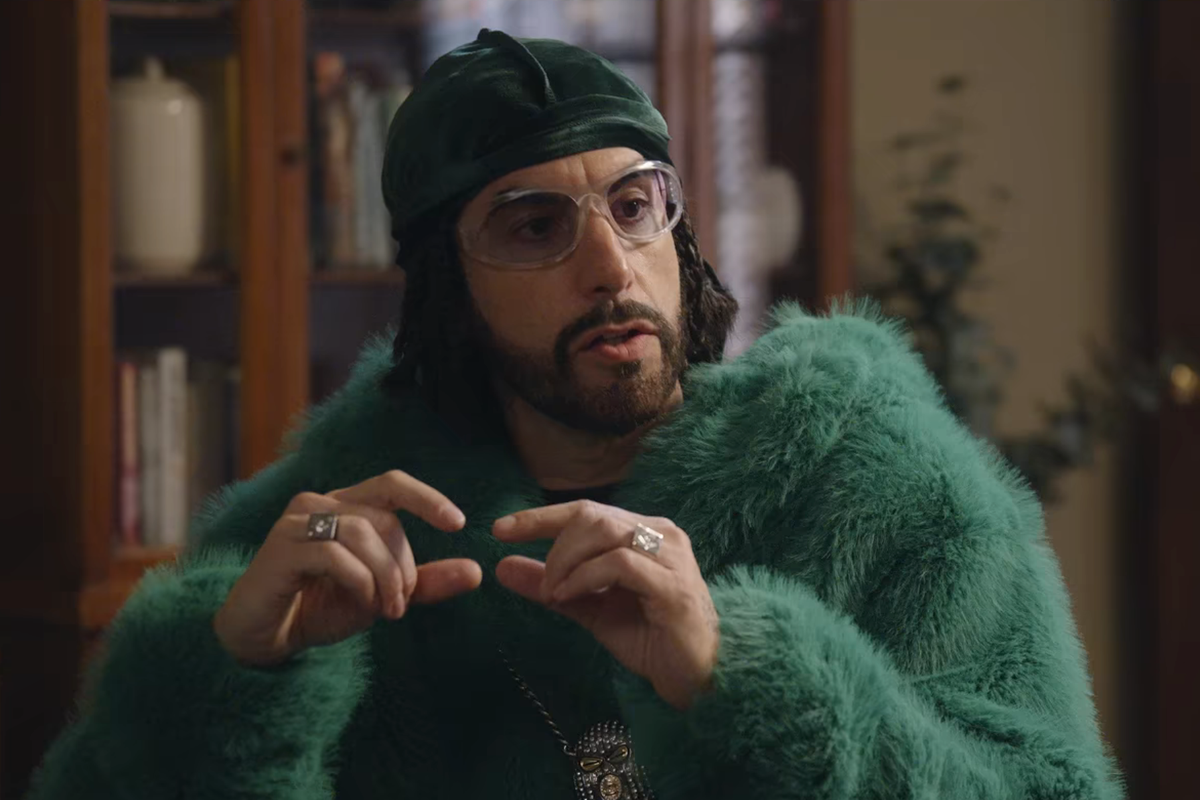
Sacha Baron Cohen has responded to criticism of his decision to bring back Ali G, arguing that the character's dated and controversial image is precisely what makes him useful today. The comedian returns to the role in the film Ali G: Who Iz I?, which reaches cinemas later this week, more than a decade after the character last appeared on screen. According to The Independent, the actor set out his position in an essay written for Time magazine, published on Tuesday, 20 October.
The character first appeared on Channel 4's The 11 O'Clock Show in 1998. Ali G is a parody of a white, middle-class young man who copies the speech, dress and music of British Jamaican and hip-hop culture. Some critics regard the figure as offensive, and a campaign has urged cinemas to refuse to screen the new film.
Why it matters
The dispute places a long-running debate about satire and offence at the centre of a mainstream cinema release. Cohen has built a career on characters who draw out prejudice from the people they interview, and he now argues that the same approach is needed in a media environment he describes as more hostile than the one Ali G originally inhabited. The film's reception will test whether audiences still accept that defence, or whether the character is now seen as part of the problem rather than a way of exposing it.
Cohen sets out his defence
In the Time essay, Cohen wrote that his intention with his characters and his comedy has always been to reveal prejudice, bias and stupidity, while acknowledging that not everyone interprets the work that way, The Independent reports. He described Ali G as a white imbecile and a delusional cultural appropriator who lifts his style and lyrics from the gangsta rap and dancehall artists he admires, from Compton to Kingston.
The comedian explained that the target of the joke is Ali G himself, along with the largely white male establishment that takes him seriously enough to accept that a broadcaster would employ the world's least intelligent man as an interview host. He compared the character to a bouffon, a type of court jester, arguing that Ali G undermines that establishment rather than the culture he borrows from.
Addressing the criticism that the new film is simply reheating an old creation, Cohen wrote that the fact Ali G is outdated and problematic is the very reason he resurrected him, according to The Independent.
A changed world, and a boycott campaign
Cohen, who is also known for the Kazakhstani television presenter Borat, the Australian fashion reporter Brüno and the fictional dictator Admiral General Aladeen, said the world Ali G has come back to is in many respects worse than the one he left two decades ago. He argued that the prejudices his characters are built to expose have not merely persisted but spread, carried by social media and now by artificial intelligence.
He pointed to rising political violence, what he described as an explosion of misogyny, and a surge in intolerance and extremism. Cohen said he hopes the film will raise an alarm and remind audiences of the dangers of absurd falsehoods, whether they come from a thin-skinned authoritarian or an extremist with an online following. With the US midterm elections only weeks away, he suggested the film might encourage people to act against such falsehoods at the ballot box and elsewhere.
The campaign against the film was launched earlier this year by NewsCord, a British news comparison site, which called on cinemas to boycott Ali G: Who Iz I?. The group said 37,658 emails had been sent in support of its effort, The Independent reports. In its statement it cited Black British comedians who described the character as an alibi for racism in 2000, the author Jeanette Winterson's comparison of the act to the Black and White Minstrels, and documentation by Kazakh and Arab organisations of harm linked to Cohen's body of work. The campaign also drew attention to a promotional line used by Sony Pictures UK: "He iz back. We ain't liable."
Production details
Cohen finished shooting the Ali G follow-up in July this year, having made much of the film in secret. The project also features the comedian Morgana Robinson as Ali G's girlfriend Julie, and it marks Cohen's first time directing a feature. It arrives in cinemas later this week.
What to watch next is how the boycott effort affects takings when the film opens, and whether Cohen's argument about satire shifts the terms of a debate that has followed Ali G since his first television appearances.