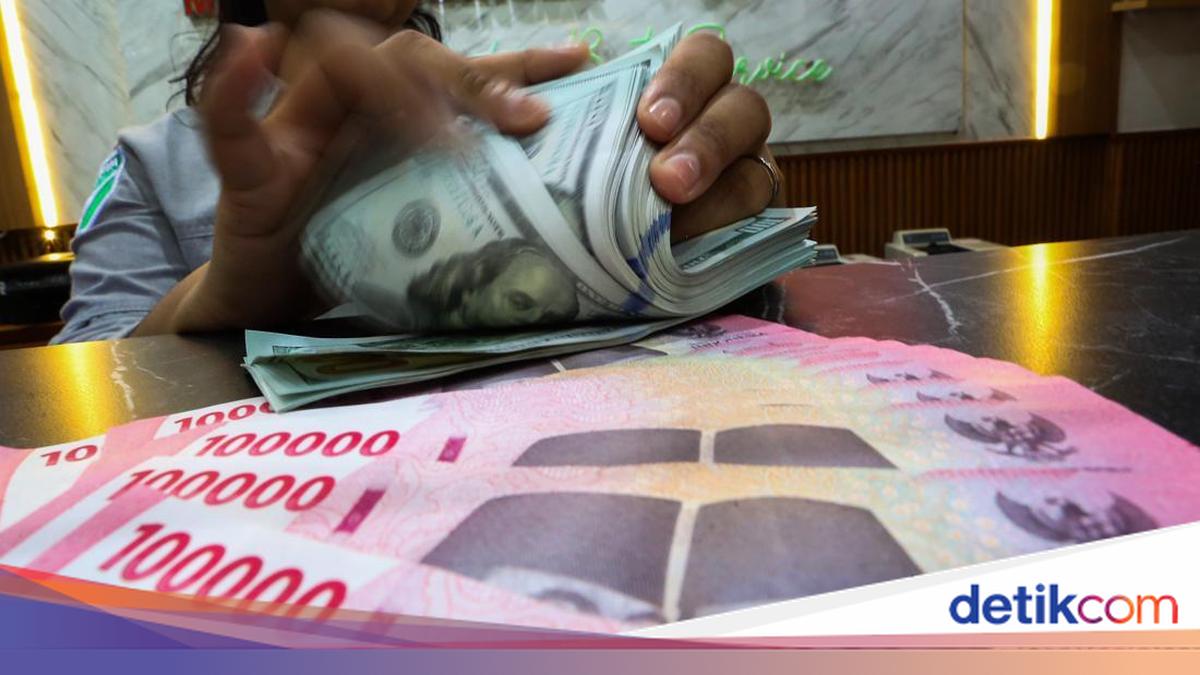
The rupiah is expected to stay weaker than Rp 18,000 per US dollar through the end of 2026, with a worst-case scenario of around Rp 18,350, according to analysts interviewed by detikFinance. Currency analyst Lukman Leong told the outlet on Tuesday (3/11/2026) that pressure on the Indonesian currency is likely to persist for the rest of the year. Senior economist Tauhid Ahmad of the Institute for Development of Economics and Finance (INDEF) separately projected the exchange rate holding in a range of Rp 18,000 to Rp 18,100 until the fourth quarter closes.
The dollar was trading in the Rp 18,100s on Tuesday morning, detikFinance reported, citing Bloomberg data. The US currency opened at Rp 18,145, eased 0.06%, then firmed 0.02% to Rp 18,160 by 09:10 WIB. It had closed at Rp 18,156 on Monday (2/11).
Why it matters
A rupiah that stays above Rp 18,000 per dollar affects import costs, dollar-denominated debt servicing and the pricing of imported raw materials for Indonesian manufacturers. It also shapes how Bank Indonesia sets policy, since the central bank is tasked with keeping the currency stable. Both analysts quoted by detikFinance said the currency is unlikely to return to the Rp 17,000s soon, which means the current level is being treated as the new baseline rather than a temporary spike.
What is pushing the currency down
Lukman attributed the weakness to a mix of external and domestic factors. On the external side, he pointed to the US Federal Reserve's interest rate policy, elevated global oil prices and high yields on US government bonds. Domestically, he cited MSCI's review of Indonesia's capital market, which he said has triggered foreign capital outflows.
"Pressure on the rupiah could still persist until the end of the year, mainly because of uncertainty related to MSCI, foreign capital outflows, and high US bond yields and oil prices," Lukman told detikFinance.
He said that as long as those factors remain unresolved, the room for the rupiah to strengthen is relatively limited, making a return to the Rp 17,000s difficult. If outflows continue and the dollar strengthens further, he warned, the rupiah risks weakening even more.
Lukman said the pressure could carry into early 2027 unless there is a major fundamental shift at home or abroad — such as MSCI confirming Indonesia's market status, an end to the war in the Middle East, or a decline in oil prices.
In the worst case, if neither the external nor the domestic factors improve, he said the rupiah could slide to Rp 18,350 per dollar by the end of the year.
A narrow band, and a central bank ready to intervene
Tauhid's view is similar but tighter. He expects the rupiah to stay between Rp 18,000 and Rp 18,100 through the fourth quarter and sees it as difficult for the currency to move outside that zone — either strengthening into the Rp 17,000s or breaking past Rp 18,200.
"The position is still between 18,000 and 18,100 until the fourth quarter at the end of the year," Tauhid told detikFinance.
He said the high exchange rate is influenced by several factors, from global crude oil prices to MSCI's plan to downgrade Indonesia's capital market classification, which could prompt capital outflows.
On the other side, Tauhid said Bank Indonesia will use every tool available to keep the rupiah from deteriorating further. He pointed to the central bank's current push to encourage hedging through swap instruments and Domestic Non-Deliverable Forwards (DNDF).
"BI will go all out so the rupiah doesn't sink too far. But getting below Rp 18,000 per dollar seems difficult again," he said.
The rupiah's slide past Rp 18,000 has been accompanied by other signals of strain. detikFinance's summary of related coverage noted reports of banks selling US dollars above Rp 18,200, and of the rupiah strengthening to Rp 18,110 per dollar at one point as world oil prices fell 7%. Those moves suggest the market is reacting sharply to oil and dollar flows rather than settling into a stable level.
What to watch
The next markers are MSCI's decision on Indonesia's market status, the direction of global oil prices and US bond yields, and how aggressively Bank Indonesia rolls out its hedging incentives. Any of those shifting could move the rupiah out of the range the two analysts described — in either direction.