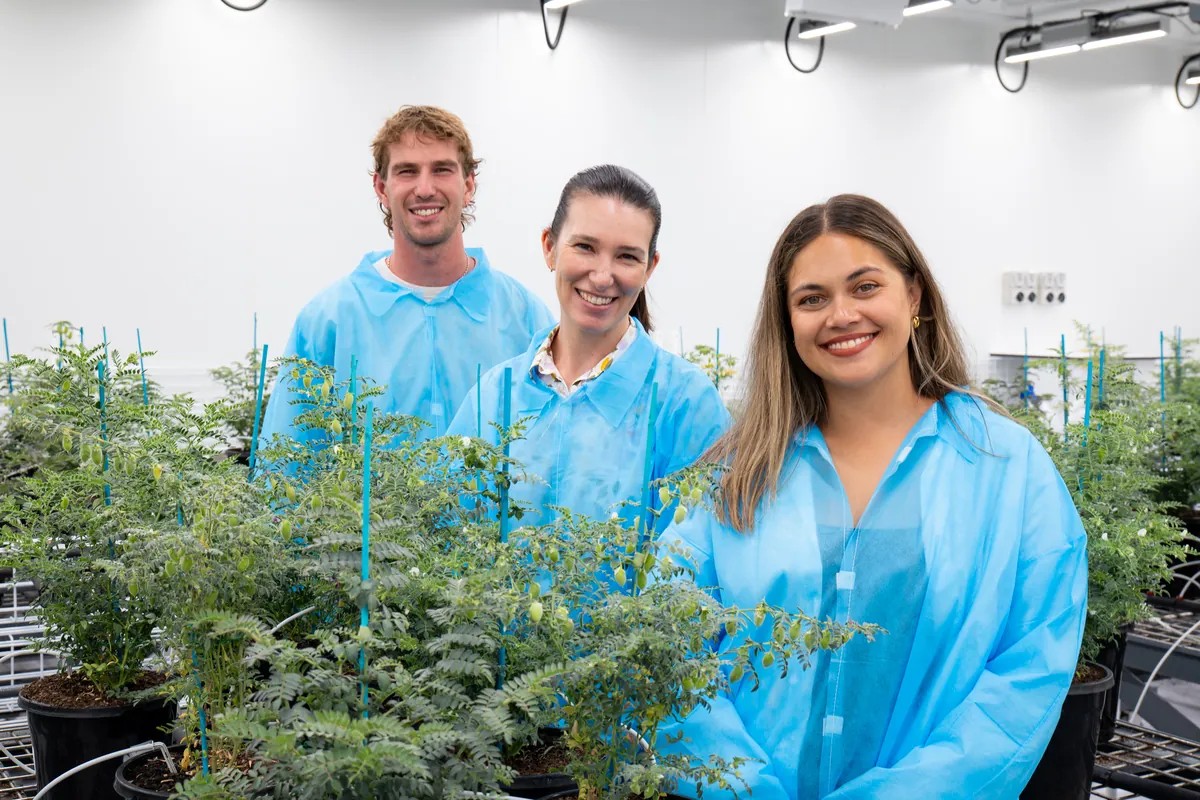
Researchers at the University of Queensland in Australia have laid out a phased plan for using “omics” tools to speed up the breeding of chickpea varieties that tolerate high temperatures, according to Food Ingredients First.
The proposal, published in the journal Food and Energy Security, is a roadmap rather than a finished variety, the outlet reports. It sets out how several layers of biological data could be folded into chickpea breeding programs in stages.
Project leader Dr. Millicent Smith told Food Ingredients First that the work is meant to shorten and sharpen a process that normally takes many years. “This paper is a roadmap rather than a new variety,” she said, adding that the tools described are about cutting the time required and making breeding more targeted.
Why it matters
Chickpeas are a staple grain legume in countries including India, Pakistan and Ethiopia, and heat during the plant’s reproductive phase is described in the review as a major drag on productivity. Food Ingredients First reports that the authors cite projections of global average temperatures rising by 1.8 to 4.0°C by 2100, which would intensify heat stress in key growing regions.
Heat at the wrong moment can cost the crop flowers and pods and reduce the viability of pollen, the review notes. For ingredient buyers, the appeal of hardier genetics is less about changing how chickpeas perform in a factory and more about getting them at all.
Smith told Food Ingredients First that the clearest near-term gain for manufacturers would likely be steadier supply from Australian growers during hot seasons. The outlet reports that the Australian Bureau of Agricultural and Resource Economics and Sciences expects the country’s chickpea output to drop 52% to a little over one million metric tons in 2026–27, citing smaller planted areas and weaker expected yields in northern New South Wales and Queensland.
A layered look at a complicated trait
Omics refers to technologies that examine separate levels of a plant’s biology — its genes, gene activity, proteins and metabolites among them — to build a fuller picture of how it copes with stress such as heat.
The review covers genomics, epigenomics, transcriptomics, proteomics, metabolomics, phenomics and enviromics, and suggests ways to bring these tools into breeding gradually rather than all at once.
Smith told Food Ingredients First that heat tolerance is not a single switch. It draws on many genes and on responses that occur at different points in the plant’s life, she said. Omics methods allow researchers to look beneath the trait and see what is actually happening, but most studies to date have relied on only one or two kinds of data and a small number of plant lines, which is why the team wanted to map out a realistic, staged approach.
The authors also flag cost, the ability to scale up, and the challenge of integrating data from different sources as obstacles, according to the outlet. Earlier chickpea work, they note, tended to use limited datasets, few genotypes and single tissues, which restricts how well findings carry over to large breeding populations.
What the work does not yet show
Smith was direct with Food Ingredients First about the limits of the project. The team has not measured grain composition, she said, so it cannot yet say whether heat adaptation would lead to more consistent protein, starch, flavor or color.
She noted that other studies have shown heat can affect those qualities, and that high temperatures during flowering and grain filling cause pod loss and poorer filling, which can mean smaller grain and lower yields. Whether that translates into steadier composition is an open question that would need more research, she said.
Processing performance — milling, cooking and protein extraction — has also not been assessed at this stage, according to the outlet.
On timing, Smith told Food Ingredients First that the immediate value lies in pinpointing heat-tolerant material that breeders can work with. Benefits for supply chains would arrive later, as those genetics move into commercial varieties.
She also stressed that breeding always involves trade-offs and that grain quality is evaluated when any new variety is developed. If useful heat-tolerance traits emerge, the next task would be combining them with the yield and quality that growers and markets expect, she said.
The University of Queensland effort sits within a broader move to address climate risk at the crop level, Food Ingredients First reports. The outlet points to recent work on AI-driven and gene-edited climate-resilient corn, drought-tolerant rice genetics, and Nestlé’s breeding of robusta coffee varieties for yield and cup quality. Research has likewise shown that climate stress can pull down milk output and lower milk fat and protein levels.
For now, the roadmap offers breeders a structure for layering omics data over successive generations of chickpea improvement. The next signals to watch are whether heat-tolerant lines identified through this approach reach breeding programs, and how quickly they then appear in commercial seed.