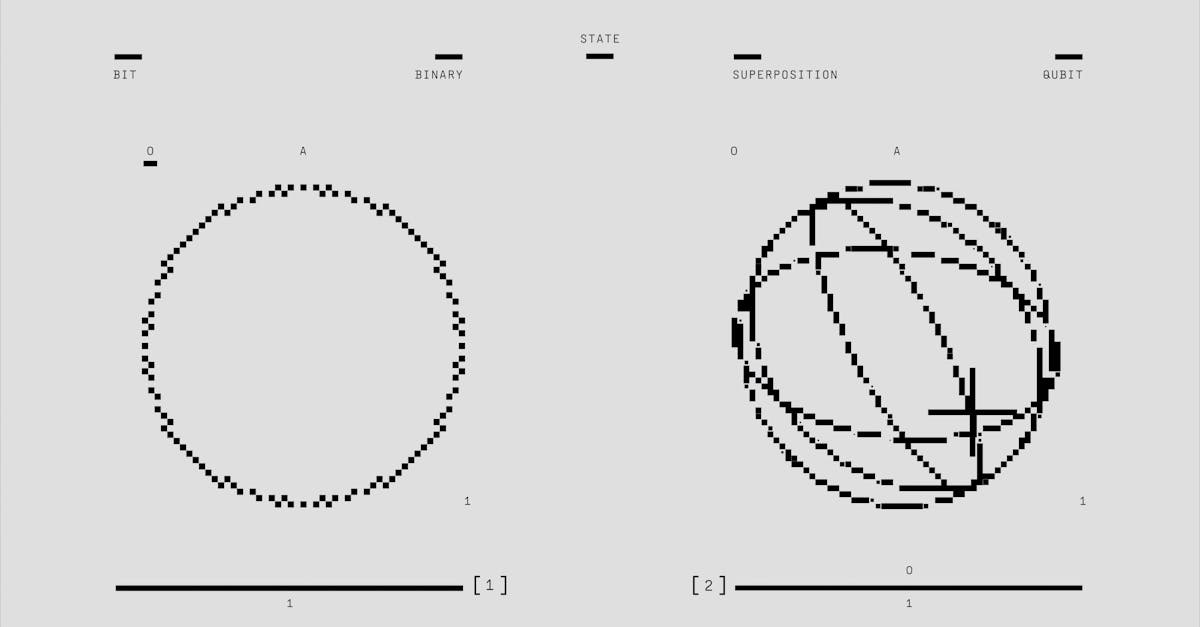
A research team led by Gerald Gabrielse, a chaired professor of physics and astronomy at Northwestern University in the United States, has confined a single positron in an extremely cold vacuum for several months and controlled it with high precision, DongA Science reports. The work was published on 21 October (local time) in the international journal Physical Review Letters. The device the group built is called the "single-positron quantum cyclotron."
A positron is the antimatter counterpart of the electron. It carries the same mass as an electron but a positive charge instead of a negative one. When matter meets its antimatter partner, the two annihilate each other and release energy. Antimatter is thought to have been produced alongside matter at the birth of the universe, yet almost none survives nearby, and any that appears is quickly lost through interactions with surrounding matter, which makes it very hard to control.
Why it matters
The point of holding a positron still is measurement. If researchers can pin down its properties with great precision and check whether they differ in any way from those of the electron, they may gain a handle on one of physics' open problems: why the universe contains so much more matter than antimatter.
According to DongA Science, the Big Bang is believed to have created matter and antimatter in equal amounts, but the observable universe today is overwhelmingly made of matter. The Standard Model, the framework describing fundamental particles and forces, does not adequately account for this imbalance.
How the experiment worked
The team began with sodium-22, a radioactive isotope that emits high-energy positrons as it decays. They slowed those positrons down and captured one in a Penning trap, a device that uses electric and magnetic fields to suspend a particle in empty space rather than letting it touch a wall.
The interior of the apparatus was then cooled to 0.3 kelvin, or about minus 272.85 degrees Celsius, and kept under ultra-high vacuum. Keeping the positron from colliding with surrounding material allowed the team to hold the single particle stably for months.
Cyclotron motion is the circular path a charged particle follows in a magnetic field. In the completed setup, the researchers induced the trapped positron to move between distinct, step-like energy states and succeeded in observing those transitions.
The long-term aim is to use this trapping technique to measure the positron's magnetic moment — the quantity describing the strength and direction of its magnetism — with extreme precision, and then to compare it with the electron's. In earlier work, the group used a single-electron quantum cyclotron experiment to measure the electron's magnetic moment to a precision of roughly one part in ten trillion. The new result is seen as establishing a basis for applying comparable control techniques to the positron.
DongA Science notes that this study did not uncover any new difference between electrons and positrons. The achievement lies in demonstrating the ability to capture, cool and manipulate the quantum state of a positron. Should future measurements reveal a discrepancy between the two particles that existing theory cannot explain, that would be a clue pointing toward physics beyond the Standard Model.
Other routes to the asymmetry puzzle
Researchers are pursuing several other approaches to the matter-antimatter question. One major condition for explaining the imbalance is CP violation, in which the symmetry breaks when a particle is swapped for its antiparticle (C) and space is reflected as in a mirror (P). CP violation was first shown experimentally in 1964 through a particle called the kaon, but DongA Science reports that more evidence is needed to account for the matter dominance observed in the universe.
Neutrinos are another focus. They have very little mass and no electric charge, so they rarely interact with other matter, and as they travel they oscillate among three forms. Comparing how neutrinos oscillate with how antineutrinos do could serve as a test of CP violation.
Francis Halzen of the University of Wisconsin–Madison, who helped propose and build the IceCube neutrino observatory beneath the Antarctic ice, received this year's Nobel Prize in Physics. A new generation of neutrino facilities is also entering the field: China's JUNO, which began operating last August; Japan's Hyper-Kamiokande, targeted for 2028; and the U.S. DUNE project, aimed at the 2030s.
Some researchers are also testing ideas about particles that have never been observed. Rishav Roshan of the University of Southampton's physics and astronomy department in the UK and Sudipta Show, a postdoctoral researcher in physics at IIT Kanpur in India, suggested that a hypothetical particle called the heavy neutrino may have played an important role in producing the matter-antimatter imbalance. Their paper appeared in Physical Review Letters on 8 October. The argument is that heavy neutrinos thought to have existed in the early universe lived long enough to alter the cosmos's expansion rate, shaping how the asymmetry formed. The researchers proposed that traces of gravitational waves from the early universe or future neutrino oscillation observations could test the idea.
For now, the positron work is a platform rather than a discovery. Watch for the follow-up measurement: a precision comparison of the positron's magnetic moment against the electron's, which is where any hint of new physics would surface.