
Let me be brutally honest for a second: I didn't want to like Pastor Prince D. When the name first started popping up in my feed, I rolled my eyes. Another pastor-turned-musician? Another guy with a microphone and a choir singing the same four chords? Please. I've seen too many hype trains derail.
But then I listened. And I had to eat my words.
Pastor Prince D isn't just a preacher who makes music. He's a musician who happens to preach. And that distinction matters more than most people realize. Today, I'm breaking down why his sound is different, what he's doing that others miss, and why you should pay attention — even if you're not religious.
The "Church Boy" Trap That Pastor Prince D Escaped
Here's what most people miss about the Christian music scene: it's often sonically safe. You know the formula. Slow build, key change, emotional bridge, repeat. It works for Sunday morning, but it rarely works for your headphones on a Tuesday afternoon.
Pastor Prince D said "no thanks" to that formula.
I've found that his production leans heavily on Afrobeats, highlife, and even subtle hip-hop inflections. It's not background music. It's music that makes you move. The drums hit harder. The bass grooves deeper. The melodies stick in your head like gum on a hot sidewalk.
Take a track like "Your Presence" (if you haven't heard it, pause reading and go find it). The opening isn't a slow organ pad. It's a percussive groove that sounds like it belongs in a Lagos nightclub. Then his vocals come in — not preaching, but singing with this raw, unpolished energy that feels more like a conversation than a sermon.
That's the secret. He treats music like art first, ministry second. And because of that, the ministry actually lands harder.

3 Things Pastor Prince D Does That Other Gospel Artists Don't
I've listened to a lot of gospel music. Like, a lot. And I've noticed patterns. Most artists fall into one of two camps: the "too polished" camp (sounds like a studio session, no soul) or the "too raw" camp (passion over everything, but the mix hurts your ears).
Pastor Prince D sits in a rare third space. Here's what sets him apart:
- He writes like a songwriter, not a sermon writer. Most gospel songs sound like someone put Bible verses to music. His songs sound like someone processed real pain, joy, and doubt through melody. The lyrics are personal, not preachy. You can hear him wrestling with faith, not just declaring victory.
- His collaborations aren't forced. When he features secular artists, it doesn't feel like a marketing stunt. It feels like two musicians who genuinely respect each other's craft. That's rare. Most gospel artists either avoid secular features entirely or do them so awkwardly you cringe. He finds the middle ground where artistry wins.
- He understands vibe. Let's be honest — a lot of gospel music is emotionally draining. It's all intensity, all the time. Pastor Prince D knows when to pull back. He has songs that are quiet, intimate, almost fragile. Then he has songs that make you want to jump out of your seat. That dynamic range keeps you coming back.
Why "Pastor Prince D" Works in a Skeptical Era
We're living in a time where everyone is suspicious of organized religion. Scandals, hypocrisy, performative faith — it's all out in the open. So when a pastor steps onto a music stage, the default reaction is skepticism. "What's his angle?" "Is this a marketing funnel for his church?" "How much of this is genuine?"
Pastor Prince D navigates this by not pretending to be perfect.
I've watched interviews where he admits to struggles with doubt. He talks about seasons where he didn't feel like making music. He doesn't present himself as a holy man who has it all figured out. He presents himself as a guy who found something that works for him and wants to share it through the universal language of rhythm and melody.
That humility is magnetic.
In a world full of influencers selling curated perfection, someone who says "I don't have all the answers, but this song helped me" is refreshing. It's not a sales pitch. It's a shared experience.
The Hidden Production Value Most People Miss
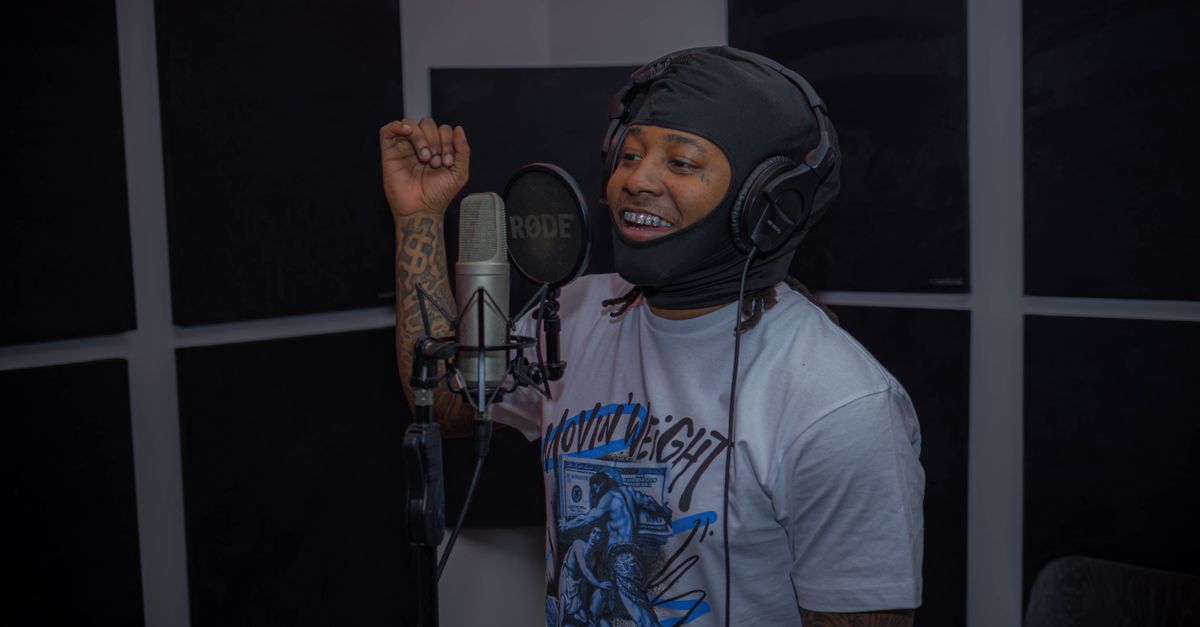
Let's talk about something I rarely see discussed: the mixing and mastering of his tracks.
I've been a music nerd for years. I've interned at studios. I know bad production when I hear it. And Pastor Prince D's team is operating on a different level.
The low-end on his tracks is tight. The vocals sit perfectly in the mix — not buried, not overpowering. The reverb choices are tasteful, not drowning. This might sound like technical jargon, but trust me: your ears notice even if your brain doesn't.
Most gospel music suffers from "church hall" acoustics — everything sounds like it was recorded in a large room with too much echo. Pastor Prince D's music sounds like it was crafted in a professional studio with attention to detail. The stereo width, the panning, the subtle effects — it all adds up to a listening experience that competes with mainstream pop and Afrobeats.
And that's the point. He's not competing in the "best gospel artist" category. He's competing in the "best artist, period" category. And he's holding his own.
What His Rise Says About the Future of Gospel Music
If you look at the streaming numbers, there's a clear shift happening. Gen Z and younger millennials are abandoning traditional church music. But they're not abandoning spirituality. They're abandoning bad production and outdated sounds.
Pastor Prince D represents a bridge generation. He's old enough to have deep roots in the church, but young enough to understand that a good beat is a good beat, regardless of the message.
I think we're going to see more artists follow his blueprint. Less "preaching at you," more "inviting you in." Less organ-and-choir, more 808s and synth pads. Less Sunday morning, more Friday night playlist.
The genre is evolving. And Pastor Prince D is one of the architects of that evolution, whether he admits it or not.
The One Question Nobody Is Asking
Here's what keeps me up at night about his career: Can he sustain this?
It's one thing to have a viral moment. It's another to build a catalog that holds up over time. I've seen too many artists blow up on one sound, then struggle to evolve. The pressure to repeat what worked the first time is intense.
I hope he doesn't play it safe. I hope he experiments. I hope he releases an acoustic EP, a full dance record, a collaboration with an unexpected producer. The artists who last are the ones who keep you guessing.
Pastor Prince D has the talent. He has the vision. The question is whether he has the courage to keep pushing boundaries instead of settling into a formula.
I'm betting on the former. But only time will tell.

So, Should You Listen?
If you're not religious, you might be asking: "Is this for me?"
My answer: Try one song. Not a whole album. Just one song. Pick "Your Presence" or "Never Let Go" or whatever is trending. Listen with an open mind. Don't filter it through your assumptions about gospel music. Just hear it as music.
If the groove hits, it hits. If the lyrics resonate, they resonate. If not, move on.
But don't dismiss it because of the label. Good music doesn't care about your beliefs. It just demands to be felt.
And Pastor Prince D, whether you're ready to admit it or not, is making some of the most interesting music coming out of the African gospel space right now.
The question isn't whether he belongs in your playlist. The question is whether you're brave enough to let him in.
What's your take? Have you listened to Pastor Prince D? Drop your favorite track in the comments — I'm always looking for new recommendations. And if you haven't heard him yet, start with "Your Presence" and thank me later.


