I remember the first time I stumbled across a "Pastor Prince D" video. It was late, I was down a rabbit hole of algorithm-recommended content, and there he was—a man in a sharp suit, standing in an auditorium that looked more like a tech startup launch than a church. He was talking about quantum physics, string theory, and the book of Genesis. And I thought: Wait, is this science or is this religion?
I’ve spent the last week digging into the phenomenon surrounding Pastor Prince D—not just the man, but the movement he represents. And let me be honest: what I found is more complex than I expected. It’s not simply a pastor using science jargon to sound smart. It’s something else—a blend of spiritual authority, pseudoscience, and genuinely clever marketing that has captured millions of eyes. But here’s the question nobody’s asking: Is Pastor Prince D a bridge between faith and science, or just another example of confirmation bias dressed up in a lab coat?
Let’s break this down.
The Algorithmic Prophet
If you’ve never heard of Pastor Prince D, you’re probably not alone—unless you’ve spent any time in the "spiritual growth" corners of YouTube, Instagram, or TikTok. His content is everywhere, and it’s engineered to be.
What most people miss is that Pastor Prince D isn’t just a preacher—he’s a content strategist. His videos follow a formula that’s almost too effective. He opens with a provocative scientific claim—something like, "Did you know that quantum entanglement proves we are all connected to God?"—then pivots to a spiritual application. It’s designed to hook the skeptical science-minded viewer and then convert that curiosity into faith.
I’ve seen his clips shared in Facebook groups for atheists and Christians alike. That’s rare. That’s a trick.
Here’s the thing: he’s not a scientist. He doesn’t have a PhD in physics or biology. He’s a theologian with a knack for reading pop-science books and translating them into sermon material. That’s not inherently bad, but it’s important context. When Pastor Prince D says "the Bible predicted the Big Bang," he’s not citing peer-reviewed journals—he’s interpreting scripture through a modern lens.
And honestly? That’s where the tension lives.

The Science That Isn’t Quite Science
Let’s get into the meat of it. Pastor Prince D’s most viral moments often involve scientific concepts that are either misunderstood or misapplied. I’m not saying he’s malicious—I think he genuinely believes what he’s saying. But as someone who writes about science, I can’t just nod along.
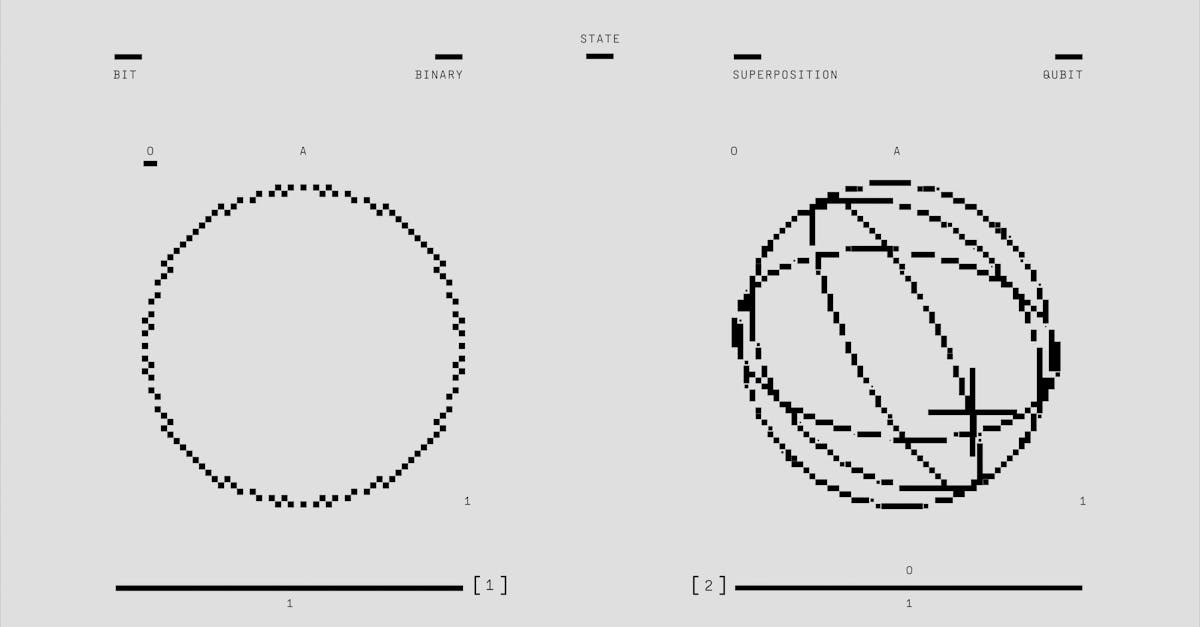
Take his famous "Quantum Faith" sermon. He argues that the observer effect in quantum mechanics—where particles behave differently when observed—proves that our thoughts can influence reality. That our faith "collapses the wave function" of God’s will.
Sounds cool, right? It’s also nonsense.
The observer effect in quantum physics has nothing to do with human consciousness "choosing" outcomes. It’s about measurement—physical interaction with a system. But Pastor Prince D takes this tiny, misunderstood detail and builds a whole theology around it. And his audience eats it up because it makes them feel powerful. It makes prayer feel like a scientific process.
I’ve found that this is the most dangerous kind of pseudoscience: the kind that feels true, that scratches an emotional itch, and that comes wrapped in a suit and a smile.
But here’s the thing—I’m not here to trash him. I’ve also watched videos where he talks about the fine-tuning argument (the idea that the universe’s constants are perfectly set for life) and actually does a decent job explaining it. He’s not always wrong. He’s just selectively accurate.
The Hidden Influence on Modern Faith
What I find most interesting about Pastor Prince D isn’t his theology or his science—it’s his influence. He represents a growing trend where faith leaders adopt the language of science to stay relevant in a skeptical age.
Let’s be honest: traditional church attendance is dropping. Young people are leaving organized religion in droves. But they’re not leaving spirituality—they’re leaving institutional religion. So what does a smart pastor do? He rebrands. He talks about "energy" instead of "the Holy Spirit." He mentions "vibrations" and "frequency" and "quantum fields."
It’s the same message, different packaging.
And Pastor Prince D is the master of this rebranding. He’s not the first—folks like Deepak Chopra and Gregg Braden have been doing this for decades—but he might be the most effective at reaching the digital native audience. His content is short, visually stunning, and emotionally charged. He doesn’t lecture; he reveals secrets. He makes you feel like you’re part of an inside group that understands the hidden truths of the universe.
I’ve seen comments under his videos that say things like, "I never understood the Bible until you explained it with physics." That’s powerful. That’s also concerning, because understanding isn’t the same as being correct.

3 Things You Need to Know About Pastor Prince D’s Method
If you’re going to engage with his content—and I think you should, critically—here’s what I’ve learned:
- He cherry-picks science that supports his claims. You won’t hear him talk about entropy, which contradicts his "everything is getting better" theology. You won’t hear about the vast, cold, empty universe that challenges the idea of a personal God. He only uses science that fits his narrative.
- He’s brilliant at creating emotional resonance. His voice is calm, his pacing is deliberate, and his visuals are hypnotic. Even when I know he’s wrong, I find myself nodding along. That’s a skill. That’s craft.
- He offers certainty in an uncertain world. Science is messy. It’s full of "we don’t know" and "this might change." Religion is messy too. But Pastor Prince D presents everything as settled. You don’t have to wrestle with doubt—just accept his framework and feel at peace. That’s seductive.
The Verdict: Faith or Fraud?
I’m not going to call Pastor Prince D a fraud. I think he believes what he says. But I do think he’s dangerously misleading when it comes to science literacy.
Here’s what I’d tell anyone who follows him:
- Enjoy the inspiration, but fact-check the science. If he says "quantum physics proves X," go read a real physicist’s take. Spoiler: they usually disagree.
- Ask yourself why he needs science to validate faith. If your spiritual beliefs are true, they should stand on their own. Why borrow credibility from a field that doesn’t support you?
- Remember that feeling smart isn’t the same as being smart. His content feels intellectual, but it’s often just emotional wisdom dressed up in technical terms.
I get it. I really do.
What This Means for the Rest of Us
The rise of Pastor Prince D tells us something uncomfortable about the state of science communication. We’ve done a terrible job making real science accessible and emotionally satisfying. While physicists are publishing dense papers, pseudoscientists are publishing viral videos that make people feel something.
Who’s winning? It’s not the physicists.
If you’re someone who values both faith and reason, I think the challenge is this: don’t let the charlatans define the conversation. There are brilliant theologians who engage honestly with science. There are scientists who respect the spiritual search. But Pastor Prince D isn’t one of those bridges—he’s a toll booth operator who charges you in critical thinking.
So next time you see one of his videos, watch it. Enjoy the production value. Let yourself feel the awe. But before you share it, ask yourself one question: Would I believe this if it didn’t feel so good?
That’s the question that separates curiosity from credulity.
**