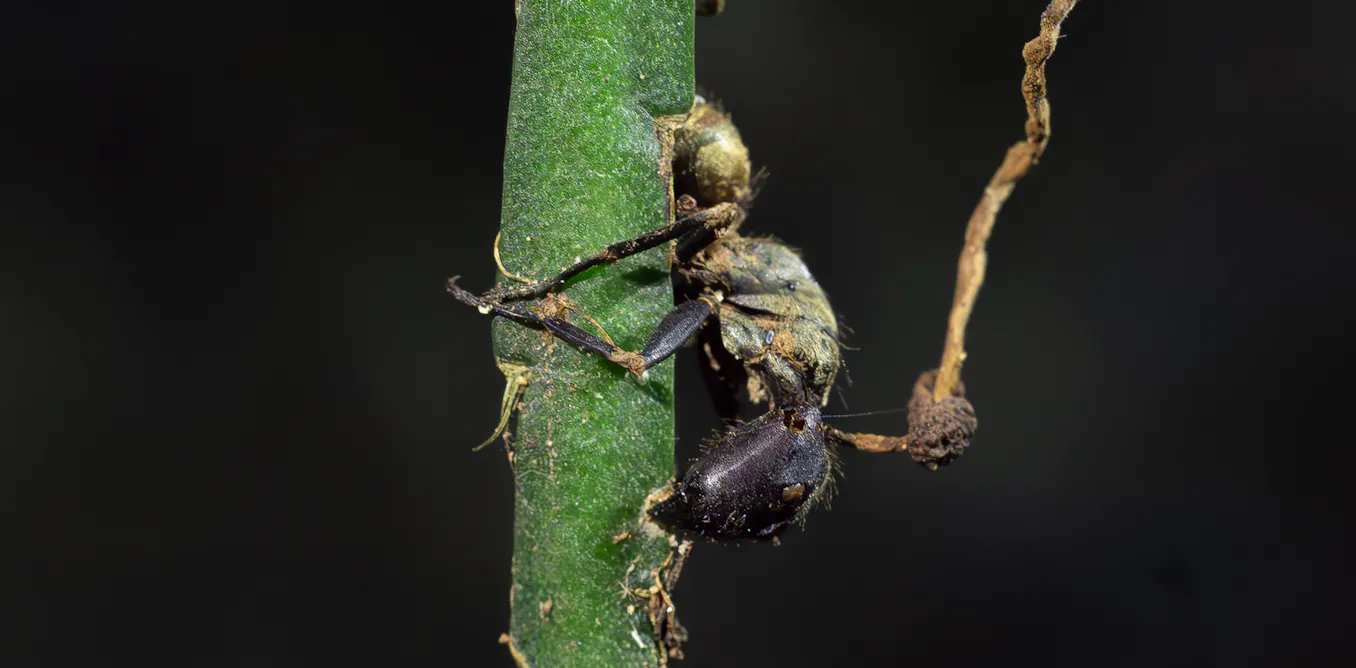
Parasites and fungi can genuinely alter the behavior of the creatures they infect, according to an explainer published by The Conversation on October 30, 2026. The article, written by a biomedical engineer and synthetic biologist, examines several organisms that steer their hosts toward actions that serve the parasite rather than the host. The author stresses that none of this amounts to reanimating the dead; instead, the invaders interfere with the biological systems governing movement, motivation and decision-making.
Why it matters
The subject has a long life in fiction, from dancing corpses in music videos to a fungal outbreak in a television drama. The Conversation notes that the fungus behind "The Last of Us" drew inspiration from a real organism that attacks ants. Beyond the pop-culture appeal, the examples show how deeply one species can reach into another's nervous system and senses. Understanding those mechanisms matters for biology because it reveals how behavior can be changed without destroying the underlying anatomy — a question with implications for how scientists think about signaling, control and infection.
The fungus that sends ants to their deaths
The best-documented case, according to The Conversation, is the so-called zombie ant fungus, Ophiocordyceps. Its life cycle starts when spores settle on an ant's exterior and then penetrate the outer surface, letting the fungus inside. The fungus then grows and spreads through the insect while the ant is still alive. Weeks can pass before the behavioral changes become obvious.
Eventually the infected ant abandons its colony and wanders, climbing onto vegetation. The Conversation reports that this shift carries the ant away from its usual surroundings and into places that suit fungal reproduction and dispersal. As the infection nears its end, the ant clamps its jaws onto a leaf, twig or similar surface and stays fixed there — a phenomenon researchers call the death grip. Once the ant is dead, the fungus uses what remains of its tissues and pushes a stalk out of the body, which then releases spores onto ants below, restarting the cycle.
What surprises researchers is where the fungus is not found. The Conversation reports that examinations of infected ants before death revealed widespread fungal growth in the body and around muscle fibers, but not within the brain. Fungal cells appear able to build networks around the insect's muscles, which suggests the manipulation may work through communication between the fungus and several host tissues rather than by seizing the brain directly.
The jaw muscles offer a striking illustration. According to The Conversation, they are heavily colonized by the fungus and show signs of severe contraction, and there are indications the fungus may release molecules in those areas. Even so, motor neurons and the junctions between nerves and muscles can remain intact. The author writes that this points to the fungus altering the machinery that governs muscle contraction rather than simply wrecking it.
Scientists still cannot fully explain the whole sequence of wandering, climbing and biting. Researchers have identified fungal genes tied to proteins, toxins and other compounds that might influence chemical signaling in the host, but The Conversation notes that many of these proposed mechanisms remain unproven. The author's reading is that the fungus does not throw a single switch; it likely shifts several biological systems at once until the ant's behavior serves the fungus.
Wasps, worms and a cat-loving microbe
Other organisms achieve similar ends with different tools. The emerald jewel wasp, Ampulex compressa, injects venom into a cockroach's nervous system, according to The Conversation. The cockroach is not paralyzed, but it becomes far less inclined to move on its own or flee, which lets the wasp guide it to a burrow and attach an egg to it. Research cited in the article shows the venom dampens activity in the parts of the nervous system responsible for initiating movement. The cockroach retains the ability to walk; what changes is its inclination to do so.
Hairworms push their hosts further. Some species infect praying mantises or crickets and develop inside them while the insect lives. When the worm is ready to reproduce, the host develops an unusual attraction to light, which can pull it toward the reflective surface of water. The host enters the water, the worm exits its body and moves to the next stage of its life. For a host that cannot swim, the trip is often fatal. The Conversation reports that researchers are still untangling how the parasite triggers this change, though studies have found shifts in proteins in the host's brain as the manipulation unfolds. The parasite appears to commandeer the host's sensory and behavioral systems to send it somewhere it would never normally go.
Behavioral manipulation also shows up in mammals. Toxoplasma gondii can infect a wide range of warm-blooded animals but reproduces in cats. Rodents typically steer clear of cat odor, yet infected animals can lose part of that aversion and may even be drawn to the smell, according to The Conversation. That shift could raise the odds an infected rodent is eaten by a cat, letting the parasite finish its life cycle.
Taken together, the examples suggest "mind control" is an imprecise label. The Conversation argues that parasites do not need to govern every action a host takes. Changing a single pivotal behavior — whether to climb, whether to walk away, whether to enter water or whether to shun a predator — can be enough. There is no one zombie switch; behavior emerges from many systems, and the parasite only has to nudge the right one.
Watch for further research on the fungal compounds and host proteins that may underlie these shifts, since the precise mechanisms remain an open question.





