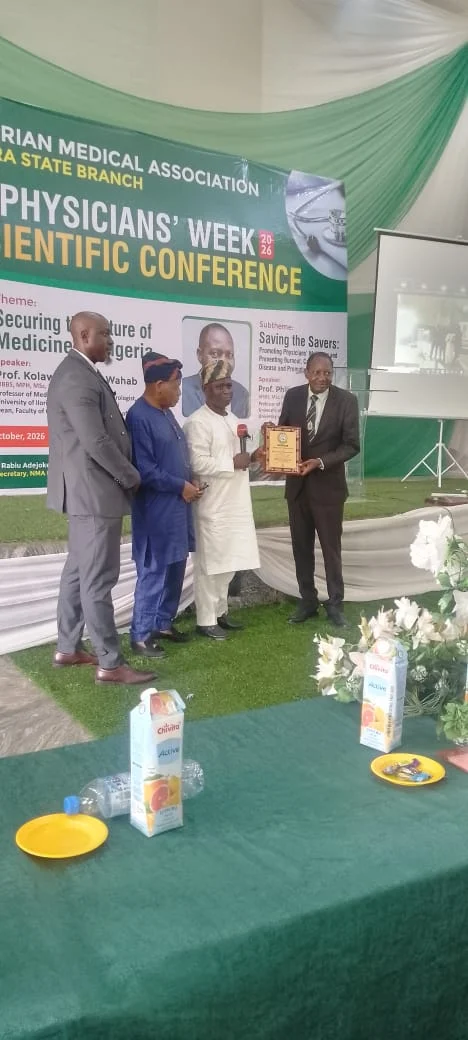
A consultant neurologist at the University of Ilorin Teaching Hospital, Prof. Kolawole Wahab, has warned that the growing number of Nigerian doctors leaving the country is putting effective healthcare delivery at risk. He made the remark on Wednesday in Ilorin while presenting a paper at the scientific conference of the Kwara chapter of the Nigerian Medical Association, according to the News Agency of Nigeria. The conference formed part of the chapter’s 2026 Physician’s Week, held under the theme “Securing the Future of Medicine in Nigeria.”
Wahab, who is also Dean of the Faculty of Clinical Sciences at the University of Ilorin, said the present wave of emigration differs from earlier periods. In the past, he explained, medical professionals mostly went abroad for training and came back home to help build the country. The current trend, widely called “Japa syndrome,” does not follow that pattern.
Why it matters
The departure of doctors is already visible inside Nigerian hospitals, according to Wahab. He said patients are waiting longer for care and emergency responses are being delayed. The staffing gap is stark: Nigeria has roughly four doctors for every 10,000 people, while the World Health Organisation recommends 30 per 10,000. That shortfall affects how quickly and how well patients can be treated, and it places added strain on the doctors who remain.
Wahab traced the exodus to several causes. Poor pay, difficult working conditions, weak infrastructure and insecurity were the main factors he named. He called for urgent government action, including better salaries, stronger welfare packages, upgraded facilities and improved security for medical staff.
Burnout and the mental health of doctors
The neurologist also raised concerns about the psychological toll on physicians who stay behind. Heavy workloads and long shifts, he said, are leaving doctors vulnerable to anxiety, depression and other mental health problems. He noted that doctors who work 24-hour calls without enough rest can easily become overwhelmed, and that patients sometimes mistake exhaustion for negligence. He urged regular mental health assessments and support for medical professionals.
A consultant cardiologist at the same hospital, Prof. Philip Kolo, spoke on a sub-theme titled “Saving the Savers: Promoting Physicians’ Well-being and Preventing Burnout and Cardiovascular Diseases.” He said a shortage of staff means doctors who have already seen more than 40 patients are still under pressure to take on more, a situation that can lead to severe stress and burnout. He also called for enough manpower to carry out the health ministry’s recommendations on working hours.
On heart health, Kolo listed smoking, hypertension, diabetes and obesity as major risk factors. He advised medical practitioners and the public to take regular health checks seriously and to seek early detection. He warned that hypertension and diabetes can go unnoticed for years before causing serious complications, including stroke.
Calls for policy reform
In his welcome address, the chairman of NMA Kwara, Dr Suleiman Rotimi, asked for urgent policy changes and better working conditions as a way of slowing doctor migration and protecting the future of medical practice. He listed the profession’s main challenges as manpower shortages, assaults on physicians, insecurity, low pay, burnout, and the difficulties of modernisation and digitalisation.
Rotimi said the safety, dignity and welfare of doctors must come first, arguing that physicians working in unsafe and poor environments cannot deliver the best possible care. He also called for more training capacity and reforms in medical education to keep up with demand from a growing population, and urged medical schools to bring their curricula in line with current realities.
The discussion in Ilorin reflects a wider national conversation. Recent reports have highlighted similar concerns: Punch Newspapers reported that doctors in Kwara have complained about poor pay and illegal salary deductions, while TheCable reported that the NMA said only 500 doctors remain in Ondo State’s public health facilities. Businessday NG reported the NMA’s call for adequate remuneration and funding for safer healthcare delivery, and the News Agency of Nigeria reported a senator’s appeal for better welfare and health support for doctors.
For CYBEV readers, the takeaway is that Nigeria’s doctor shortage is no longer only a question of numbers leaving the country. It is also about the conditions faced by those who remain, and about whether pay, security, equipment and working hours improve fast enough to keep hospitals functioning. Watch for whether federal and state authorities act on the conference’s recommendations, particularly on remuneration and working-hour limits.





