I remember the first time I walked into Christ Embassy Loveworld Arena in Ho, Ghana. I wasn’t there for a Sunday service. I was there for a networking breakfast. Yes, you read that right. A church hall filled with entrepreneurs, students, and retirees—all clutching name tags and cups of Lipton tea—trying to figure out how to make their businesses work.
And here’s what struck me: nobody was selling anything. Not directly. They were sharing contacts, yes. But more than that, they were sharing testimonies of how faith had pulled them through a bad quarter, a broken partnership, or a failed harvest.
Let’s be honest: most networking events feel like awkward speed-dating for professionals. You shake hands, swap LinkedIn profiles, and never speak again. But in Ho, something different happens. Faith becomes the lubricant for connection. And it’s not accidental—it’s engineered.
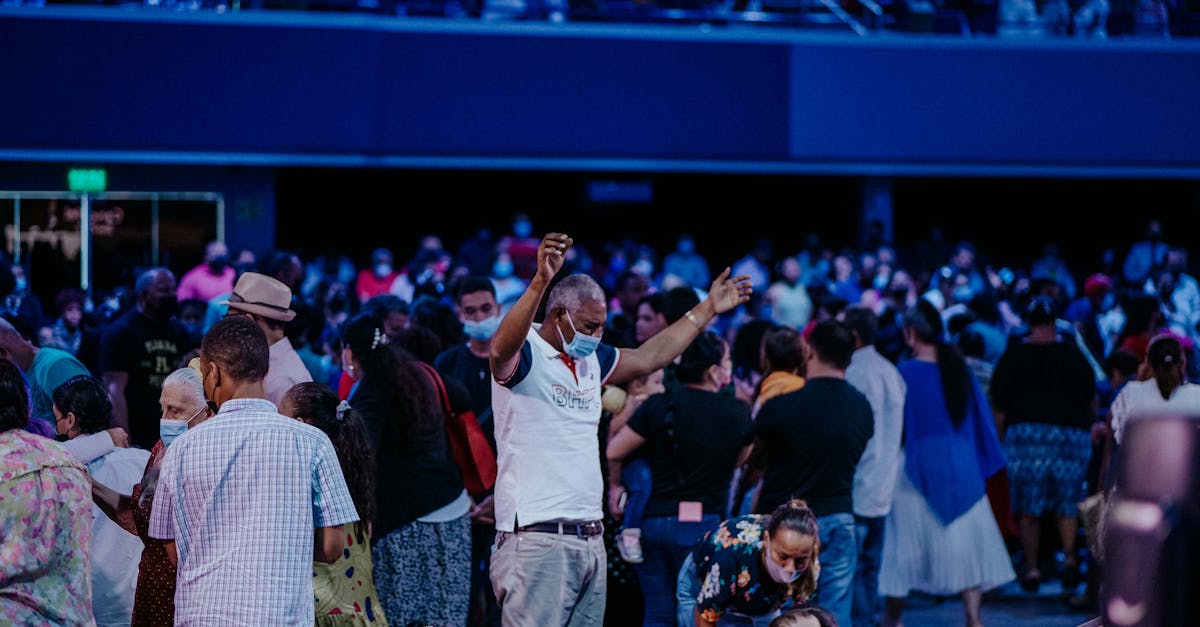
The Unspoken Rule: Faith First, Business Second
Most people miss the genius of how Christ Embassy Loveworld Arena structures its community. It’s not a church that happens to host networking events. It’s a faith ecosystem where spiritual growth and professional advancement are treated as the same thing.
I’ve attended dozens of their midweek services. Here’s the pattern: worship, word, then a 10-minute window where the pastor says, "If you own a business or have a skill, stand up and tell us what you do." That’s it. No pitch deck. No QR code. Just a name and a service.
Why does this work? Because trust is pre-loaded. When you meet someone at a church event, you already share a worldview. You’ve already sung the same songs, prayed the same prayers, and heard the same sermon about integrity in business. The barrier to collaboration drops.
I’ve found that faith-based networking removes the transactional stench that hovers over secular networking. You’re not just looking for a client—you’re looking for a brother or sister on the same journey. And in a city like Ho, where the economy runs on relationships, that distinction is gold.
The 3 Things That Make Loveworld Arena’s Networking Different
I’ve broken down what I see happening there into three distinct factors. This isn’t generic church advice. This is what I’ve observed on the ground.
1. The "One Another" Principle is Operationalized Most churches preach "love one another" but don’t give you a practical way to do it. Loveworld Arena has monthly "Business Connect" meetings where members present their challenges—not just their wins. I’ve seen a seamstress get help with fabric sourcing from a man she met during altar call. I’ve seen a young coder get mentored by an IT director who attends the same Bible study. The "one another" isn’t abstract; it’s a referral network.
2. The Arena Itself is a Third Space In Ho, there aren’t many neutral places to meet people outside work or home. The Loveworld Arena functions as a third space—like a coffee shop, but with a pulpit. People linger after service. They talk in the parking lot. The building has a large foyer where small groups spontaneously form. This physical design encourages the networking that doesn’t appear on any agenda.
3. Leadership Models Vulnerability Pastor Korsi (the lead pastor) frequently shares his own business failures from the pulpit. He talks about losing money in a transport venture and how prayer changed his decision-making. This vulnerability from the top gives permission for everyone else to be honest. You don’t have to pretend you’ve got it all figured out. That’s rare in Ghanaian professional circles, where "showing your hand" is often seen as weakness.

The Surprising Demographic Mix
Here’s something that shocked me: the age range at these networking moments. I expected mostly young hustlers—people in their 20s and 30s looking for a leg up. What I found was three generations in the same room.
You have the students from Ho Technical University, looking for internships. You have the mid-career professionals—bank managers, school principals, hospital administrators. And you have the retirees, some of whom own land or have capital they’re willing to invest in a trustworthy venture.
Faith bridges the gap. A 70-year-old woman who runs a cassava processing business doesn’t see a 22-year-old with a laptop as a threat. She sees him as a grandson who can help her digitize her records. And he sees her as a potential anchor client.
This intergenerational trust is the secret sauce most networking events can’t replicate. You can’t manufacture it with name tags and icebreakers. It has to be cultivated through shared worship and shared testimony.
The Digital Side: What Happens on WhatsApp After Service
If you think the networking stops when you leave the Arena, you’re wrong. The real magic happens in the WhatsApp groups.
Loveworld Arena Ho has dozens of them—organized by profession, by Bible study group, even by neighborhood. These groups are not spam-filled. They’re moderated. Someone posts, "I need a reliable plumber for a commercial job in Sokpoe." Within minutes, three names come up, each with a testimonial from a fellow church member.
I’ve watched this ecosystem for months. The currency of these groups is reputation, not money. If you recommend a bad contractor, your word loses weight. So people are careful. They only vouch for those they’ve personally worked with or prayed with.
This is networking with accountability. And it’s something no secular platform can offer. LinkedIn doesn’t care if you ghost a client. But in a church community, your spiritual standing is tied to your professional integrity. That’s a powerful motivator.
The Economic Impact: More Than Just Feel-Good Vibes
Let’s talk numbers—because faith without works is dead, and networking without deals is just a party.
I spoke with a young woman named Efua who runs a catering business. She told me that 80% of her contracts came through referrals from Christ Embassy members. She didn’t advertise. She didn’t run Facebook ads. She just showed up, served at the ushering department, and let people taste her jollof at church events.
Another man, Kofi, who repairs electronics, said his business doubled after he started attending the midweek services. "People saw my work on a church member’s TV," he told me. "They asked who fixed it. That was my marketing."
This isn’t anecdotal. The multiplier effect of faith-based networking is real. When you connect people who share a belief system, the transactions become relationships. And relationships in Ghana are the foundation of economic activity.
What Most Churches Get Wrong (And Loveworld Gets Right)
I’ve visited enough churches in Ghana to know that many try to force networking. They announce a "business seminar" and expect magic. But they miss the key ingredient: consistent community.
Loveworld Arena doesn’t schedule "networking events" as standalone activities. Networking is woven into the DNA of every service. The offering time becomes an opportunity to talk to your neighbor. The after-service prayer line becomes a chance to exchange numbers. The Bible study group becomes a mastermind session.
The mistake most churches make is treating business and faith as separate tracks. They have a Sunday service for the spirit and a Monday conference for the marketplace. Loveworld integrates them. The same pastor who preaches about salvation also teaches about budgeting and hiring.
This holistic approach is why people drive from as far as Aflao and Akatsi to attend services in Ho. They’re not just coming for a sermon. They’re coming for a community that helps them thrive—spiritually, socially, and economically.

The Hidden Cost: Why This Model Isn’t Easy to Replicate
I don’t want to paint a perfect picture. There are challenges.
The size of the community can become a bottleneck. As Loveworld Arena grows, maintaining the intimacy that makes networking work becomes harder. I’ve noticed that newer members sometimes struggle to break into established circles. The "old guard" can be cliquish, even if unintentionally.
Also, not everyone is there for the right reasons. I’ve seen a few people treat the church like a business development center—showing up only when they need a contact, disappearing when the relationship requires reciprocity. Pastoral leadership has to constantly remind the congregation that networking is a byproduct of genuine community, not the goal.
But here’s the thing: the model still works better than most alternatives because the foundation is faith, not utility. When people are anchored in shared belief, the selfish behaviors get exposed and corrected faster.
What You Can Learn From This (Even If You’re Not in Ho)
You don’t have to live in Ho or attend Loveworld Arena to apply these principles. Here’s what I’ve taken away:
- Show up consistently. Networking isn’t a single event. It’s a lifestyle of presence.
- Give before you receive. Offer your skill first. Let people see your competence through service.
- Let faith be the filter. If you share values with the people you network with, the business will follow naturally.
- Create spaces for vulnerability. Don’t just talk about wins. Share struggles. That’s what builds trust.
The Final Thought: Connection as Worship
Here’s what I really believe after watching this community for months: networking can be an act of worship.
When you connect someone who has a need with someone who has a solution, you’re participating in God’s economy. You’re saying, "I trust that there is enough for everyone, and I want to be a channel of blessing."
That’s what Christ Embassy Loveworld Arena in Ho, Ghana, has built. It’s not just a place to worship on Sunday. It’s a place where your Monday matters, your business matters, and your relationships matter—all because they’re rooted in something deeper than a handshake.
So next time you’re in the Volta Region, don’t just pass through Ho. Stop by the Arena. Stay for the service. Stay for the tea afterward. You might leave with a new brother, a new sister, or a new lead on a business partnership.
Or all three.
That’s the power of networking anchored in faith.