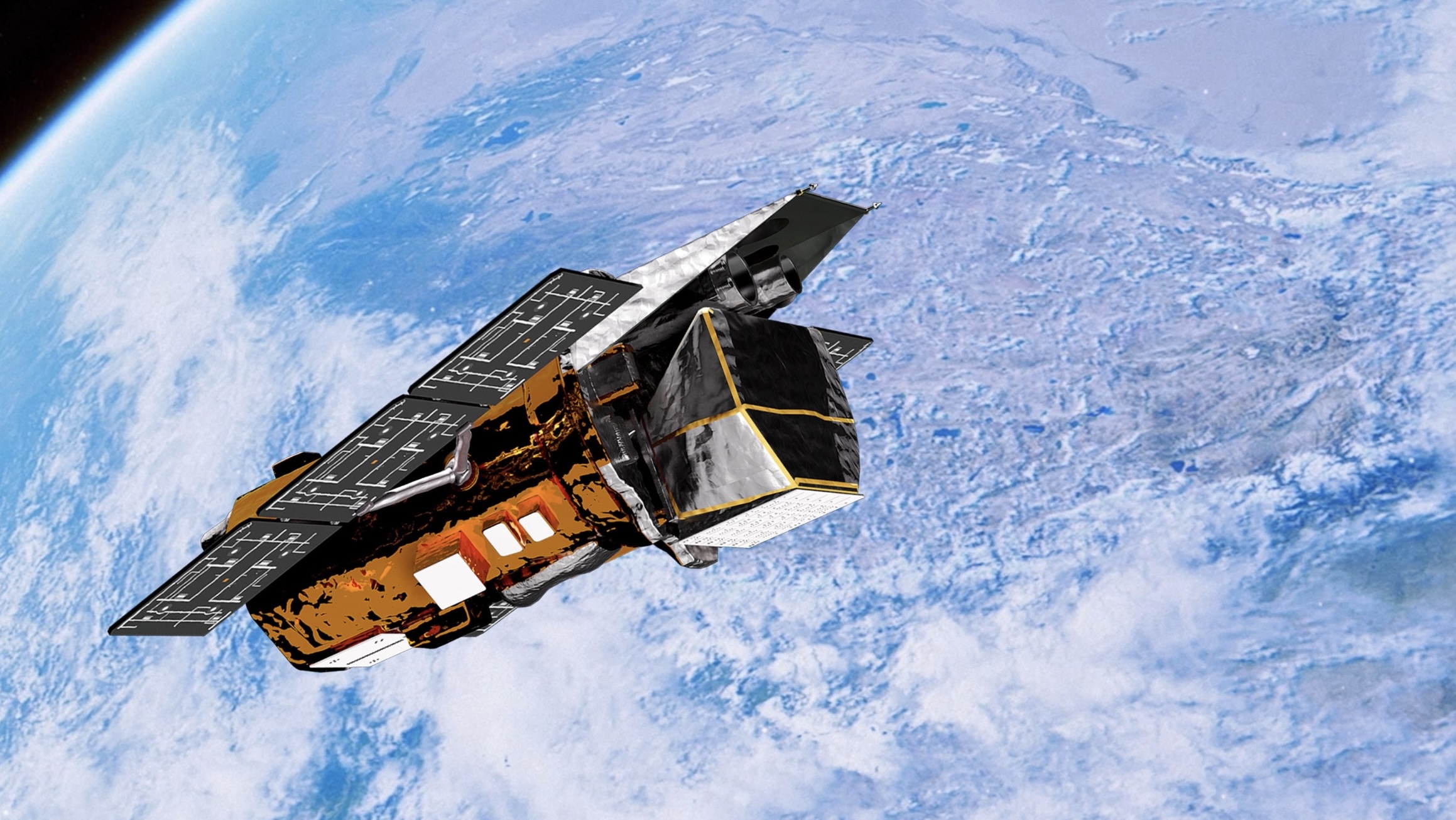
NASA's Swift space observatory re-entered Earth's atmosphere over Indonesia on Wednesday after an attempt to rescue the ageing research satellite failed, according to Peoples Gazette Nigeria.
The U.S. space agency said most of the spacecraft is thought to have burned up during descent, though it noted that "some components may have survived re-entry." No damage has been reported so far.
The satellite was unmanned and carried three telescopes. It lifted off from Cape Canaveral in 2004 and spent more than two decades studying gamma-ray bursts, the most violent explosions observed in the universe.
Why it matters
Swift was not a routine piece of hardware. For over twenty years it gave astronomers a rapid-response eye on some of the most energetic events in the cosmos, and the data it produced underpins a large body of published research.
That scientific value is why NASA took the unusual step of trying to retrieve it. According to Peoples Gazette Nigeria, the satellite remained in good working condition but was pulled out of its orbit in part by strong geomagnetic storms set off by solar eruptions.
Most satellites that lose their orbit are simply left to fall. Swift's case was different: NASA judged the observatory worth saving and moved quickly to attempt a first-of-its-kind recovery.
A rescue launched at short notice
In early July, NASA sent up an unmanned towing vehicle named Link. The craft was launched from an atoll in the Marshall Islands in the South Pacific, carried aloft by a Stargazer aircraft and released on a Pegasus rocket.
Link was designed and built for NASA by the American space company Katalyst Space at a cost of roughly $30 million. The towing spacecraft weighed about 400 kilogrammes and was fitted with three robotic arms, three main engines and a range of other instruments.
The plan called for Link to close in on Swift and, over several months, haul it back to its original orbit. That plan collapsed when a fault developed in Link's control system, forcing NASA to call off the operation.
With the rescue abandoned, the observatory's path back to Earth became inevitable. Its re-entry over Indonesia on Wednesday marked the end of the mission.
What was lost, and what was not
Swift's main contribution was speed. The observatory was built to swing around and point at gamma-ray bursts within seconds of their detection, giving scientists a chance to study the afterglow of explosions that fade fast. That capability made it a workhorse for a generation of astronomers.
The spacecraft's descent does not erase the archive it built. Observations collected over its lifetime remain available to researchers, and the mission's findings on gamma-ray bursts continue to be cited.
The failed rescue also leaves questions about Link itself. The towing craft was a test of whether a small, relatively cheap vehicle could extend the life of a satellite already in orbit, a capability that would matter for both science missions and commercial operators. The control system problem that ended the attempt will be studied closely by the companies and agencies watching that market.
For now, NASA has confirmed the re-entry and said most of the satellite is believed to have disintegrated. The agency has not reported any ground damage from the surviving fragments.
What to watch: whether NASA or Katalyst Space releases findings on what went wrong with Link's control system, and whether the agency pursues another in-orbit servicing attempt.





