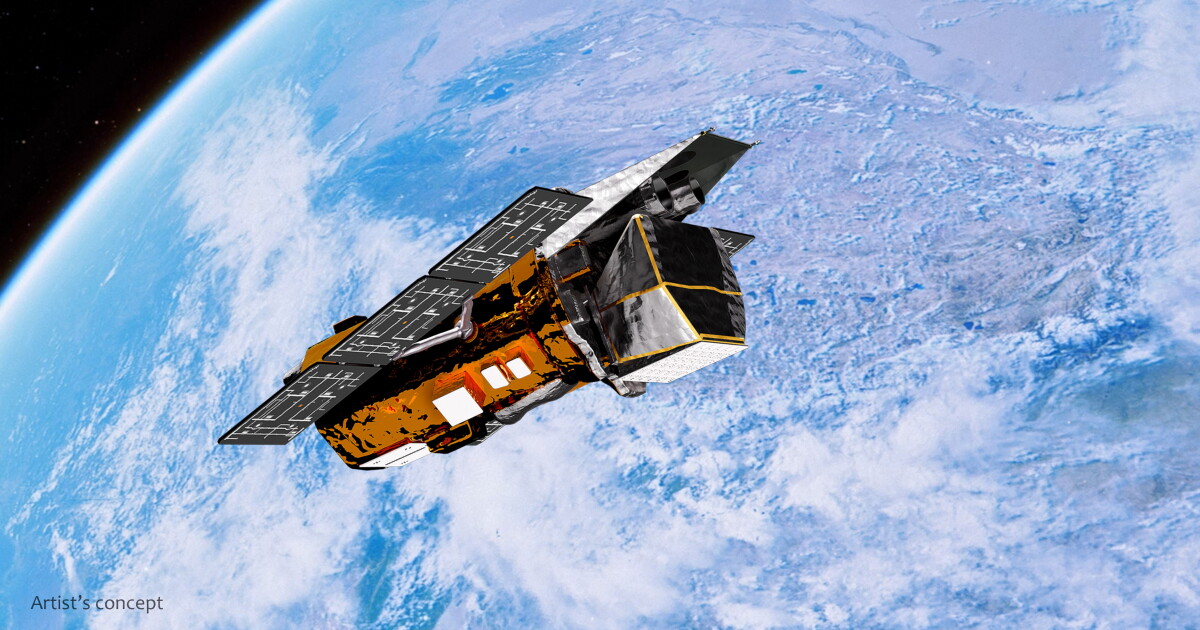
NASA has retired its Neil Gehrels Swift Observatory and expects the satellite to fall back into Earth's atmosphere within the coming weeks, according to Scripps News. The agency has not given a precise date for the re-entry. As of this week, the spacecraft was circling roughly 171 miles above the planet's surface.
The orbit had been dropping steadily, and thicker air at that altitude made it impossible for the satellite to keep a steady lock on its astronomical targets. That loss of stability is what pushed NASA to close out the mission, Scripps News reports.
Why it matters
Swift was built to run for two years. It kept working for more than ten times that long, and NASA says its findings fed into roughly 7,000 scientific papers. The observatory's long record covers some of the most violent and short-lived events in the sky, and its rapid-response approach changed how astronomers chase them.
Shawn Domagal-Goldman, who leads the Astrophysics Division at NASA Headquarters in Washington, said the mission returned far more than the nation put into it. He noted that Swift was meant to last two years but stayed productive for over a decade longer, and he credited it with helping reshape astrophysics by showing how much fast follow-up observations matter to the whole research community, according to Scripps News.
A two-decade record of cosmic explosions
During its time in orbit, Swift examined thousands of gamma-ray bursts and more than 1,400 supernovas, Scripps News reports. It also caught stars being ripped apart by black holes, carried out an X-ray survey of the entire sky, and turned its instruments on comets and asteroids.
The spacecraft built up a large archive along the way: over 1.5 million images and more than 12 terabytes of scientific data, according to the outlet.
What happens as it comes down
As the satellite sinks deeper into the atmosphere it will start to burn up. Scripps News reports that any debris reaching the ground should be minimal, since most satellites break apart and largely disintegrate on the way down.
NASA has not said where or exactly when the re-entry will occur. Watch for the agency to narrow the window as the orbit continues to decay.