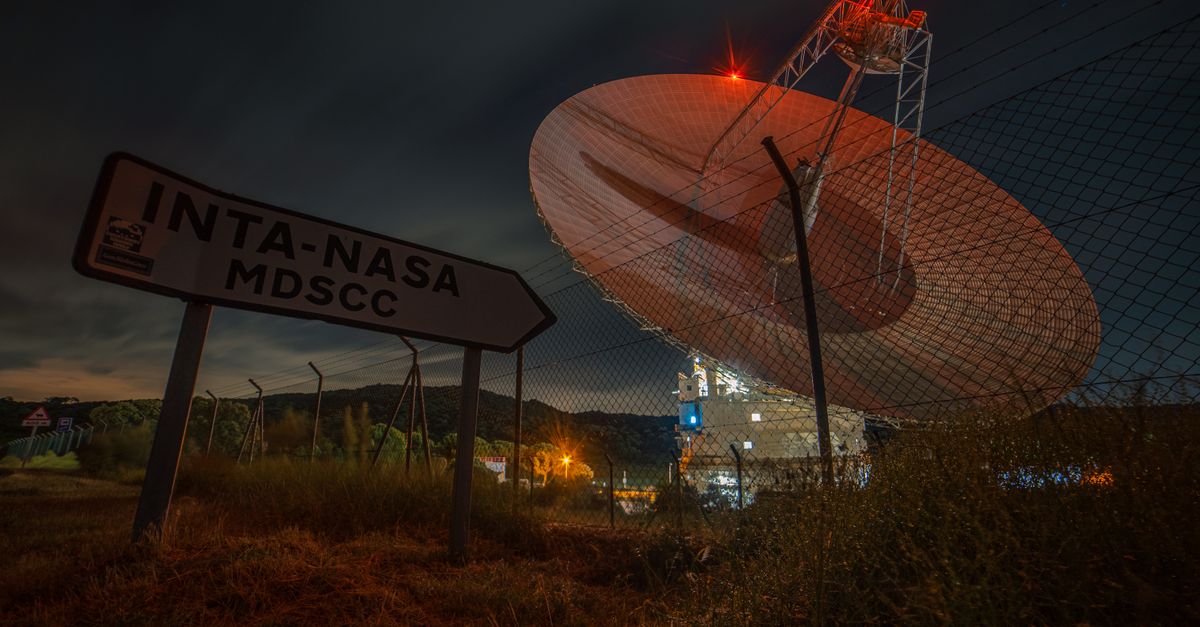
My grandfather used to take me out to the desert outside Tucson when I was a kid, far from the city lights, and we'd just lie on the hood of his truck and stare up. He'd point at the Milky Way and say, "Everything you're looking at is either eating something or being eaten. That's the whole story." I didn't get it then. I get it now — because black holes are the most literal version of that idea, and we just got a signal from one that's making astrophysicists question the script.
The Night a Telescope Heard Something It Shouldn't Have
Here's the setup. NASA's newest X-ray observatory — the Imaging X-ray Polarimetry Explorer, or IXPE — isn't a giant mirror telescope like Hubble. It doesn't take pretty pictures. What it does is measure the polarization of X-rays, which is a fancy way of saying it detects the direction that light waves are vibrating as they hit the detector. Think of it like this: if normal telescopes tell you where the light came from, IXPE tells you how it got there.
And in late 2024, while staring at a black hole called Cygnus X-1, it picked up a polarization pattern that shouldn't exist according to our current models.
I remember reading the preprint at 1 a.m. and texting a physicist friend of mine: "Is this a glitch or are we rewriting textbooks?" He replied with a single word: "Both."
Why This Signal Is Different From Every Other Black Hole Discovery
Let's be honest — black hole news is a crowded field. Every few months someone announces a new "mystery" and it turns out to be a slightly warmer gas cloud. I've learned to be skeptical.
This one is different.
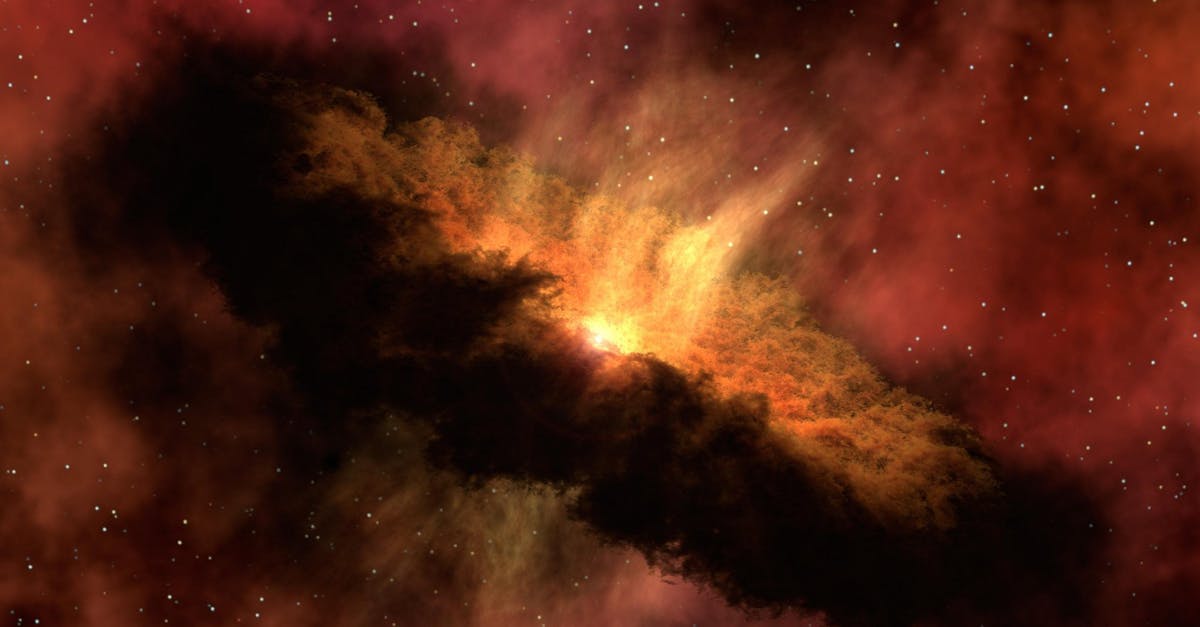
Most black hole discoveries are about mass, spin, or location. This signal is about the geometry of the accretion disk — the swirling donut of superheated matter spiraling into the black hole. Standard theory says the inner disk should be relatively flat, and the X-rays bouncing off it should have a very specific polarization angle. What IXPE saw was a polarization angle rotated by roughly 40 degrees from prediction, with a strength that suggests the disk is actually warped, tilted, and possibly precessing like a wobbling spinning top.
If that's real, it means black holes aren't just eating — they're choreographing. The gravity well is so twisted that it's literally dragging space-time around with it in a way we've only seen in simulations.
Here's what most people miss: we've had the math for this since the 1970s. Frame-dragging was predicted by Einstein. But predicting it and seeing it in a real signal from 6,000 light-years away are two very different flexes.
The Three Things This Might Actually Mean
Okay, let me break down what the physics community is quietly whispering about, because the official press release was predictably cautious.
- Our accretion disk models are too simple. Most textbooks treat the disk as a flat pancake. If it's actually a warped, twisted structure, then every mass measurement we've derived from disk luminosity could be off by 10-20%. That's not a rounding error — that's a recalibration of how we weigh the universe.
- Frame-dragging is observable, not theoretical. This would be the first clean, direct polarization signature of a spinning black hole dragging spacetime around it. Einstein's craziest prediction, finally caught in the act.
- The signal might be from the jet, not the disk. This is the wild card. A few researchers think the polarization is coming from the relativistic jet shooting out of Cygnus X-1, which would mean our models of jet formation are even further off than we thought. Either way — someone's wrong, and that's exciting.
What IXPE Is Really Doing That Nobody Talks About
Here's the part that gets buried under the headlines: IXPE is a small telescope. It's about the size of a refrigerator. It cost roughly $188 million — which, in NASA terms, is a rounding error. It was launched on a Falcon 9 in December 2021 and was originally designed for a two-year mission.
It's now in its extended phase, and it's producing more paradigm-shifting results per dollar than almost any observatory in history.
That should tell you something about how we fund science. We build one giant flagship telescope every twenty years and then act surprised when a scrappy little X-ray polarimeter from a mid-budget mission upends the apple cart. The universe doesn't care about our budget cycles.

So What Happens Next?
The IXPE team is already planning follow-up observations of Sagittarius A — the supermassive black hole at the center of our own galaxy — and M87, the one that got its glamour shot in 2019. If the polarization anomalies show up there too, we're not looking at a quirk of Cygnus X-1. We're looking at a fundamental gap in how we understand gravity near the event horizon.
And honestly? That's the most inspiring thing I can imagine. Not because we're wrong — but because we're finally asking the right questions.
My grandfather's desert wisdom was right. Everything is eating or being eaten. But now we know the meal has a shape, and the shape is stranger than anything we drew in a textbook.
Next time you look up at the night sky, remember: somewhere out there, a signal is traveling toward us right now that might make everything we think we know look like a rough draft. The question isn't whether we'll find it. It's whether we'll be humble enough to listen.
Go outside tonight. Find a dark patch of sky. And ask yourself: what else are we missing?





