NASA plans to put astronauts back on the lunar surface in 2028 and to begin building a base near the moon's south pole, the agency said Friday, describing a schedule it intends to run with the urgency of the Apollo program. Administrator Jared Isaacman gave the update at a news conference at Kennedy Space Center in Florida, according to SFGATE.
The announcement came six months after four astronauts flew around the moon on Artemis II, the first crewed lunar trip in more than 50 years.
Why it matters
The landing would be NASA's first by astronauts since Apollo, and it would take place in a competition with China rather than the Soviet Union. Isaacman said the current race will be "much closer than it ever needed to be" because of slow progress in earlier years, SFGATE reported.
He said NASA is now speeding up by cutting back on drawn-out meetings and internal bureaucracy, while SpaceX, Blue Origin and other contractors work around the clock toward deadlines and the agency adds staff.
Isaacman framed the approach as a return to the agency's own methods from 1968 through 1972, when 24 astronauts traveled to the moon and 12 walked on it. He said it is not a new management theory but a familiar playbook — the one that carried NASA from Apollo 7's splashdown to Apollo 11 in nine months.
Docking rehearsal set for next summer
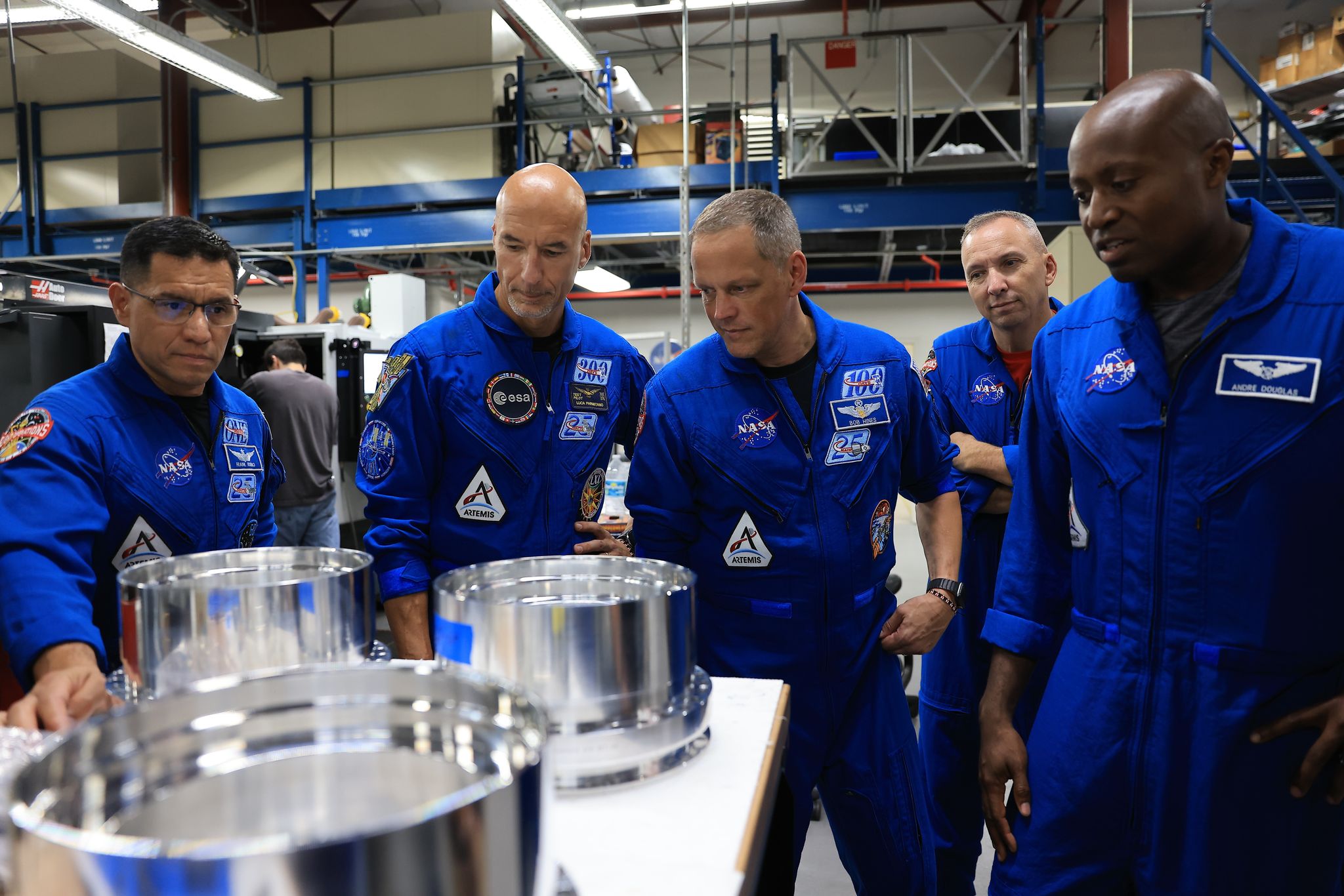
Artemis III is still scheduled to launch next summer, according to Isaacman. The two-week mission will carry three NASA astronauts and one from Italy in the Orion capsule, but it will stay in orbit around Earth rather than travel to the moon.
The crew will practice docking with lunar landers built by SpaceX and Blue Origin, both of which are to launch next summer for the exercise. The plan calls for three launches in close succession from Cape Canaveral. Orion will first link up with Blue Origin's Blue Ghost at an altitude of about 270 miles (435 kilometers), then meet SpaceX's Starship in a somewhat lower orbit.
Amit Kshatriya, a NASA associate administrator, said the docking sequence should be a spectacle for spaceflight enthusiasts.
NASA has not yet decided whether SpaceX or Blue Origin will provide the lander for Artemis IV, and officials said they will hold that choice open for as long as they can.
Base construction begins at the south pole
The planned base sits near the moon's south pole, a different region from the equatorial sites Apollo crews visited. Its first launch is expected by the end of this year, when a Pittsburgh company will try again after its first lunar landing attempt failed in 2024. This time the target is the south polar area, with a rover and other experiments aboard.
Additional landers, rovers and orbiters are to follow, enough that the first Artemis moonwalkers should find their lunar vehicle already parked and waiting, according to officials.
To save time and lower risk, the first crews will wear a simpler, lighter suit than the one Axiom Space is still developing for longer stays. Axiom plans to test these shorter-excursion suits on the International Space Station next year.
Frank Rubio, a NASA astronaut assigned to Artemis III, said sustaining a long-term presence is what makes this effort harder than the brief Apollo visits. He called the plan "incredibly ambitious" in comments to The Associated Press earlier this month, adding that he would not bet against the United States.
The next milestones to watch are the three-launch docking campaign next summer, the year-end south pole landing attempt, and NASA's choice of lander for the 2028 crewed touchdown.