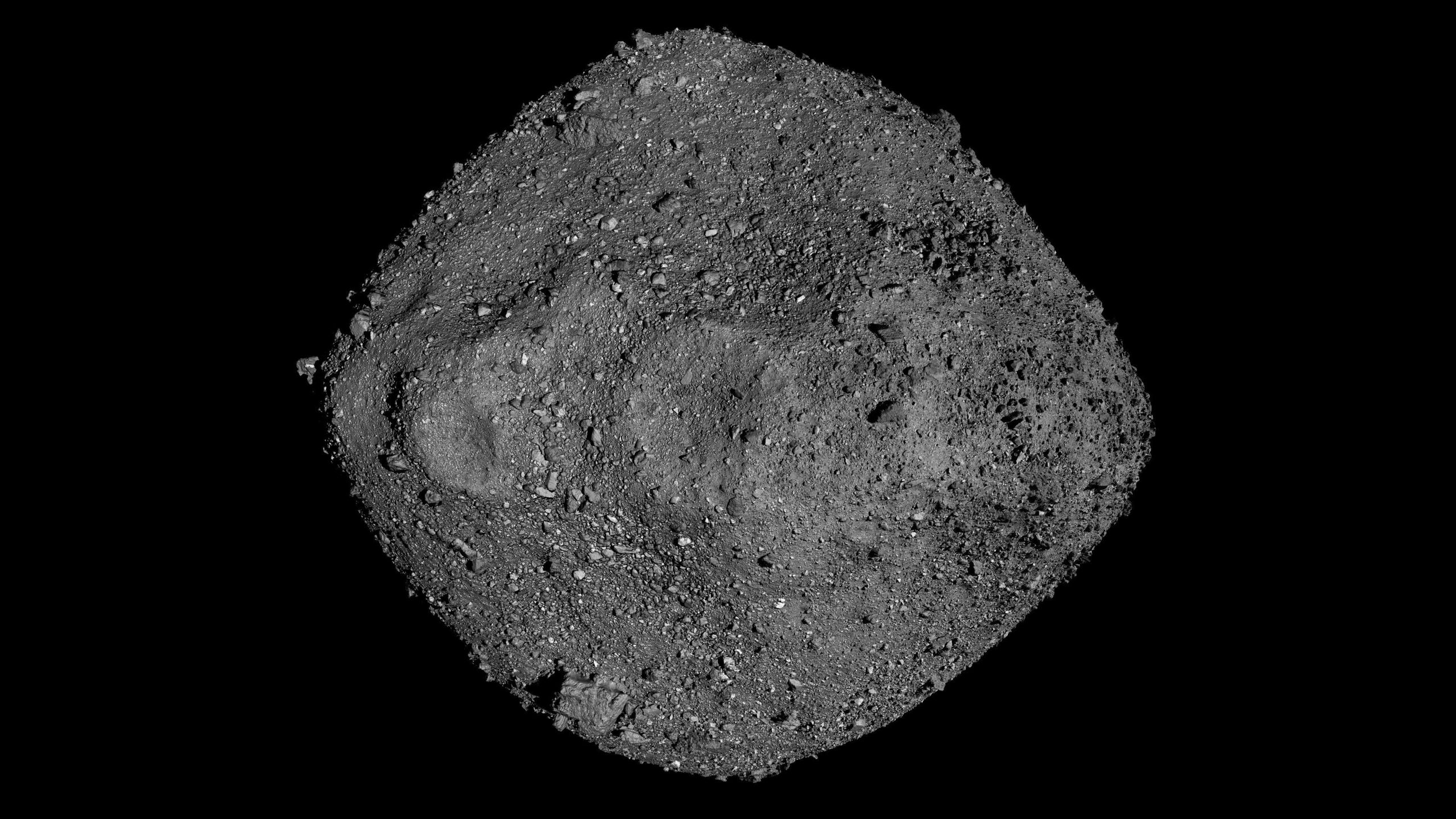
NASA formally retired OSIRIS-REx on Sept. 30, closing out the first American mission to gather material from an asteroid and bring it back to Earth, Space reports. The van-sized probe collected its sample from Bennu, a space rock that carries material dating back more than 4.5 billion years, and delivered it to the ground in 2023. The mission's principal investigator, Dante Lauretta of the University of Arizona, marked the end in a LinkedIn post, writing that he had long expected the day but still found it hard to watch it come.
Why it matters
The sample OSIRIS-REx brought home is the largest ever returned from an asteroid, according to Space. It weighs 4.29 ounces (121.6 grams) on Earth, more than double what the mission was required to collect. Scientists have been working through that material ever since, and the resulting literature has passed 200 papers.
Those papers describe a rock rich in the chemistry of life. Bennu's material contains amino acids and sugars that are essential to biology on Earth, along with signs that liquid water once flowed through the asteroid's parent body. Researchers say that water could have acted as the medium in which those compounds combined and reacted.
Most of the sample has not been touched. It is being held back for scientists who have not yet been born, so that they can examine it with instruments and questions nobody can currently foresee, Lauretta said in a statement from the university quoted by Space.
A decade of surprises
The mission's path to Bennu was not smooth. Before it ever flew, the project was turned down twice by NASA, Space reports, before winning approval in 2011 as a $1 billion effort under the agency's New Frontiers Program. OSIRIS-REx launched on Sept. 8, 2016, and spent two years crossing the inner solar system.
At the time of launch, Bennu appeared in telescopes as little more than a dot, and scientists expected a relatively smooth, sandy surface where the spacecraft could set down without difficulty. When the probe arrived in late 2018, that picture fell apart. Bennu turned out to be a loosely assembled pile of sharp boulders.
"Our expectations about the asteroid's surface were completely wrong," Lauretta said in an Oct. 7 university statement cited by Space. He added that there was no obvious spot anywhere on the asteroid to take a sample.
The team settled on a small crater called Nightingale. When the spacecraft touched down, Bennu pushed back so weakly that its surface behaved more like a liquid than solid rock, according to Space. The sampling head drove straight in and stopped only after reaching 20 inches (51 centimeters) deep, at which point thrusters fired to pull the probe away with its cargo.
A second crisis followed. The collector's lid stuck partly open because so much material had been captured, and pieces of the sample began drifting away. The team raced to seal the sampling head inside the return capsule before more was lost.
The return itself, on Sept. 24, 2023, brought another scare when a parachute did not open as intended. The capsule nonetheless came down safely in the Utah desert.
Lauretta drew a lesson from the string of problems, quoting a line from the mission's final report to NASA: successful exploration missions are not the ones that dodge surprises but the ones built to respond to them. He said the description fit OSIRIS-REx, which met unanticipated circumstances repeatedly and repeatedly found a way through.
Records and a second life
The mission's achievements began well before the sample landed. OSIRIS-REx entered orbit around Bennu, which measures 1,610 feet (490 meters) across, earning a Guinness World Record as the smallest body ever circled by a spacecraft, Space reports.
Remote observations from the probe showed that Bennu's surface is covered in carbon-bearing compounds. They also indicated that the asteroid is a fragment of a much larger, water-rich body that was destroyed in a violent collision in the main asteroid belt between Mars and Jupiter.
The spacecraft is not finished. It has been renamed OSIRIS-APEX, short for OSIRIS-APophis EXplorer, and is spending its remaining propellant on a course toward Apophis, a near-Earth asteroid of a different type than Bennu. Arrival is scheduled for 2029.
Watch for the first results from that encounter, and for further papers from the Bennu material still waiting in storage.