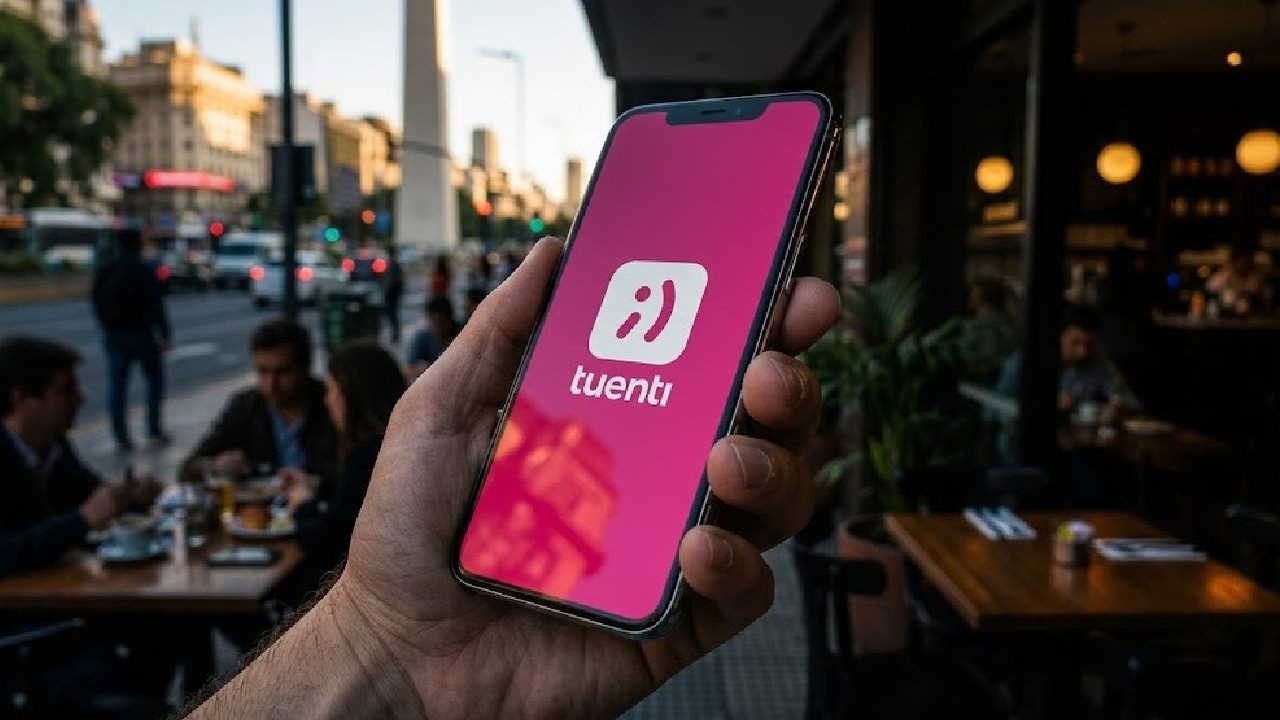
More than 6 million Movistar mobile lines will pass to Metrotel, which will operate them under the Tuenti brand, according to iProfesional. The transfer is the direct result of the divestment the state required of Telecom as a condition for clearing its purchase of Telefónica Argentina.
The deal covers 6,005,425 mobile lines, iProfesional reports. Roughly 4 million of them are in the Buenos Aires metropolitan area, with the remaining 2 million spread across the rest of the country. Another 211,566 residential internet subscribers with an associated landline, located in 28 localities, are part of the package.
Not all of Movistar's customer base is affected. Only the clients and assets that the competition authority judged necessary to keep the mobile market competitive will change hands.
Why it matters
The handover reshapes Argentina's mobile market. Metrotel becomes the country's third operator, according to Clarín, and will compete with Personal and Claro. It also marks the end of Movistar as a mobile phone brand in Argentina, a point Infobae has reported.
For customers, the central question is what actually changes. According to iProfesional, the agreement states that phone numbers, current contracts, prepaid balances and active promotions will all be preserved. The companies have not yet announced the operational details of the migration.
Numbers stay, contracts carry over
The provider changes; the number does not. That is what the filing Telecom submitted to the National Securities Commission (CNV), which iProfesional reviewed, sets out. Telefónica Móviles Argentina (TMA), the operator behind Movistar, is obligated to notify each customer of the transfer as soon as possible.
The same document says the transfer covers contracts, numbering, consumption history and current commercial terms. Unused prepaid balances and active promotions are included. In practice, each user keeps their number, and their contractual relationship moves to Metrotel without any portability paperwork.
A stock of SIM cards is among the assets changing hands, though the filing does not say whether users will have to replace their chips. It also gives no instructions for individual procedures. For Movistar customers whose lines fall inside the 6,005,425 covered by the agreement, that answer will only come with the formal notification each company must send.
The goal stated in the documentation is that the migration does not interrupt service or alter the terms the customer originally agreed to with Movistar. Whether that holds in practice will depend on coordination among TMA, Metrotel and the regulatory bodies.
Prices are not frozen, and support channels are unclear
Carrying over the terms does not mean prices are locked. The papers filed with the CNV announce no new rates and do not describe the commercial offer Metrotel will launch. Nor do they support the assumption that every customer will move to a prepaid model simply because the operation uses the Tuenti brand.
The license Metrotel obtained allows it to offer mobile services to individuals and businesses, plus fixed broadband and residential telephony. Its scope goes well beyond the prepaid bundles Tuenti is known for in Argentina. The license fee is one million dollars a year plus VAT, with the first year waived.
After-sales support is another open question. The filing does not specify which app, inquiry channels or payment methods customers will use once they switch operators. The existence of a Tuenti app does not guarantee that all Movistar customers must adopt it right away, or that their procedures will change overnight. This point is especially sensitive for postpaid and corporate users, whose billing and complaint handling tends to be more complex than a prepaid customer's.
Metrotel has a track record in the corporate segment but no history of serving millions of individual customers. Moving from 9,000 business accounts to more than 6 million retail lines will require support infrastructure, contact centers, SIM logistics and a digital platform that its current structure does not have.
How coverage will be maintained
To avoid interruptions, the agreement provides for transitional services and access to Telecom and TMA infrastructure. Metrotel will be able to serve new customers without first building a national network of its own. Antenna and radio equipment sharing, along with roaming agreements, is meant to keep coverage continuous through the transition period.
For fixed internet subscribers, the package includes fiber-to-the-home assets that TMA deployed in the city of Buenos Aires, plus infrastructure access contracts. The transfer of those customers also covers their service terms and the associated landline.
The filing sets no detailed migration schedule for each user segment. Approval by Telecom's board does not close the operation either: TMA's board must still agree, the final contracts must be signed, and the transfer itself must be carried out. Dates and steps will depend on what the companies announce.
Before the buyer's identity was known, iProfesional reported that Telecom had to shed 6 million mobile lines and that no interested party had emerged.
La Nación has reported that the handover of Movistar customers to Tuenti is set to begin in the coming days. El Destape, meanwhile, has covered the former Clarín executives behind the divestment that cleared the Telecom-Telefónica merger.
What to watch: the formal notifications TMA and Metrotel must send to affected customers, and whether those notices address SIM replacement, pricing and support channels.




