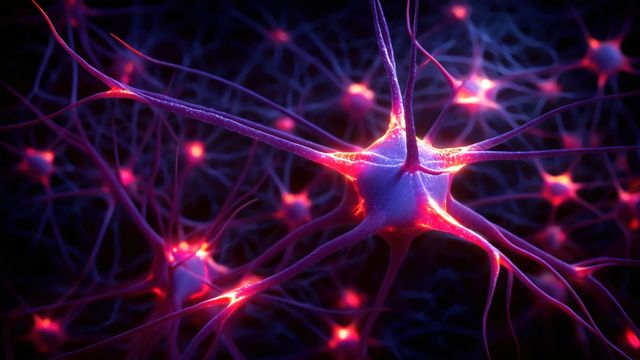
A research team at the Institute for Neurosciences (IN), a joint centre of the Spanish National Research Council (CSIC) and Miguel Hernández University of Elche (UMH), has produced the first multi-omic atlas of the mouse embryonic thalamus, according to Technology Networks. The work, published in Nature Neuroscience, reconstructs how the different neuronal cell types of this brain region take shape during development. The study reports that sensory neurons and those tied to motor and associative functions diverge along separate developmental routes from very early stages, and it identifies the gene Sp9 as a key regulator of visual neuron identity.
Why it matters
The thalamus is more than a relay station between the body and the cerebral cortex. It also combines sensory signals and helps organise sensory maps, and Technology Networks notes that the laboratory led by Guillermina López-Bendito at IN CSIC-UMH has spent recent years clarifying this active role. The region is built from distinct nuclei, each holding neuron groups specialised for sensory, motor or associative jobs. How those nuclei assemble in the embryo, and what fixes the identity of their neurons, had remained open questions. The new atlas addresses both by tracing thousands of cells from their earliest stages to their final specialisation.
Two lineages, two tempos
The team worked at the level of individual cells, taking cells from embryonic mouse brains at several developmental points. For each cell they recorded which genes were switched on and which stretches of DNA were open for regulation. José López-Atalaya, who heads the Cellular Plasticity and Neuropathology laboratory at IN CSIC-UMH and collaborated on the study, explained the logic: combining those two layers of information let the researchers rebuild how cells differentiate over time and pin down the gene regulatory programmes steering those paths.
The data show that thalamic neurons do not all travel one road to specialisation. Two major cell lineages split apart very early in embryonic development — one producing sensory nuclei, the other forming nuclei linked to motor and associative functions. The two genetic programmes also move at different speeds, with sensory circuits reaching certain milestones ahead of the circuits behind cognitive and motor functions.
The atlas also turned up an unexpected waypoint inside the sensory pathway. Before specialising, some neurons pass through a molecular state that resembles neurons of the thalamus's higher-order nuclei. First-order nuclei carry signals such as visual or tactile information from the outside world to the cerebral cortex; higher-order nuclei take part in more complex communication between brain regions.
To check that cells really followed this route, the researchers used genetic labelling to follow progenitor cells and the neurons they produce. Lorenzo Puche-Aroca, first author of the study, said the approach let the team experimentally confirm predicted relationships between cells and showed that, within the sensory lineage, cells first enter a state resembling higher-order nuclei before becoming sensory neurons such as visual or somatosensory ones.
Sp9 and the making of a visual neuron
Working from the genetic programmes in the atlas, the team zeroed in on Sp9, the gene carrying instructions for the SP9 protein, a transcription factor that controls the activity of other genes. To test its role, the researchers experimentally lowered its activity during mouse embryonic development. López-Bendito said that when Sp9 activity was reduced, visual neurons failed to properly acquire their identity, indicating the gene is important for establishing the features that set these neurons apart as they develop.
The findings rest on mouse data, and the study as reported does not extend its claims to human development. What the atlas offers is a detailed, cell-level account of how one deep brain region assembles itself, together with a shortlist of regulatory genes that can now be tested one by one. Watch for follow-up work probing whether the same programmes and the same intermediate state appear in other species and in models of thalamic disorders.





