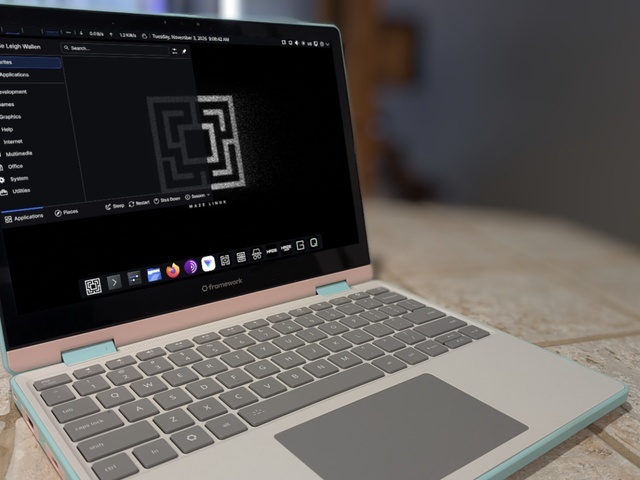
Maze Linux, a distribution built around security, privacy and artificial intelligence, has been reviewed by ZDNET Japan, which published its assessment on November 8, 2026. The operating system is based on Arch Linux and ships with a hardened KDE Plasma 6 desktop running on Wayland. According to ZDNET Japan, it offers more security, anonymity and AI tooling than most desktop operating systems, and its AI features run locally so that chat content never leaves the machine.
The review's central finding is that Maze Linux manages to be both locked down and approachable. ZDNET Japan notes that it has encountered numerous distributions over the years that promise formidable protection but leave Linux newcomers struggling, and the reviewer questions what such a system is worth if ordinary users cannot actually operate it. Maze Linux, in the outlet's assessment, overcomes that trade-off by pairing its security posture with a desktop that people can pick up quickly.
Why it matters
Security-focused Linux distributions have long carried a reputation for friction: extra prompts, unusual configurations and documentation aimed at specialists. If a distribution can deliver hardened defaults without forcing users to relearn their computer, the practical benefit of those protections widens considerably. ZDNET Japan frames Maze Linux as an attempt to close that gap, and its verdict is that the attempt succeeds.
The review also highlights a second shift: AI features that are pre-installed, pre-configured and running on the local machine rather than in a remote data center. For users concerned about where their conversations and data end up, that architecture is the point rather than an afterthought.
A familiar desktop with modest tweaks
According to ZDNET Japan, Maze Linux's KDE Plasma environment is customized, but not so heavily that users are left disoriented. The layout keeps a conventional dock at the bottom of the screen, which the review says makes the desktop immediately familiar. A top bar is tuned for more demanding users and displays CPU, GPU, memory and network traffic information.
One quirk the review points out involves two similarly designed buttons. An icon in the dock that looks like a traditional start menu actually launches the Maze Control Center, while the genuine menu button sits at the left edge of the top bar and carries the same visual design as the Control Center launcher.
The application menu mixes well-known software with tools aimed at security, privacy and AI. ZDNET Japan lists ONLYOFFICE Desktop Editors, Firefox, FileZilla, Thunderbird, Steam and VLC Media Player among the familiar entries, alongside a larger set of less common utilities that signal how Maze Linux differs from other distributions. The review describes the pre-installed catalogue as extensive, and says every title has a clear purpose rather than feeling like bloatware.
Local AI, ready out of the box
Maze Linux also ships with an agentic AI chat application that is already set up, according to ZDNET Japan. Because the AI runtime is installed and configured in advance and inference happens on the device, the review states that chat contents are not exposed externally. The defensive layers, meanwhile, are active from the first boot rather than left for the user to switch on.
There is one manual step: the review notes that users must fetch a model themselves, for example by running a command such as ollama pull llama3.1. That requirement aside, the AI stack is presented as ready to use on arrival.
ZDNET Japan's overall conclusion is that Maze Linux takes the protection of its users and their data seriously, and that this commitment shows throughout the system, without costing it ease of use. For readers weighing a move to a security-minded desktop, the review positions Maze Linux as a candidate that does not demand specialist skills as the price of admission.
What to watch: whether Maze Linux can sustain its Arch-based update cadence while keeping its hardened defaults and pre-configured AI stack intact for non-expert users.