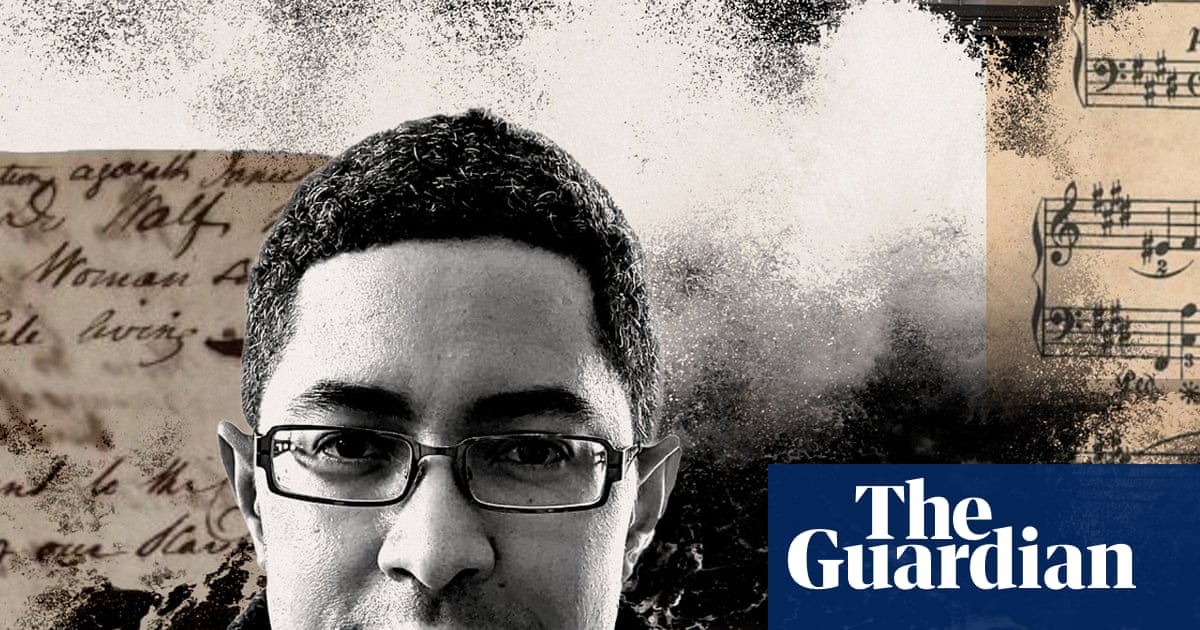
The Manchester-based composer David Önaç has written a requiem that draws on centuries-old insurance records covering the trafficking of enslaved Africans, with the work set to premiere on Sunday at LSO St Luke's in London, according to The Guardian.
The London Symphony Orchestra and BBC Singers will perform Atlantic Requiem, conducted by Grammy-winning conductor Malcolm J Merriweather. The performances fall during Black History Month.
The piece was commissioned by Culture&, an arts and heritage charity, and grew out of research into Lloyd's of London, the historic insurance market whose members helped underwrite ships and enslaved people during the transatlantic slave trade, The Guardian reports.
Why it matters
The project turns documents written to protect a trade in human beings into a memorial for the people that trade consumed. Dr Errol Francis, artistic director and chief executive of Culture&, told The Guardian that one such document opened with the phrase "In the name of God, Amen" — a religious invocation attached to paperwork that treated people as cargo.
Francis, who sat on a steering group overseeing research into Lloyd's historical involvement in the trafficking of enslaved Africans, said that contradiction prompted the idea of a Requiem Mass. In his view, such a work could surface the tension while putting the records to a purpose their authors never intended.
Lloyd's has acknowledged its historical links to enslavement. After publishing the Underwriting Souls interactive archive, it announced its Inclusive Futures programme, aimed at supporting Black and ethnically diverse communities.
Francis drew a line between the requiem and the separate question of financial redress. He told The Guardian the project is not about reparations but about an artwork that recognises both the suffering and the survival of African people.
A score spanning two continents
Önaç told The Guardian that the musical styles he is drawn to come from both sides of the Atlantic, and that the commission gave him a large canvas on which to let those traditions feed into one another. The work blends contemporary classical writing with jazz, gospel and other forms that developed on both shores.
The composer, who is of mixed heritage and has roots on both sides of the Atlantic, said the piece let him explore long-standing questions about where he belongs. He described how the geography of the piano itself shaped his thinking: taking five black keys and two white keys produces a seven-note blues scale, which he characterised as a product of the musical and cultural experience of enslaved Africans on the far side of the Atlantic.
Önaç also framed the requiem as a comment on the present, telling The Guardian that public life now feels sharply divided and combative, and that he tried to capture that split in the contrast between black and white notes.
Testimony from the brig Polly
The requiem's second movement confronts the violence of enslavement directly, drawing on a 1791 grand jury testimony about the killing of an enslaved African woman aboard the brig Polly, commanded by James DeWolf.
The testimony, held by the Newport Historical Society, records the account of John Cranston, a crew member. According to The Guardian, Cranston described an incident during the ship's 1791 voyage from Africa to the West Indies in which an enslaved woman suspected of having smallpox was bound to a chair, gagged and thrown overboard on the captain's orders, amid fears she would infect others on board.
Francis said the material still moves him, describing passages that bring him to tears even in conversation. He said the work speaks not only for those who died but also to the fact that people survived an extraordinary trauma.
For Önaç, the combination of the testimony and the music was at times overwhelming. He recalled the captain's reported remark that he regretted losing a good chair, and said the piece needed to convey the human cost — the emotional weight, the cultural loss and the failure to see value in a human life.
Mixed reception and what comes next
Not everyone views the project as sufficient. The Guardian reports that for some, an artistic response does not go far enough in addressing the legacy of the trade.
The premiere at LSO St Luke's puts the work before a London audience for the first time, with the London Symphony Orchestra and BBC Singers under Merriweather. Further performances are expected during Black History Month, and how the piece is received — and whether it prompts wider discussion of Lloyd's and other institutions' historical ties — is the next thing to watch.


