
The faith-based organisation says the fund will connect entrepreneurs in its network with capital, expertise and markets — with business credibility, not membership, as the test.
What Loveworld Kingdom Says It Has Secured
Loveworld Kingdom said it had secured $1m for a Loveworld Kingdom investment fund aimed at businesses inside its network, weeks after the initiative was unveiled at the Loveworld Trade and Investment Forum in Accra, Ghana, in October.
The faith-based organisation set out the figure in a statement issued on Tuesday. In its own words, the statement read: “Loveworld Kingdom has secured a $1m boost for an investment fund targeting businesses within its network, as the faith-based organisation seeks to mobilise private capital to address financing constraints facing African small and medium-sized enterprises.”
The fund is presented as a way to channel private capital towards small and medium-sized enterprises — SMEs, the smaller firms that make up much of Africa’s business landscape — at a time when many such businesses say affordable financing is hard to obtain. Loveworld Kingdom says it wants to mobilise private capital to address financing constraints facing African SMEs.
What the statement does not say matters as much as what it does. It gives no indication of who provided the $1m, whether the money arrives as a grant, a loan, an equity commitment or a pledge, or over what period it will be made available. No fund manager, investment committee or disbursement schedule is named, and the mechanics of how money would move from the fund to a business are not set out.
For now, the $1m is a figure Loveworld Kingdom says it has secured. It has not been independently confirmed, and the organisation has not published the terms behind it.
The Financing Gap the Fund Is Aiming At
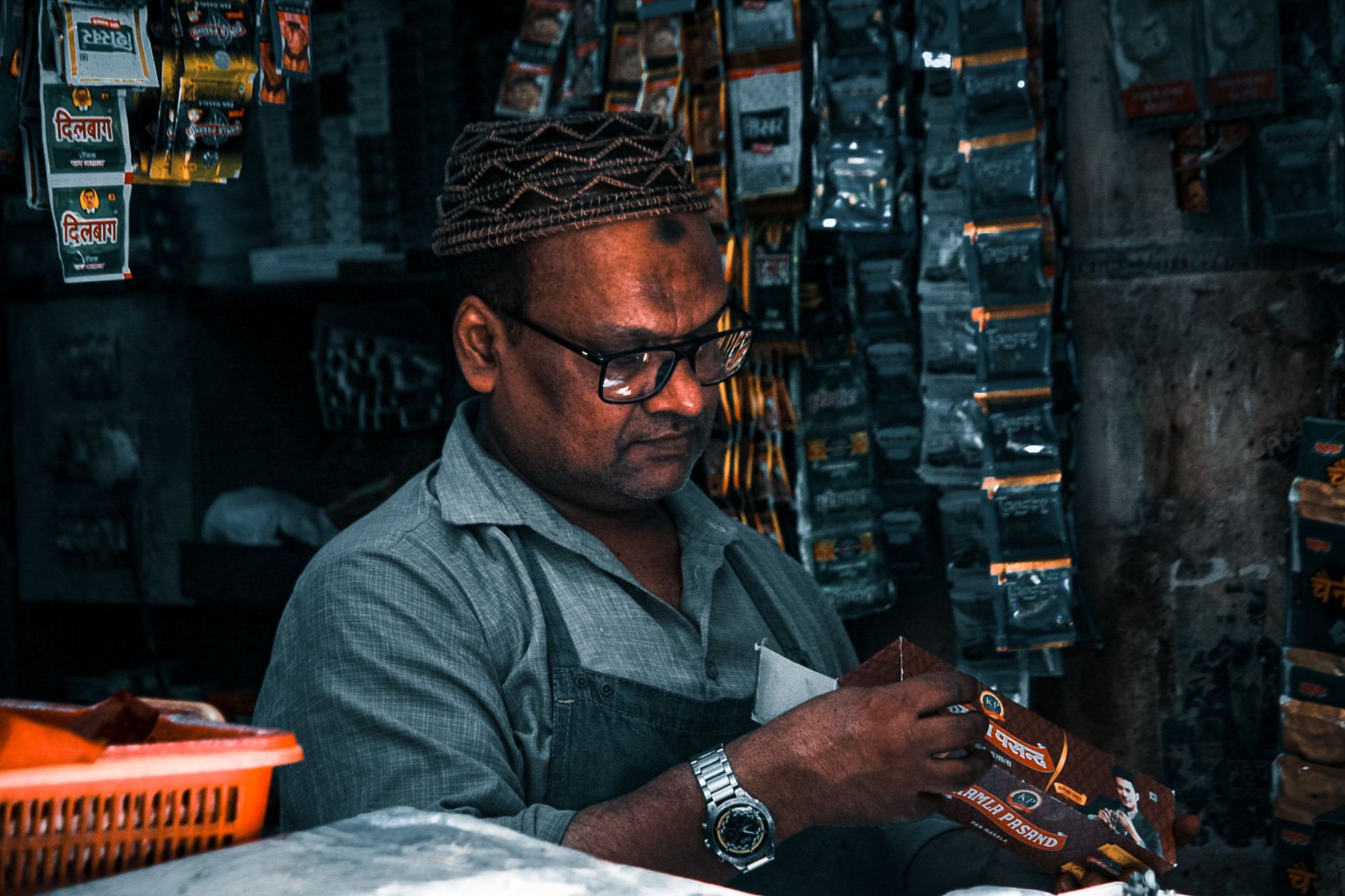
The initiative is being pitched against a financing gap that the organisation illustrates with two figures, both attributed to outside institutions.
According to the World Bank, fewer than five per cent of Nigeria’s micro, small and medium-sized enterprises have access to bank credit.
The African Export-Import Bank estimates Africa’s annual trade finance deficit at approximately $100bn. Trade finance is the short-term credit and guarantees that let businesses buy goods, ship them and get paid across borders; a deficit of that scale implies that many firms cannot obtain the backing they need to trade, with smaller businesses particularly vulnerable to the shortage of funding.
The source points to two familiar barriers. The first is collateral — assets a business pledges to a lender so that the loan can be recovered if repayment fails. The second is financial records: the documented accounts that banks use to judge whether a business can service a loan. Enterprises that lack either are often shut out of commercial lending, however sound their underlying trade.
Those constraints sit behind Loveworld Kingdom’s stated rationale for the fund. The organisation says it wants to mobilise private capital to address financing constraints facing African SMEs, and its proposed model seeks to bring entrepreneurs into closer contact with individuals and institutions capable of providing capital, business advice and market opportunities.
No further statistics are offered in the source, and none are added here. The two figures above are as the source gives them, attributed to the World Bank and the African Export-Import Bank respectively.
Stephanie Oforka: Capital Should Follow the Businesses We Want to See
Stephanie Oforka, Executive Minister of Commerce at Loveworld Kingdom and Convener of the Loveworld Trade and Investment Forum, framed the initiative as a question of where capital is directed.
“We cannot continually speak about the businesses we want to see while directing our capital elsewhere,” Stephanie Oforka said.
Through its Ministry of Commerce, Loveworld Kingdom plans to connect business owners with potential investors, professionals and other resources available within its network. Stephanie Oforka’s argument is that the gap is not only one of money but of direction — that organisations and individuals should put investment behind the businesses they say they want to see grow.
Her stated next priority is scale, and she set out the questions that follow from it:
“Our next responsibility is to scale. How do we take our businesses from local successes to global success? How do we take our businesses to regional relevance? How do we improve standards? How do we increase our production capacity? How do we provide access to capital? How do we connect our businesses to new markets?” Stephanie Oforka said.
The questions are practical ones for any small firm with ambition: better standards, more capacity, capital and customers beyond the home market. Stephanie Oforka presents them as the organisation’s next responsibility rather than as outcomes already achieved. The source does not say how the Ministry of Commerce will select businesses, what form the connection with investors will take, or how progress on those questions will be measured.
What it does record is the direction of travel: from local success towards regional relevance and global markets, with capital access treated as one element among several rather than the whole answer.
Credibility, Not Membership
Loveworld Kingdom maintained that access to financing would not be determined solely by membership or religious affiliation. That position is central to how the organisation describes the fund: the network provides the connections, but the source indicates that commercial viability, not relationships, is the expected test.
Chidi Ezimako, Executive Minister of Hinterlands Ministries at Loveworld Kingdom, emphasised the importance of business credibility, product quality and the ability of entrepreneurs to honour their obligations. His stated emphasis points towards businesses being expected to demonstrate commercial viability rather than depend exclusively on relationships within the organisation.
Bolaji Akinboro, Special Adviser on the Economy to Loveworld Kingdom and Co-founder of Cellulant, stressed the importance of improving productive capacity to enable African businesses to compete in regional and international markets. His emphasis is on what businesses can produce and how well they can produce it — the capacity to compete beyond a local customer base.
Taken together, the two positions describe a filter that looks commercial rather than relational. Credibility, quality and the record of honouring obligations speak to how a business behaves with money and customers; productive capacity speaks to whether it can meet demand at scale. Neither Chidi Ezimako nor Bolaji Akinboro is quoted as setting out fund criteria, and the source does not describe formal eligibility rules, guarantees or selection processes.
The distinction matters for readers trying to understand the model. A network can convene investors, professionals and customers; it cannot by itself make a business creditworthy. The organisation’s own framing — access not decided by membership or religious affiliation — places the emphasis on the business case each entrepreneur brings.
What the Model Could Mean for African SMEs

The source highlights the potential for organised religious communities to facilitate business financing by connecting entrepreneurs with investors, suppliers, professional expertise and customers. That is the structural argument: a large, organised community already contains many of the parties a growing business needs, and can shorten the distance between them.
Such arrangements, the source notes, could provide additional funding opportunities for enterprises that struggle to meet conventional lending requirements. For businesses caught between informal savings and bank credit they cannot access, a network that brings investors and professional advice into the same room represents a different route — not necessarily an easier one, but an additional one.
The source also carries its own caveat. The sustainability of the model would depend on effective investment management and commercial performance. That is the organisation’s own framing of the risk: connections can open a door, but the money still has to be managed well and the businesses still have to trade profitably.
No prediction is offered here about whether the model will work. The source does not disclose the fund’s investment management arrangements, its performance to date, or the terms on which any business would receive support. What it does describe is an attempt to mobilise private capital through a community structure, with commercial viability named as the test.
The Next Test: Scaling Beyond Local Markets
Stephanie Oforka’s stated next priority is to help participating businesses develop beyond their existing markets by strengthening production capacity, improving standards and expanding access to capital. The scaling questions she raised — regional relevance, standards, capacity, capital and new markets — are now the organisation’s own benchmark for what comes after the announcement.
Several questions remain open. The source does not disclose the fund’s governance, how or when money will be disbursed, or how performance will be reported. It does not name the provider of the $1m, the instrument used, or the period over which the fund will operate. Nor does it set out how businesses will be selected or what they will be expected to show.
Weeks after the Accra unveiling, the $1m is a stated commitment and the model is a stated intention. The test Stephanie Oforka described — taking businesses from local success to regional and global relevance — is the one the organisation has set for itself.
Key Facts at a Glance
- $1m: Loveworld Kingdom said it had secured $1m for an investment fund targeting businesses within its network (attributed; donor, instrument and timeline not disclosed).
- Unveiling: Loveworld Trade and Investment Forum, Accra, Ghana, October.
- Stephanie Oforka: Executive Minister of Commerce at Loveworld Kingdom and Convener of the Loveworld Trade and Investment Forum.
- Chidi Ezimako: Executive Minister of Hinterlands Ministries at Loveworld Kingdom.
- Bolaji Akinboro: Special Adviser on the Economy to Loveworld Kingdom and Co-founder of Cellulant.
- World Bank, as quoted: fewer than five per cent of Nigeria’s micro, small and medium-sized enterprises have access to bank credit.
- African Export-Import Bank, as quoted: Africa’s annual trade finance deficit is approximately $100bn.