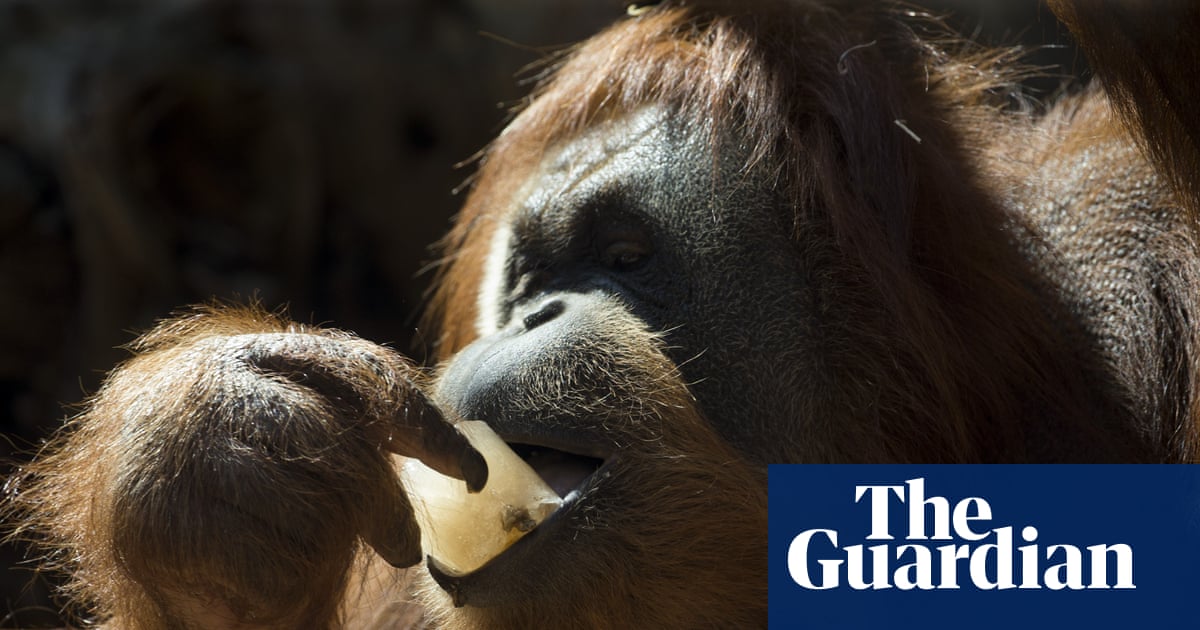
Captive orangutans were more likely to choose a food reward that had been paired with recordings of other orangutans playing and laughing, according to a study reported by The Guardian. The research, published in the journal Biology Letters, involved six orangutans housed at two zoological institutions. Erica Cartmill, a professor of anthropology and cognitive science at Indiana University and the study's senior author, said the work forms part of a wider effort to understand whether animals experience joy and how those feelings affect thinking and learning.
Why it matters
The findings add to a growing body of evidence that emotion and reasoning are not separate systems, according to the researchers. Cartmill told The Guardian that human studies have already shown feelings can shape rational thought, and her team wanted to test whether the same holds true for other animals. The results, she said, indicate that the value an orangutan places on a reward depends not only on how much or how often it is given, but also on the animal's emotional state at the moment the association is formed.
How the experiment worked
The team began by training the orangutans to rummage through bowls to locate hidden food treats. In the main test, each ape was shown two bowls. One held a treat buried beneath a harmless material such as moss or sawdust; the other held a different material with nothing inside. Before the bowls were presented, the researchers played a soundtrack — either orangutan play and laughter or environmental noise such as wind. Which sound accompanied which covering material was decided in advance, so that each ape could build a link between a specific material and a specific sound.
On the fifth day, the setup changed. Both bowls now contained a treat, each buried under one of the two materials, and the orangutans were asked to pick one. Across repeated trials, the apes as a group leaned toward the bowl whose covering had been paired with the laughter recording. Four of the six animals showed a marked preference.
Cartmill suggested the laughter may have lifted the orangutans' mood while they were learning which material signaled food, and that this brighter emotional state then carried into how they weighed the two options later.
Outside reaction and possible lessons for people
Adriano Lameira, a primatologist and evolutionary psychologist at the University of Warwick who was not involved in the study, called the results fascinating. He told The Guardian that by hearing others plainly enjoying themselves, the orangutans effectively placed a food order along the lines of asking for whatever their peers were having.
Cartmill said the work points to practical implications for human settings, education among them. Students may absorb material at similar speeds whether or not they are in a good mood, she said, but her research suggests they would place more value on information learned while feeling positive. That idea, she added, could help explain why some information is trusted more than other information, or why students stick with certain subjects. A pupil who feels anxious while studying maths, for instance, might be less inclined to pursue the subject later.
The study is the latest to probe the link between feeling and learning in great apes, a line of inquiry Cartmill's team frames as an extension of human emotion research into the animal world.
Watch for follow-up work from the same research program on how emotional context shapes memory and decision-making in other species.