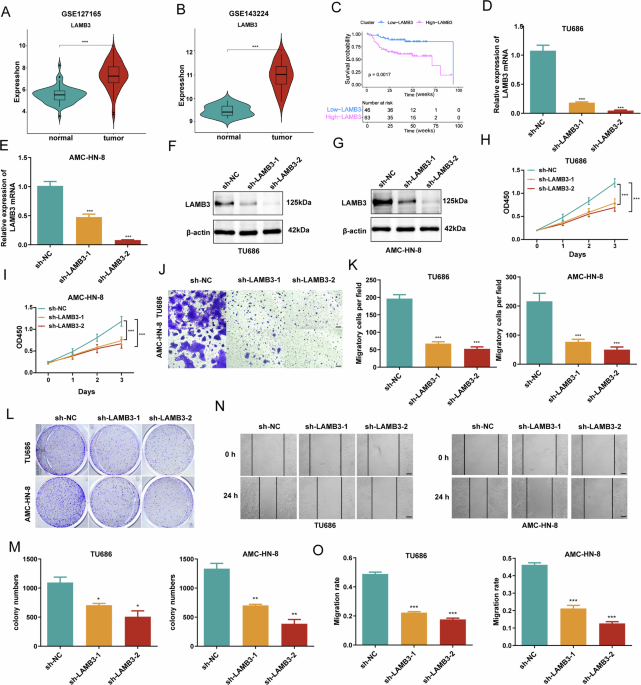
A study published in Nature has identified a molecular pathway that drives the progression of laryngeal carcinoma, a cancer of the voice box that continues to carry a poor prognosis. According to the research, the extracellular matrix protein Laminin Subunit Beta-3, or LAMB3, is overexpressed in laryngeal carcinoma tissues and promotes tumor growth by reprogramming cancer cell metabolism toward glycolysis.
The findings, reported by Nature, position LAMB3 as both a potential prognostic biomarker and a therapeutic target, and describe a signaling cascade — LAMB3-EGFR-MAPK-PKM — that appears essential to the protein's cancer-promoting effects.
Why it matters
Laryngeal carcinoma remains difficult to treat, and the study's authors note that new therapeutic targets are needed. The research connects a structural protein in the tumor environment to a well-known metabolic feature of cancer cells: the shift toward rapid glucose consumption and lactate production, often called glycolytic reprogramming or the Warburg effect.
Because the study shows that blocking this pathway — either by silencing PKM genetically or by inhibiting EGFR or MAPK pharmacologically — reverses LAMB3-driven metabolic changes and tumor-promoting behavior in both cell and animal models, it raises the possibility that existing drugs targeting EGFR or MAPK signaling could be relevant for patients whose tumors show high LAMB3 expression. The work also adds LAMB3 to a growing list of laminin family proteins implicated in cancer, alongside LAMC2 in pancreatic cancer and LAMB3 itself in cervical, salivary gland, and pancreatic tumors.
Tracing the pathway from LAMB3 to PKM
The researchers began with bioinformatics analysis of multiple GEO datasets, which showed that LAMB3 is significantly overexpressed in laryngeal carcinoma tissues compared with normal tissue. Higher LAMB3 expression correlated with shorter overall survival, according to the study.
Functional experiments using two distinct laryngeal carcinoma cell lines showed that reducing LAMB3 levels suppressed cell proliferation, migration, and the ability of cells to form colonies. Knockdown of LAMB3 also reduced glycolytic metabolism in vitro and inhibited tumor growth in xenograft models.
Mechanistically, the team found that LAMB3 activates the EGFR-MAPK signaling axis, increasing phosphorylation of both EGFR and ERK. That activation leads to transcriptional upregulation of PKM, a key enzyme in glycolysis. The result is enhanced glycolytic flux, which the researchers measured through increased glucose uptake and lactate production.
The dependence on this axis was absolute in the experiments: when PKM was genetically silenced, or when EGFR or MAPK was inhibited with drugs, LAMB3's effects on glycolytic reprogramming and tumor-promoting phenotypes disappeared both in vitro and in vivo. The study's authors conclude that LAMB3 functions as a novel prognostic biomarker and that the LAMB3-EGFR-MAPK-PKM axis represents a promising target for therapeutic intervention in laryngeal carcinoma.
Context and caveats
The study situates itself within a broader body of work on cancer metabolism and the tumor microenvironment. Laminins are extracellular matrix proteins with established roles in tissue development and disease, and prior research has linked other laminin subunits to tumorigenesis through EGFR and ERK signaling. The new work extends that pattern to laryngeal carcinoma and ties it specifically to PKM, an enzyme that has drawn attention for its multiple functions across cell types and its involvement in immune responses.
The paper also references the wider clinical landscape for laryngeal carcinoma, including systematic analyses of global disease burden and reviews of systemic therapy options. It notes that metabolic reprogramming and immune microenvironment characteristics in laryngeal carcinoma are active areas of immunotherapy research, and that lactate and lactylation have emerged as mechanisms of interest in tumor immunology and treatment resistance.
The original data from the study are available upon reasonable request from the corresponding author, according to the publication.
What to watch: whether the LAMB3-EGFR-MAPK-PKM axis can be validated in patient cohorts and whether EGFR or MAPK inhibitors already in clinical use show activity in LAMB3-high laryngeal tumors.





