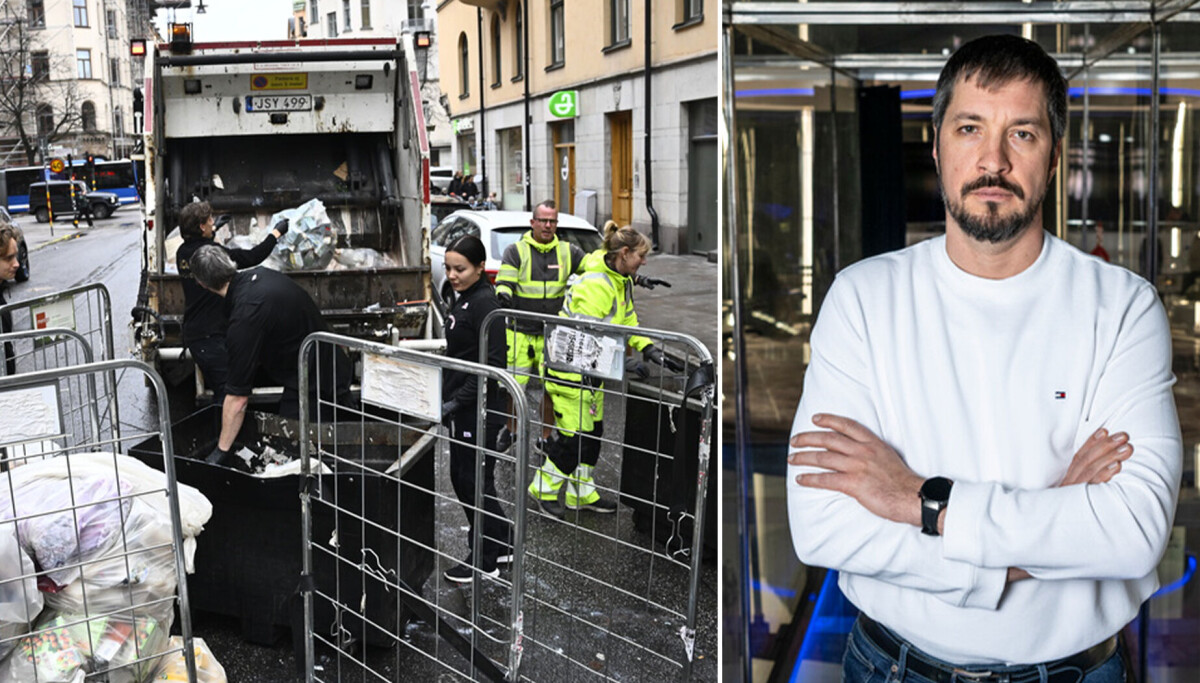
A cyberattack that knocked out refrigeration in grocery stores across Europe, including Coop and Ica outlets in Sweden, was technically uncomplicated, according to the official responsible for defending Kyiv's digital infrastructure. Oleksandr Voloshtchuk, deputy head of cyber defence at the city-owned company Kyivteleservice, told the Swedish news agency TT that the operation was simple and that artificial intelligence was very likely used to find the weak points it exploited. He spoke during a visit to Bahnhof's Pionen data centre in Stockholm, as reported by Ny Teknik.
The attack struck overnight into Monday and affected several European countries. In Sweden, refrigerators and freezers in Coop and Ica stores were warmed up, forcing food to be thrown away.
Why it matters
Voloshtchuk's assessment places the incident in a broader pattern. He described it as a clear illustration of how a digital intrusion can produce immediate consequences in the physical world, noting that the same kind of access could be used to close roads, alter traffic signals or turn a freezer into an oven.
His remarks also carry weight because they come from a city that has spent four years defending itself against Russian cyber operations. Similar attempts have been recorded in Kyiv, he said, though the effect there was smaller because fewer cooling units in the Ukrainian capital are connected to the internet.
An attack that scaled through a shared supplier
According to Voloshtchuk, the intruders most likely deployed AI to hunt for vulnerabilities. The low difficulty of the technique is compounded by market concentration: because many retailers rely on the same equipment supplier, a single flaw can open the door to a large number of devices.
"Connecting freezers to the internet means you also have to protect them," he told TT. "From what we have been able to see of this attack, many systems had not been updated."
That combination — unpatched equipment, networked appliances and a common vendor — is what allowed a modest piece of exploitation to register as a physical disruption rather than a purely digital one, in his account.
A security centre built after the invasion
Voloshtchuk leads the security operations centre established in Kyiv after Russia's full-scale invasion in February 2022. He and his colleagues had to start from nothing and gradually assemble the system now used to detect and repel attacks on the city's digital infrastructure.
His takeaway from that experience is that preparation cannot be improvised once a war has begun. Building such a capability after hostilities start, he said, presents a major challenge.
By his account, Russian cyber operations have so far not succeeded in causing critical damage to Kyiv's digital infrastructure. But the character of the attacks has shifted.
Over the past one to two months, Voloshtchuk said, his team has observed many incidents in which AI is used in the opening phase. Kyiv's assessment is that Russia has obtained access to Chinese AI models, which he expects to pose a growing test for defenders and is something the city is preparing for.
The freezer incident, meanwhile, has drawn attention beyond security circles in Sweden: local coverage described strong public support for a café affected by the disruption, and consumer advice on hardening smart-home devices has circulated in the Swedish press.
What to watch is whether retailers and equipment makers disclose which systems were exposed and whether patches follow, and whether Kyiv's warning about AI-assisted reconnaissance in the first stage of attacks shows up in incident reports elsewhere in Europe.