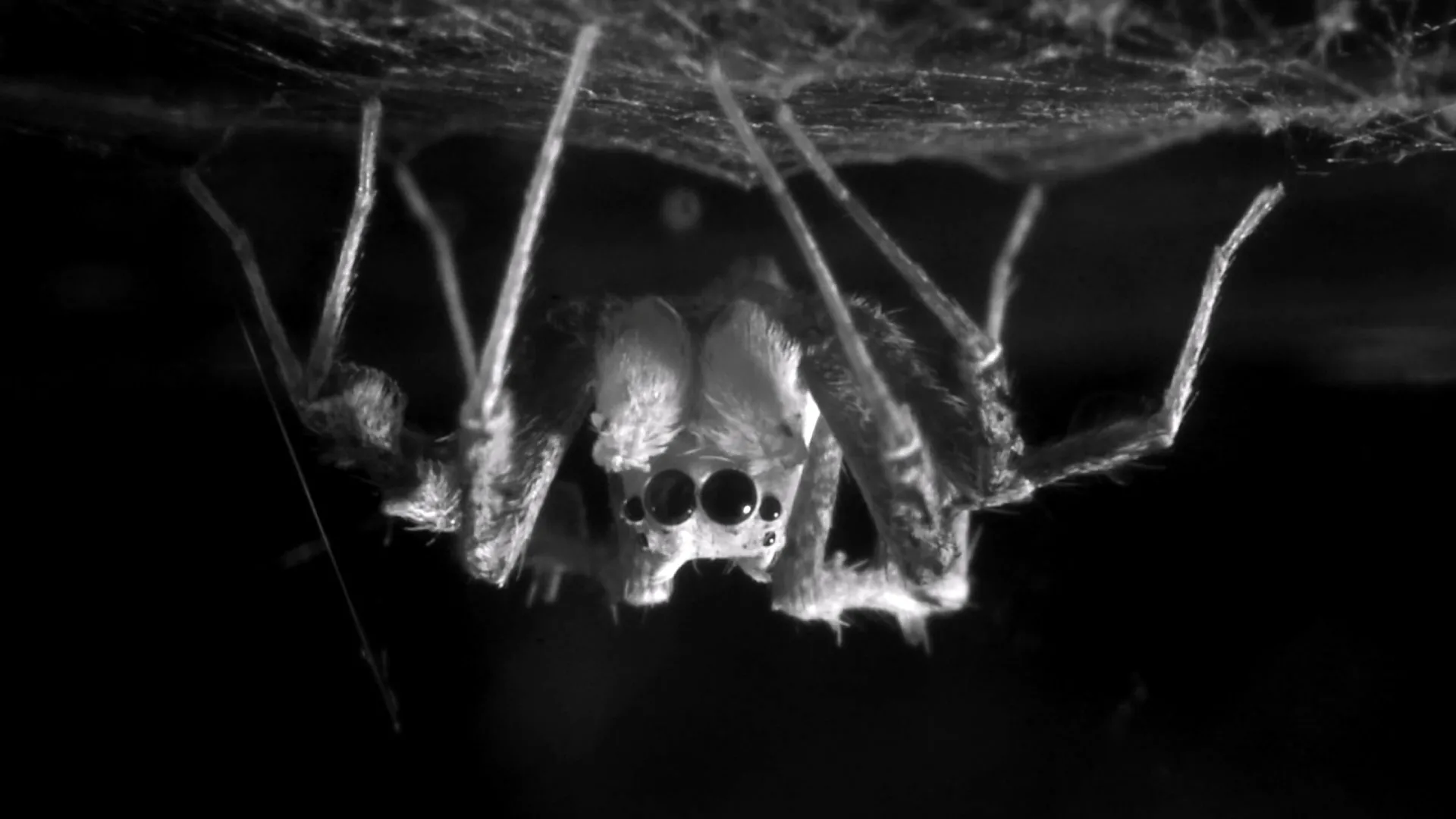
Researchers at the University of Bonn report that spiders pass through separate stages of sleep, one of which resembles the rapid eye movement (REM) phase seen in humans. According to Science Daily, the team observed the Australian jumping spider Portia fimbriata moving its eyes and twitching its muscles during this stage, mirroring behavior linked to REM sleep in vertebrates. The work, carried out at the university's Institute of Organismic Biology, is described as the first thorough experimental confirmation that spiders sleep in a regulated way rather than merely going quiet.
Why it matters
Almost everything science knows about sleep comes from vertebrates, mainly mammals and birds. Finding comparable sleep features in an animal with a very different nervous system could help researchers work out when and why the different types of sleep appeared during evolution. The Bonn findings, as reported by Science Daily, also open questions about whether creatures with radically different wiring share basic sleep functions. The researchers say the results point toward behavioral science, neuroscience and chronobiology — the study of biological rhythms — as areas where the discovery could matter.
A spider that hunts other spiders
Portia fimbriata is small, roughly the size of a one-euro coin when fully grown, but it is an unusually capable predator. Rather than mainly catching insects, members of the genus Portia target other spiders. They deploy a range of tricks, including mimicking the vibrations of an insect struggling in a web. Those false signals can draw a web-building spider out toward what looks like an easy meal, where the hunting Portia is waiting instead. Science Daily reports that such behavior suggests unusual learning abilities, which is part of why the species is a useful subject for studying the links between sleep, nervous system function and cognition.
How the sleep was measured
The team watched individual spiders placed in plastic dishes 12 centimeters across, monitoring them across several days and nights under different lighting conditions to track their activity and rest cycles. Infrared cameras let the researchers observe the animals after dark without visible light, recording sleeping postures, quiet rest and bouts of REM-like movement. To test whether the spiders were actually asleep rather than simply motionless, the team used sound stimuli and timed how quickly the animals reacted to disturbances. They also interrupted the spiders' sleep to see whether the animals made up for lost rest afterward — a "sleep rebound" — which Science Daily reports as further evidence of regulated sleep with distinct stages.
Limits of the evidence
Confirming that a spider is asleep is far harder than watching a person doze. Because spiders sense the world differently, the researchers first had to find a sound that reliably provoked a response. They were also careful not to assume that the eye movements and twitches they saw meant the same thing as human REM sleep. The biggest constraint was that they could not record brain activity at all, so the sleep states were identified purely from carefully documented behavior. That took high-resolution video gathered over many days and nights, which produced a large volume of footage to analyze. Science Daily notes that the researchers stress the REM-like movements do not show that spiders dream; the finding shows instead that their sleep is more complex than previously thought.
What to watch
The Bonn team argues that future sleep research should look beyond the usual study animals and include species with unusual adaptations or much simpler nervous systems, to see whether particular sleep mechanisms are widespread across the animal kingdom or arose separately in different lineages.





