Saudi Arabia and the wider Arab region have a packed astronomical calendar in November 2026, according to the Jeddah Astronomical Society, with a close-approach full moon, four planets spread across the dawn sky and three meteor showers all on the schedule. Majed Abu Zahra, who heads the society, laid out the month's phases and events, with all times given in Mecca time.
The moon reaches its last quarter on Sunday, November 1 at 11:28 p.m., then goes dark at the new moon on Monday, November 9 at 10:02 a.m. First quarter falls on Tuesday, November 17 at 2:48 p.m., and the moon turns full on Tuesday, November 24 at 5:53 p.m.
Why it matters
Most of what Abu Zahra describes needs no equipment at all. The society's guidance is that the naked eye is enough for the moon phases, the planetary groupings and the brighter meteors, while binoculars or a telescope help with fainter targets. That makes November an unusually accessible month for casual skywatchers across the Kingdom, not just dedicated amateurs.
A full moon that arrives near the closest point
The November 24 full moon lands shortly before the moon swings through perigee, its nearest point to Earth in its orbit, on Thursday, November 26 at 11:58 p.m. Popular media call this a "supermoon," and Abu Zahra noted that the label is not an official astronomical classification. The effect is real but modest: compared with a full moon near apogee, the farthest point, this one appears slightly larger and brighter.
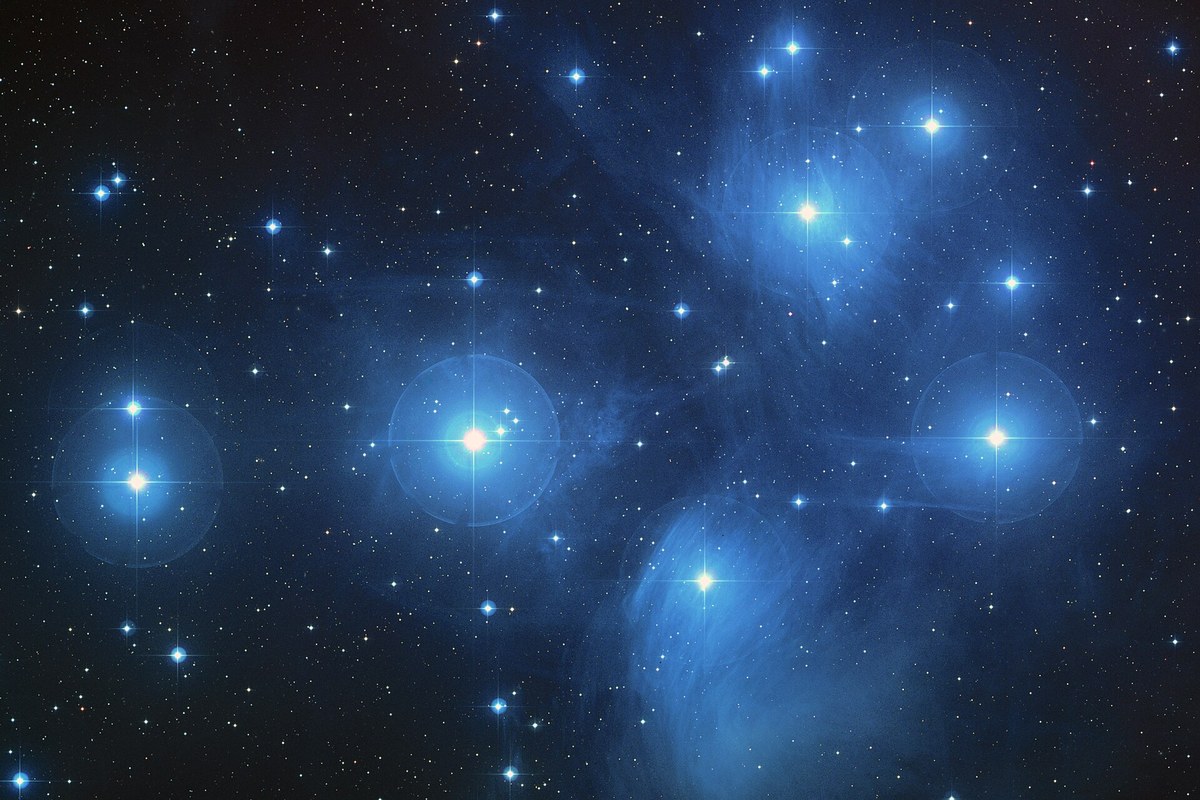
The moon also makes a series of close passes during the month. On the evening of Friday, November 20 it appears near Saturn. On November 24 and 25 it moves past the Pleiades cluster and then the star Aldebaran.
Four planets before sunrise
The dawn sky carries most of the planetary action. On Saturday, November 7, a thinning crescent moon sits close to Venus. Between November 13 and 22, Mercury, Venus, Mars and Jupiter are all visible, scattered across a wide stretch of sky rather than bunched together.
Mercury is the trickiest of the four. Viewing improves between November 20 and 22, provided the eastern horizon is clear. The planet reaches its greatest western elongation on Saturday, November 21 at 1:59 a.m.
The standout arrangement comes before sunrise on Sunday, November 22, when Mars, Jupiter and the star Regulus form a roughly isosceles triangle. Mars sits about 2.4 degrees from each of the other two, while Jupiter and Regulus are separated by about 3.9 degrees — a grouping the society says can be followed without any optical aid.
Uranus reaches opposition to the sun on Thursday, November 26 at 1:47 a.m., putting it in the sky for most of the night. The society advises binoculars or a telescope for that one.
Three showers and a distant galaxy
The Southern Taurids are active through the month, with a theoretical rate of about five meteors an hour. The Northern Taurids peak on the night of November 11 into November 12. The Leonids peak on the night of November 17 into November 18, with an expected rate of 10 to 15 meteors an hour under ideal conditions.
Abu Zahra cautioned that actual counts often fall short of those figures. Light pollution, weather and how high the radiant point sits in the sky all cut into what observers see.
November is also a good window for the Andromeda galaxy, roughly 2.5 million light-years away. Away from city lights it shows up as a faint, hazy patch to the unaided eye, and binoculars make it easier to pick out.
For the best results, the society recommends a dark site with an open horizon, a check on the weather forecast, and about 20 minutes for the eyes to adjust to darkness. Bright light sources should be avoided, since they undo that adjustment.
The next markers to watch are the November 22 triangle before sunrise and the November 24 full moon, with the Leonids peaking in between.





