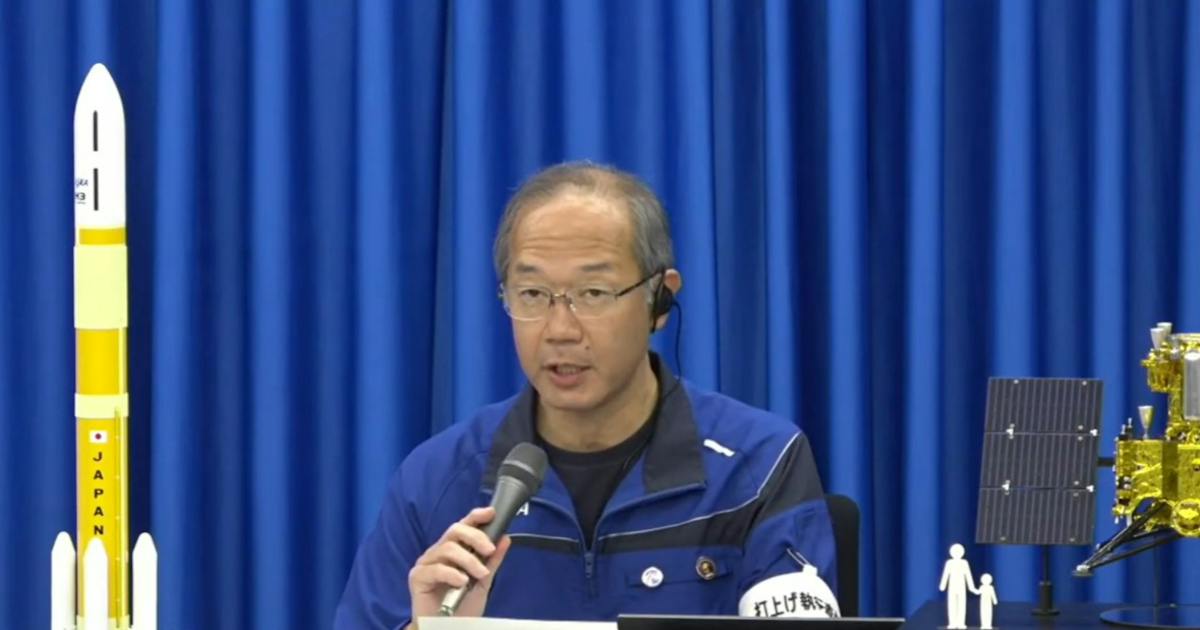
The Japan Aerospace Exploration Agency (JAXA) will launch its MMX Mars moon explorer aboard the tenth H3 rocket in the early hours of October 20, the agency said at a press conference on October 18. Liftoff is scheduled for around 4:41 a.m. from the Tanegashima Space Center in Kagoshima Prefecture, according to 日本経済新聞.
MMX is designed to collect soil from Phobos, one of Mars's two moons, and bring it back to Earth. JAXA says no mission has yet returned samples from that moon, and success would be a world first. The spacecraft is expected to reach the Martian sphere in 2027 and return in 2031.
At the briefing, MMX project manager Masashi Arita said the mission draws attention from around the world and that he feels the weight of that responsibility, while adding that he is excited. 日本経済新聞 reported his remarks.
Why it matters
The launch pairs Japan's flagship heavy-lift rocket with a mission that has been waiting on it. MMX was originally planned for a 2024 launch, but delays in H3's development pushed the schedule back. Arita said the agency had kept people waiting for two years on the MMX assignment, and that reaching the tenth H3 flight makes this a chance to mark a major milestone if the launch succeeds.
The mission also carries weight because of what it asks of the rocket. The tenth H3 is configured with two liquid-fueled main engines and four solid-fuel boosters, giving it the highest launch capacity in the H3 line. Arita described it as the most powerful version in the sense that it can carry heavy payloads to distant destinations.
A heavy-lift configuration for a distant target
H3 is Japan's large core rocket, and the tenth flight is the first to carry this combination of engines and boosters. The configuration matters for MMX because the probe must travel well beyond Earth orbit, carrying the hardware needed to land on Phobos, gather material and lift off again for the trip home.
The mission profile calls for the probe to survey Phobos and collect soil before heading back. Yasuhiro Kawakatsu, the JAXA project manager leading the exploration side, said the team intends to clear each stage one by one and carry the effort through to the final sample recovery, according to 日本経済新聞.
Local viewing and a longer sample-return story
The early-morning timing has prompted public viewing events near the launch site. Kanaroko reported that a public viewing is planned in front of Fuchinobe Station on the night of October 20, giving residents a place to watch the launch together.
The MMX launch also connects to Japan's broader record in bringing material back from space. JST reported that Yuichi Tsuda, who worked on the Hayabusa2 asteroid mission, spoke about carrying that sample-return experience forward at the time of the MMX launch.
What to watch: whether the tenth H3 lifts off as scheduled at 4:41 a.m. on October 20, and whether the probe is placed on its path toward Mars. If it is, the next markers will be its arrival at the Martian sphere in 2027 and its return to Earth in 2031.





