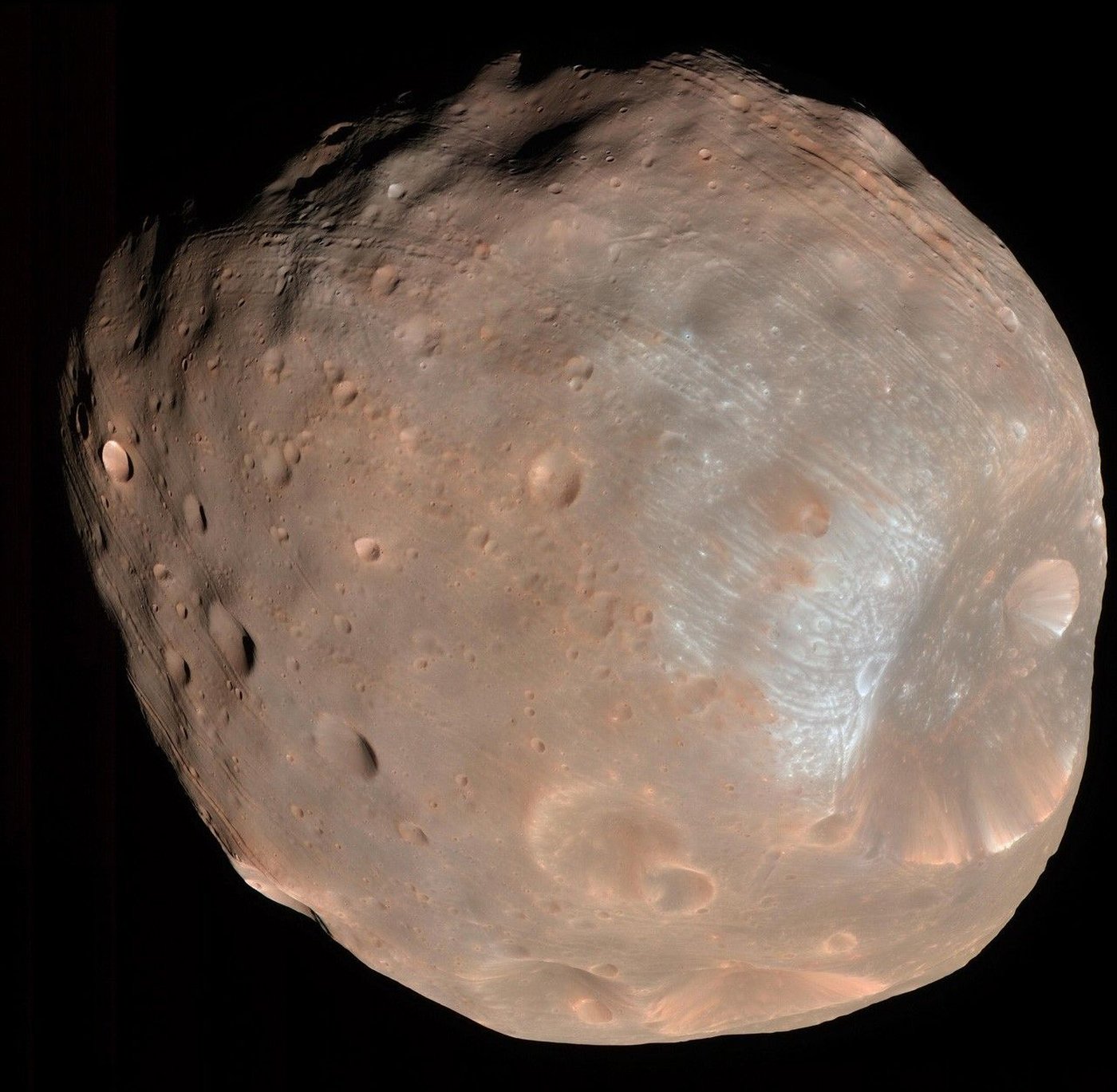
Japan's space agency launched a spacecraft toward Mars before sunrise on Tuesday, sending it on a five-year journey aimed at exploring the planet's two small moons and returning material from one of them to Earth. The Japan Aerospace Exploration Agency (JAXA) is leading the mission, which lifted off from Tanegashima Island, the country's primary spaceport, according to Lethbridge News Now.
The plan calls for placing a robotic prospector and a rover on Phobos, the larger and nearer of the two moons. Five space agencies around the world have combined their resources for the effort.
Why it matters
No spacecraft has ever touched down on Phobos or on Deimos, its smaller companion. Lethbridge News Now reports that the pair have remained unvisited by any lander despite decades of Mars exploration.
The gap is not for lack of activity at Mars itself. NASA has set nine spacecraft down on the Martian surface over the past half century, and China achieved its own touchdown in 2021, the outlet reports. Yet no mission has managed to collect samples from Mars, and none has tried to do so from its moons.
If the landing and sampling succeed, the mission would open a new chapter in the study of the Martian system. Phobos and Deimos are thought to hold clues about the early history of the region, and material gathered there would give scientists something no ground-based telescope or orbital probe can provide: physical specimens they can examine directly.
A shared undertaking
The mission is unusual for the breadth of its international backing. Five of the world's space agencies have joined forces on the project, with JAXA serving as the lead organization, according to Lethbridge News Now.
The launch took place in the dark hours before dawn, a timing the outlet describes as occurring before daybreak at the Tanegashima site. The spacecraft now begins a voyage that is expected to last five years from launch to completion.
The mission architecture pairs two pieces of hardware on the Phobos surface: a robotic prospector, designed to survey the landing area, and a rover that can move across the moon's terrain. Working together, they are meant to gather the soil and rock that would eventually travel back to Earth.
What has and hasn't been done before
Mars has drawn more landed missions than any other planet, but its moons have stayed out of reach. The nine NASA landings and China's 2021 touchdown show that reaching the Martian surface is a solved problem in principle. Returning anything from that neighborhood is not.
The distinction matters for how the Phobos mission is understood. It is not simply another Mars flight. It combines a first-ever landing on a new body with a sample-return operation, and it does so under the coordination of five agencies rather than one.
Lethbridge News Now frames the project as an unprecedented quest, noting that neither Phobos nor Deimos has ever been explored from the surface. The reporting does not specify a landing date, the mass of the samples sought, or which other agencies are participating beyond JAXA's leadership role.
What to watch
The spacecraft is now in flight, and the coming years will show whether the lander and rover can reach Phobos and complete their sampling work. The return of material to Earth, if it happens, would be the first of its kind from the Martian system.