Mayapada Hospital Jakarta Selatan has performed a robot-assisted mastectomy, the surgical removal of a breast affected by cancer, using the da Vinci Xi robotic system. The procedure took place on Sunday, 8 November 2026, according to Kompas.com.
The operation was led by dr. Bayu Brahma, Sp.B.Subsp.Onk(K), a surgical oncology specialist. Planning for the surgery was discussed with Clinical Associate Prof. Mok Chi Wei, a surgeon from Changi General Hospital in Singapore, Kompas.com reports.
According to an official statement from Mayapada Healthcare cited by Kompas.com, the operation was carried out through a single small incision. The hospital says the approach can help conceal surgical scarring and allows the skin and nipple to be preserved in patients who meet the relevant medical criteria.
Why it matters
Breast cancer surgery has traditionally left visible marks and, in many cases, has required the removal of more tissue than the tumour itself. A technique that works through a smaller opening and preserves the skin and nipple could change what recovery looks like for patients, both physically and psychologically.
Mayapada Healthcare's statement, as reported by Kompas.com, links the approach to supporting patients' appearance and confidence after surgery. The hospital's announcement also signals that robotic operating systems, long associated with prostate and other urological procedures, are now being applied to breast cancer care in Indonesia.
What robot-assisted surgery actually involves
Robotic surgery is a method in which a robotic system helps a surgeon carry out an operation. The surgeon remains in full control throughout; the machine does not act on its own. Its role is to move surgical instruments with finer control and to give the surgeon a clearer view of the operating area.
Prof. (Dr.) Sanjai Kumar Addla, MRCS, MD, FRCS (Uro) of Apollo Hospitals Jubilee Hills in Hyderabad, India, described the technology as an established part of current surgical practice rather than something still on the horizon. Quoted from an official statement by Kompas.com on Monday, 9 November 2026, he said robotic surgery is no longer a future technology but part of modern surgery today.
Addla said the technology helps surgeons perform complex procedures with clearer visualisation and more precise instrument control. He stressed, however, that robotic assistance does not mean the operation runs automatically. The surgeon remains responsible for deciding and carrying out what each patient needs.
One of the potential advantages highlighted in the reporting is the ability to operate through smaller incisions than conventional open surgery requires. In the Jakarta case, the entire mastectomy was performed through one small cut.
Matching the technique to the patient
The benefits described by the hospital do not apply to every patient. Kompas.com reports that the type of operation and the technique used must still be matched to the condition of the cancer, the characteristics of the tumour and each patient's medical needs.
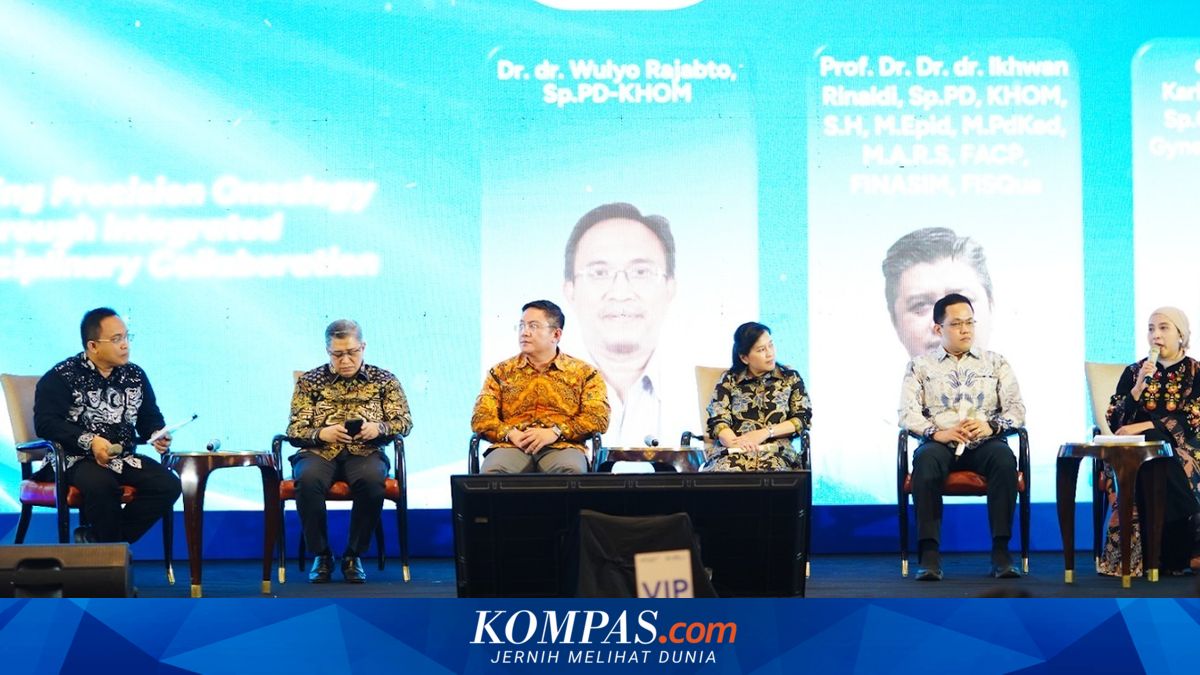
Prof. Mok Chi Wei made a similar point during a panel discussion at Mayapada HOPE 2026 titled "The Evolution of Cancer Surgery: Advancing Patient Outcomes Through Innovation." He described how minimally invasive surgery and robotic technology are developing in cancer care, opening the possibility of more precise breast cancer operations that help preserve breast shape and patients' quality of life, according to Kompas.com.
Prof. Dr. dr. Ikhwan Rinaldi, Sp.PD-KHOM, a medical haematology-oncology consultant with the Tumor Board at Mayapada Hospital's Oncology Center, said two patients with the same type of cancer will not necessarily receive the same treatment. Quoted by Kompas.com, he said therapy choices must take into account the cancer's stage, the tumour's characteristics and the patient's overall health.
That is why cancer care, in his description, depends on specialists and subspecialists working together to settle on the right treatment strategy.
What to watch
The reporting does not say how many robot-assisted breast cancer operations the hospital plans to perform or how widely the technique will be offered. For patients, the practical question remains a clinical one: whether their tumour, stage and general health make them suitable candidates, a judgment their own surgical team will have to make.





