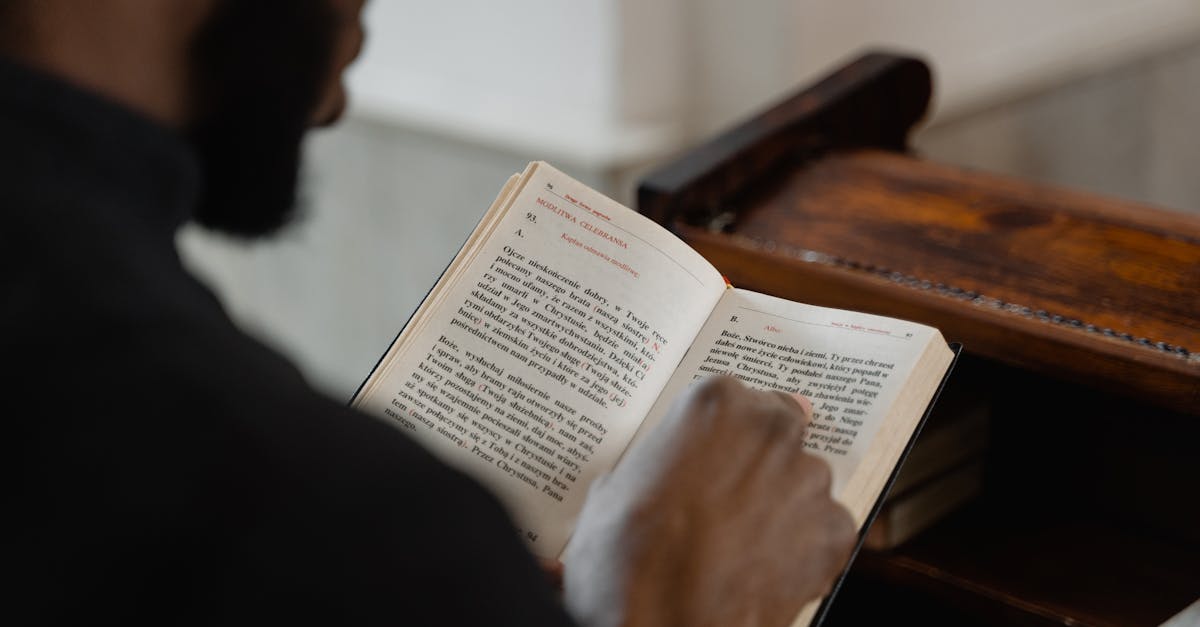
Remember that friend in college? The one who grew up in a devout family, knew all the right answers in youth group, and seemed to have a faith built on granite? I do. Let’s call him Sam. For years, Sam was the guy we all looked to when we had doubts. Then, around 28, he just… stopped. He stopped coming to gatherings. His social media shifted from Bible verses to philosophical quotes. When we finally talked over coffee, his words were heavy, quiet, and utterly disorienting: “I think I’m deconstructing my faith. I don’t know what’s left.”
My heart sank. My first, unspoken thought was, Oh no. He’s losing it. This is a crisis.
But as I listened—really listened—to the depth of his questions, the pain of the inconsistencies he’d brushed aside for years, and the raw sincerity of his search, I began to see something else. This wasn’t a demolition. It was an archaeological dig. He wasn’t tearing down a house; he was carefully sifting through the rubble of a building that had already been damaged by poor construction, trying to find the original, unshakable foundation.
That conversation changed my perspective forever. What if deconstructing faith isn’t the end of the road, but a crucial, messy, and ultimately sacred part of the journey?

The Anatomy of a Deconstruction: It’s Not What You Think
Let’s be honest, the term “deconstruction” gets thrown around a lot. It can sound trendy, rebellious, or frightening. But strip away the buzzword, and you find a deeply human process. It’s the conscious, often painful, examination of the beliefs you were handed—the doctrines, the cultural baggage, the unspoken rules—to ask: “What is truly essential? What have I actually experienced as true?”
This isn’t about throwing a tantrum against God. More often, it’s a crisis of trust in religious institutions, leadership, or the way faith was packaged and sold. It’s asking questions like: “Why does a God of love seem so punitive in this teaching?” “How do I reconcile science with my spirituality?” “Why does this community exclude people Jesus would have embraced?”
It feels like a crisis because it dismantles the mental framework that once provided stability. But here’s what most people miss: You cannot deconstruct something you never truly owned. The very act of questioning means there’s a core of authentic faith, a “something,” that’s worth getting right.
When the Scaffolding Cracks: The Hidden Opportunity
Think of the faith you inherited as a building. Some of it is beautiful, timeless stone—the foundational teachings of love, grace, and redemption. But over the years, well-meaning people added scaffolding: political affiliations, cultural taboos, stylistic preferences, and man-made hierarchies. We often mistake that scaffolding for the building itself.
Deconstruction happens when you realize the scaffolding is rotting, or worse, it’s trapping you inside. It’s terrifying to see it wobble. But the opportunity is breathtaking: It’s the chance to distinguish the architecture of the divine from the temporary work of human hands.
This process forces faith out of the realm of second-hand information and into the realm of firsthand experience. It moves from “This is what I’m supposed to believe” to “This is what I have found to be true, even in the fire of my doubts.” That kind of faith isn’t fragile; it’s resilient.
Navigating the Wilderness: A Practical Guide for the Journey
If you’re in this space, or walking alongside someone who is, it’s crucial to navigate it with intention, not just reaction. Here’s a modern guide to treating deconstruction as a sacred opportunity:
- Name the Real Pain: Is it grief? Betrayal? Intellectual honesty? Moral outrage? Don’t just say “I’m doubting.” Get specific. Journal it. The more precisely you can name the wound, the more directly you can seek healing.
- Find Safe, Wise Companions: This is non-negotiable. You need people who won’t panic at your questions. They might be a therapist, a spiritual director, a trusted friend from outside your tradition, or a online community that values exploration over answers. Avoid echo chambers—both the rigidly fundamentalist and the cynically anti-faith.
- Re-engage with Primary Sources: Go back to the text, the story, the origin. Read the scriptures for yourself, not just through the lens of a commentary. Study the historical context. Explore other traditions and see what wisdom they hold. Often, we’re deconstructing a caricature of God, not God as revealed in the full, complex narrative.
- Embrace “Both/And” Thinking: Our brains love “either/or.” Deconstruction thrives in the gray space. Can you hold grief and hope? Anger and love? Certainty and mystery? This tension isn’t a failure; it’s a sign of maturity.
- Look for What Remains: In the quiet, ask: “What has survived every storm so far?” It might be as simple as “Love is real,” or “I am not alone,” or “There is a mystery worth seeking.” That tiny ember is your starting point for reconstruction.

The Other Side: What Reconstruction Can Look Like
Reconstruction isn’t about building the same house again with new bricks. It’s about creating a more honest, spacious, and integrated dwelling for your spirit. For Sam, it meant letting go of a transactional, fear-based God and discovering a presence of boundless, creative love. His faith became quieter, less certain in its declarations, but far more profound in its practice. He trades in kindness over dogma, and presence over performance.
His faith is now his own. And because it’s his own, no one can take it from him.
Is It Worth the Risk?
Absolutely. A faith that cannot survive questioning isn’t worth having. A God who is threatened by our honest search is not God, but an idol we’ve constructed.
Deconstructing faith is the brave work of trading a borrowed spirituality for an earned one. It’s the path from a faith that is fragile (easily shattered by hard questions) to a faith that is anti-fragile*—one that gets stronger precisely because it has been tested.
So, if you’re in the middle of it, take a deep breath. You are not lost. You are on a quest. You are not destroying your faith. You are searching for its truest, most durable form. And that is not a crisis.
It might just be the most important opportunity of your spiritual life.
What’s the one question your heart is genuinely asking right now? Have the courage to sit with it. The answer, or the peace amidst the unknowing, might be the very thing you’re being rebuilt around.





