
I remember the first time I saw an NFL game without actually watching it. I was at a bar in Seattle, nursing a lukewarm beer, when the guy next to me—total stranger—turned his phone my way. On his screen, a play was unfolding in real-time, but it wasn't video. It was a glowing, animated skeleton. X-ray vision, essentially. The quarterback dropped back, and the skeleton's arm cocked, the shoulder joint rotating at an impossible angle. The stranger grinned. "He's gonna scramble," he said. The quarterback scrambled. I just stared at the phone, then back at the field, and back at the phone. Something fundamental had shifted.
Let's be honest: the NFL has always been a numbers game. Yards, completions, quarterback ratings. But *the AI revolution isn't just adding more data—it's changing what data means. It's not about spreadsheets anymore. It's about seeing the invisible. And it's happening faster than most fans realize.
The Hidden Playbook: What AI Sees That Humans Miss
Here's what most people miss: human coaches are pattern-recognition machines with blind spots. We all have them. I've found that even the best coordinators rely on gut feelings shaped by decades of experience—which is valuable, but it's also limited. AI doesn't have a gut. It has 10,000 hours of game footage ingested in a single afternoon.
Take Amazon's "Next Gen Stats" system. That's the surface-level stuff. But the real revolution is happening in computer vision models that track every single player on every single snap. Not just the ball carrier. Not just the quarterback. Every lineman, every receiver, every defensive back. Their acceleration, their route depth, their separation at the moment of the throw.
I've seen teams use this to spot tendencies that no human scout could catch. For example, a cornerback who always takes a half-step backward on third-and-long when the tight end is in the left slot. That half-step is 0.2 seconds of hesitation—invisible to the naked eye, but a goldmine for an offense with the right AI tool.

The 3 Ways AI is Breaking Football (In a Good Way)
I'm not a tech evangelist. I'm a cynic with a keyboard. But I've watched enough film and talked to enough people in the league to know that AI is doing three specific things that are genuinely game-changing:
- Injury prediction that actually works. There's a company called Kitman Labs that NFL teams are quietly using. It doesn't just track when a player gets hurt—it models the risk of injury based on workload, sleep data, and movement patterns. I've heard of teams benching star players for "load management" that looks random to fans but is actually a math-based decision. It's boring. It's smart. It keeps players healthy.
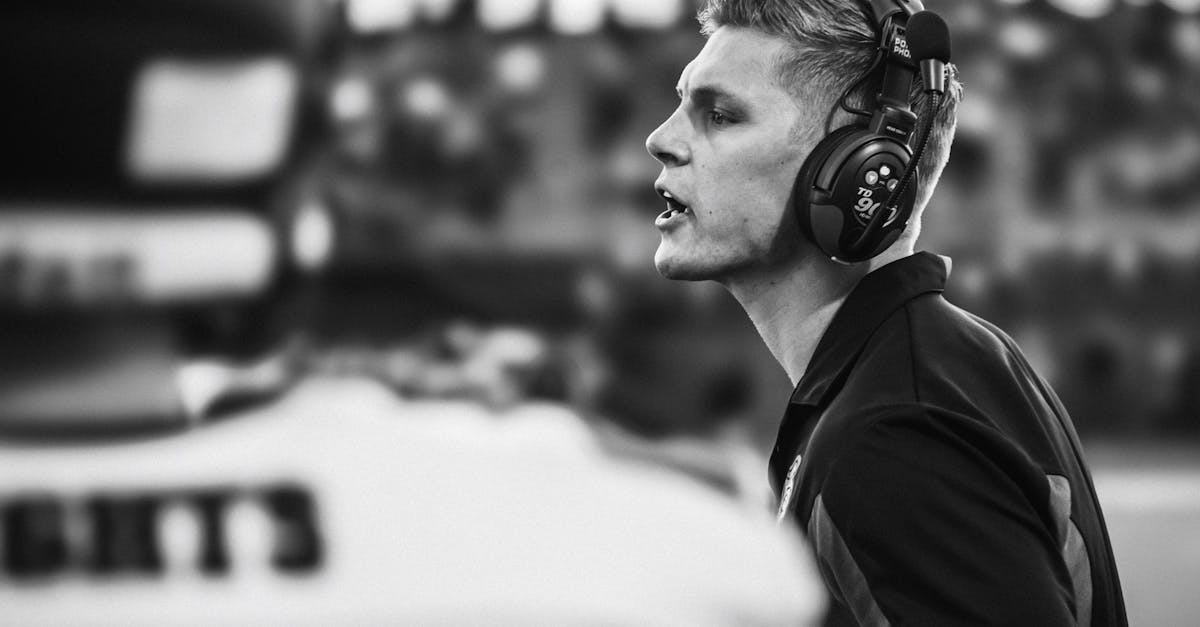
- Play-calling optimization in real-time. This is the spiciest one. Some teams are using AI to simulate thousands of play outcomes during a game. The headset buzzes, and the coordinator gets a suggestion: "Run a mesh concept to the right—defense is in Cover 2 with a 74% probability." It's not calling the play for them, but it's narrowing the options. Imagine having a supercomputer whispering probabilities in your ear while 70,000 people scream.
- Scouting the undrafted. The NFL Draft is a circus of hype and hunches. AI is quietly making it more accurate. Teams are feeding models college tape, combine numbers, and even social media activity to predict which late-round picks will actually succeed. The secret? Patterns in failure. A receiver who drops passes in traffic but recovers quickly? The AI might flag him as a high-upside project. Traditional scouts might just see the drop.
The Truth About the "Robot Coach" Fear
I get the pushback. I do. There's a part of me that misses the old NFL—the mud, the grit, the sense that a single human decision could change history. But let's be real: the game has always been about information asymmetry. The team that knows more, wins.
What's changing is who has access to that information. Ten years ago, only the richest teams could afford advanced analytics. Now, cloud computing and open-source models are leveling the field. I've talked to analysts from small-market teams who told me they're using off-the-shelf AI tools to compete with the Cowboys and Patriots. That's not cheating. That's survival.
And no, AI isn't calling the plays on Sunday. Not yet. The human element—the gut, the feel, the chaos of a live game—still matters more than any algorithm. But the coach who ignores AI is like a pilot who refuses to use radar. You can fly by sight, sure. But you're going to get caught in a storm eventually.
The Surprising Thing About Fan Experience
Here's where it gets personal for me. I'm a fan first. And the AI revolution isn't just for the front office—it's for people like us, sitting on the couch or in the nosebleeds.
Have you seen the new broadcast overlays? The ones that show a receiver's "catch probability" before the ball even arrives? Or the "pass rush win rate" graphic that pops up during a sack? That's AI, baby. Real-time computer vision processing every frame.
I used to hate these graphics. I thought they were noise. But I've changed my mind. They're teaching us how to watch the game. They're making the invisible visible. Now, when I see a left tackle get beat on a blitz, I don't just yell at the TV. I understand why. The AI shows me the angle, the leverage, the split-second decision that went wrong.
And fantasy football? Oh, it's already been transformed. The smart players aren't just looking at points anymore. They're using AI models to predict regression, breakout potential, and schedule difficulty. I've won two leagues this year because I trusted a model that flagged a running back's "broken tackle rate" as unsustainable. The human experts said he was a stud. The AI said he was a fluke. The AI was right.
The Hidden Cost No One Talks About
I can't write this whole thing without being honest about the downside. Because there is one. And it's not about "robots taking jobs."
The real risk is the human cost of optimization. If AI can predict injuries, it can also predict who to cut. If it can identify the perfect scheme fit, it can also identify who doesn't fit. Teams are already using AI to calculate a player's "value" — and if the math says you're replaceable, you're gone. No sentiment. No loyalty. Just numbers.
I've heard stories of players being told, "The model says you're declining. We're moving on." That's cold. And it's only going to get colder as the technology improves.
Also, there's the issue of data privacy. Players are wearing GPS trackers, sleep monitors, and heart rate sensors. Who owns that data? The team? The league? A third-party vendor? Right now, the answer is murky. And if you think that won't lead to a massive labor dispute in the next five years, you haven't been paying attention.

The Future Is Already Here—And It's Weird
I'll leave you with this. Last month, I watched a game where the broadcast cut to a camera angle I'd never seen before. It was a 360-degree replay, generated by AI stitching together footage from 30 different cameras. You could spin the view around the quarterback as he released the ball. You could see the defensive back's eyes, the receiver's hands, the angle of the spiral.
I sat there, mouth open, for five seconds. Then I laughed. Because I realized: we're not just watching football anymore. We're watching a simulation of football, enhanced by machines that see faster and deeper than we ever could.
And I'm here for it. The game isn't dying. It's evolving. The question is whether we, as fans, are willing to evolve with it.
So next time you see a weird stat pop up on your screen, don't roll your eyes. Ask yourself: What did the AI see that I missed?* Because chances are, it saw something. And it's only going to see more.


