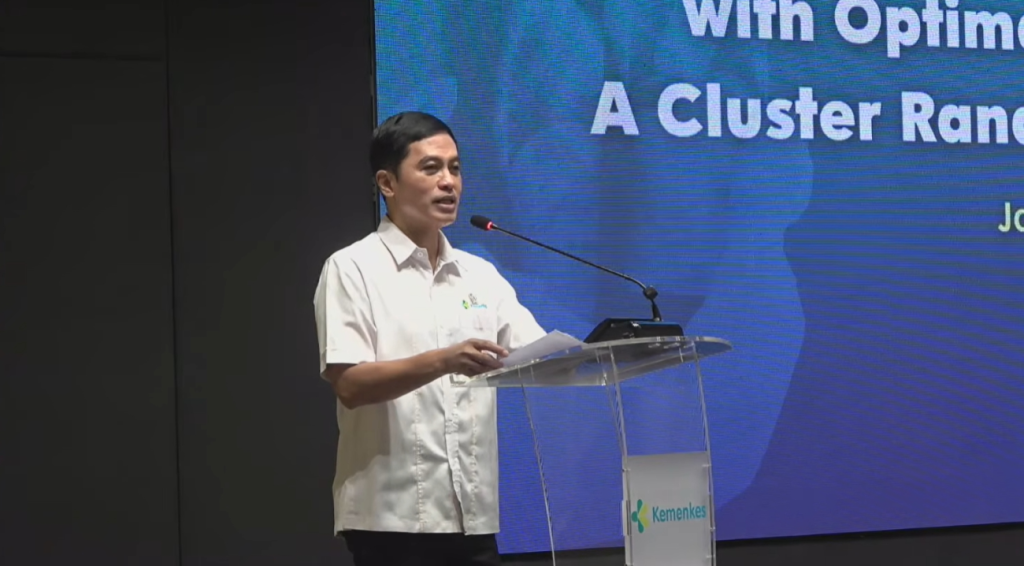
Indonesia and Tanzania have launched a five-year research trial examining whether nutritional supplements can shield people living with tuberculosis patients from falling ill themselves. The study, called Prevention of Household Tuberculosis with Optimal Nutrition (PHOTON), was formally opened at a kick-off meeting in Jakarta on Thursday, 22 October 2026, according to InfoPublik. Deputy Health Minister Dante Saksono Harbuwono used the launch to argue that nutrition may be an overlooked element in the country's TB response.
Why it matters
Indonesia carries the world's second-highest tuberculosis burden, a ranking Dante acknowledged in his remarks at the Jakarta meeting. InfoPublik reports that the deputy minister described the country's anti-TB efforts to date — treatment, vaccine development and diagnostic tools — as substantial but insufficient on their own. The scale of the remaining disease burden, he said, points to the need for broader strategies, including examining how nutritional status affects both prevention and care.
The PHOTON trial is designed to test that idea directly. Researchers will assess whether giving nutritional supplements reduces the number of new TB cases among household contacts of patients — the people who share living space with someone who is ill and therefore face elevated exposure. According to InfoPublik, the results are intended to supply scientific evidence that could strengthen prevention policy.
Dante framed the question in plain terms during his speech. He said Indonesia has worked hard against TB without yet winning, and suggested the answer may have been sitting on the dinner plate all along. He later added that nutrition could be one answer working alongside medical treatment, according to InfoPublik.
How the trial is built
The study will enroll 78,400 participants across the two countries, with 42,260 of them in Indonesia, InfoPublik reports. In Indonesia the research is led by the University of Indonesia through its Center for Global Resilience in Health and Nutrition, with support from national and international partners. Planned research sites include Jakarta, Depok, Bogor and Lombok.
Participants will be divided among three supplement regimens and a placebo group. One group receives vitamin B; a second receives vitamin B combined with mult micronutrients; and a third receives vitamin B, mult micronutrients and balanced protein-energy supplementation. Supplements are scheduled to be given for six months, with benefits tracked over 24 months. The study will measure cases of tuberculosis confirmed bacteriologically, covering both pulmonary TB and TB outside the lungs.
The trial is backed by the Gates Foundation, Wellcome Trust and Novo Nordisk Foundation, according to InfoPublik. Indonesia's Ministry of Health and other stakeholders in the national TB program are supporting the local rollout.
Collaboration as a theme
Beyond the science, Dante used the launch to stress that TB cannot be tackled by the health ministry alone. InfoPublik reports that he called for involvement from academics, the private sector, health workers, local governments and communities, arguing that wider participation is needed for prevention and treatment to reach more people. He noted that health facilities are where services are delivered, but that community engagement matters more, and that more innovative approaches — nutrition among them — are required.
He also thanked the research team and partners, expressing hope that the Indonesia–Tanzania collaboration produces evidence useful for health policy, particularly in strengthening TB prevention. InfoPublik quotes him urging the team to work as one unit, with mutual trust, openness and support, because the best evidence emerges from good collaboration.
What to watch: whether the PHOTON trial's Indonesian arm, led by the University of Indonesia, meets its enrollment targets across the four planned sites and delivers bacteriological TB outcomes that policymakers can act on when the five-year study concludes.





